• About

A Desert Father

~ The Rev'd Robert Hendrickson

A Desert Father

Monthly Archives: January 2012

Doing What Since 1784? On Ethos, Advertising, and Identity

29 Sunday Jan 2012

Posted by RHendrickson in Uncategorized

≈ 11 Comments

Friends of mine have circulated an ad for the Episcopal Church on Facebook. The ad portrays a female priest, a gay couple with two children, and a handsome fellow raising a martini. The text of the ad says, “The Episcopal Church: Resisting Fundamentalism since 1784.” The ad almost looks like someone with the intent to mock the Episcopal Church crafted it as a vaguely metrosexual (a word that spellcheck is uncomfortable with) fellow toasts us with a martini.
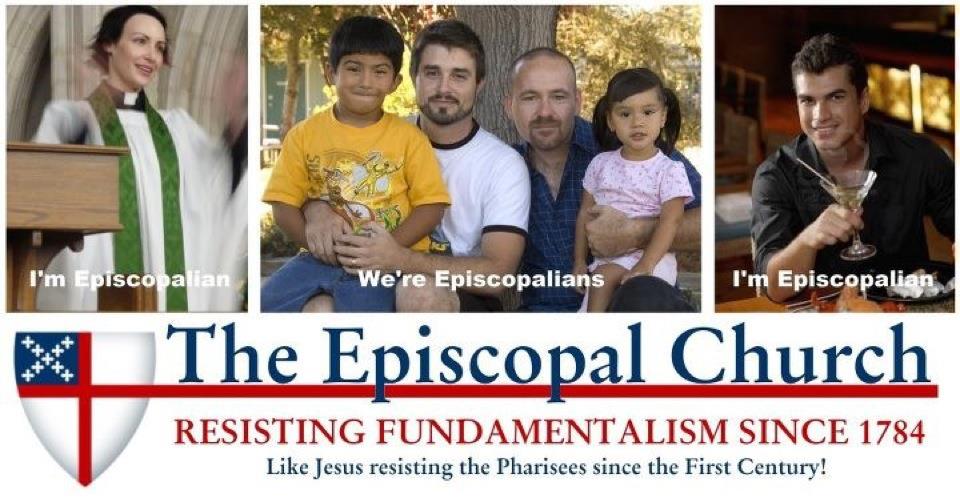
The sentiment of the ad seems to be that the Episcopal Church is not the kind of religion that marginalizes women and gay Christians. The problem is that the ad seems to communicate that we are the kind of religion that sees ourselves as better than many other Christians.

Recently someone else I know posted an ad created by breakaway Anglicans which depicted the Presiding Bishop with the tagline “Don’t believe any of that crap? Neither do we.” The ad was an obvious (or maybe not) hit on the Episcopal Church’s doctrinal wobbliness (as the breakaway cleric sees it) and our apparently flexible approach to Scriptural warrant. The friend posted it without irony believing it to be a progressive statement of the Episcopal Church’s liberation from outmoded beliefs. It was one of those moments when mockery and self-awareness passed one another by without a backward glance!

Not long ago I took part in a brainstorming session in which the participants, almost all in their 20s and 30s, were asked what it meant to be Episcopal. Here are some of the responses:

“Heritage, Bridge, Reverent, Liturgy, Music, Incarnational, Contemplative, Richness of Language, Common Prayer, Connection to Tradition, Connected to Ancient Communities.”

On the negative side, answers also were “snobbish” and “elitism.” The ad above reinforces these unfortunate stereotypes both in its text and especially in that third picture.

What are we communicating as our core identity?

A couple of years ago I watched a video interview with several Episcopal members of the Executive Committee. They were asked the question, “What is the Good News of the Episcopal Church?”

Answers ran the gamut. However, the main theme was that the Episcopal Church was open and welcoming to all. This is a good thing – but it is not the heart of the thing – the “thing itself” as DeKoven says.

Toward the end of the video a member said, “The Good News of the Episcopal Church is that Christ has died. Christ is Risen. Christ will come again.” He had the Good News exactly right. The Good News was not an answer to unfortunate strains of Christian fundamentalism – the Good News is that we preach Christ and Him crucified.

As I attend meetings of clergy, diocesan conventions, see online posts, and the like I have become increasingly worried that many in the Episcopal Church see our vocation as an oppositional one. For many, our message is that we are not the Christians that scare you. Really.

The challenge is that oppositional messages are rarely the ones that capture the heart or the imagination. They might be emotionally satisfying for the moment – a kind of cathartic response to seeing the Church used as a vehicle for political or cultural voices that victimize all too many.

Ultimately, the Episcopal Church cannot simply be a response to misrepresentation of the Gospel, it must be a voice for the Gospel. There are varying voices in the Church that define themselves by saying what we are not. We are not Roman. We are not Evangelicals. We are not fundamentalists. On it goes as we ever define ourselves on others’ terms.

Who are we though? This is the crux of our Church’s dilemma. We struggle to say who we are without saying who we are not.

We might begin with our Catechism and some of its answers to the core questions of the faith.

Q. What is the Christian hope?
A. The Christian hope is to live with confidence in newness and fullness of life, and to await the coming of Christ in glory, and the completion of God’s purpose for the world.

Q. What is Holy Baptism?
A. Holy Baptism is the sacrament by which God adopts us as his children and makes us members of Christ’s Body, the Church, and inheritors of the kingdom of God.

Q. What is grace?
A. Grace is God’s favor toward us, unearned and undeserved; by grace God forgives our sins, enlightens our minds, stirs our hearts, and strengthens our wills.

Q. What is adoration?
A. Adoration is the lifting up of the heart and mind to God, asking nothing but to enjoy God’s presence.
Q. Why do we praise God?
A. We praise God, not to obtain anything, but because God’s Being draws praise from us.
Q. For what do we offer thanksgiving?
A. Thanksgiving is offered to God for all the blessings of this life, for our redemption, and for whatever draws us closer to God.
Q. What is penitence?
A. In penitence, we confess our sins and make restitution where possible, with the intention to amend our lives.
Q. What is prayer of oblation?
A. Oblation is an offering of ourselves, our lives and labors, in union with Christ, for the purposes of God.

I chose these particular answers because they articulate an Anglican approach to grace, joy, repentance, offering, adoration, and hope. Were I creating an ad campaign for the Episcopal Church, I would begin with these Anglican answers to the core questions of the faith.

Those searching for a church home are often looking not for an agenda or a church defined by its opposition. They are searching for a church that will enrich their spiritual lives, help them raise their children, fill some deeper yearning, help them help others, and more. The reasons people come to church are as varied as the people themselves.

At its best, the Episcopal Church offers an apolitical inclusion that embraces all as they search for the One who is All. The Church is not a response to the world around us but a response to God. The Episcopal Church lives into this response of love and self-offering in manifold ways that are expressed in the answers of our Catechism. We might also use Scripture, language from the liturgy, or hymn verses – in other words those things that bind us together as the Body of Christ in this Church – to articulate our shared witness and faith.

Yes, the push for justice and equality are part of a response to God. However, that cannot be the defining character of a Church that hopes to grow and serve Christ in ever expanding ways. We have to be more nimble, more full of joy, more creative than that.

We cannot allow any agenda to define us. Whatever the agenda is it can never capture the fullness of our life in Christ. All we can do is attempt to describe our life with and in God. As we do that, we offer, in fits and starts, a glimpse of our collective response to God as the Church. Agendas are part of our life as the Church. Every wing, faction, and group within the Church has an agenda – items and articles that it elevates or prioritizes. Each of these expressions is one part of the totality of the church.

However, the Church is diminished whenever we see those agendas as somehow definitive or defining – especially when those agendas are crafted in opposition to culture rather than response to God. We can not be the church of “better than…”

The Episcopal Church is a way of being in response to God. An ad campaign for the Episcopal Church should stress how we worship together, how we live together, how we pray together, how we serve together, how we adore Christ together. An Episcopal Church campaign should offer the Episcopal Church as an alternative not to any other church, denomination, or cultural prejudice because faith is greater than the sum of that which is opposed.

We are a Church of grace, dignity, awe, reverence, prayer, hope, and joy. We do ourselves a disservice by ceding the ground upon which we define ourselves to others.

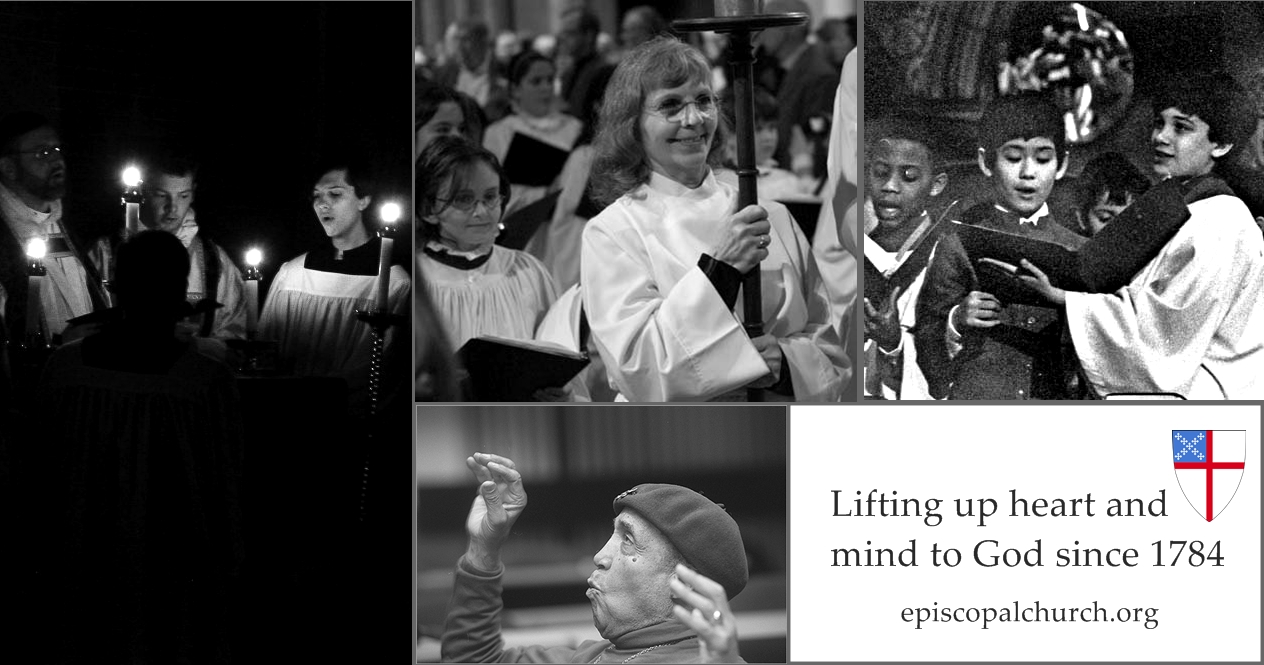
With this in mind, I dawdled around and made what I thought would be a good first ad in a string of ads communicating an Episcopal Church identity. I like the “since 1784” tag so I used that but I think it could be blended with different images and text to offer a broad image of the Church.
Share this:

  • Share on X (Opens in new window) X
  • Share on Facebook (Opens in new window) Facebook
  • Share on Reddit (Opens in new window) Reddit
  • Share on Tumblr (Opens in new window) Tumblr
  • Email a link to a friend (Opens in new window) Email
Like Loading...

Of Tebow, Football, and Prayer

09 Monday Jan 2012

Posted by RHendrickson in Uncategorized

≈ 6 Comments

A friend of mine posted this piece by a UCC pastor about Tim Tebow’s pastor and a comment he made on the Broncos being 7-1 at that point since Tim Tebow was quarterbacking. Tebow’s pastor says, “It’s not luck,” Hanson said. “Luck isn’t winning six games in a row. It’s favor. God’s favor.”

Pastor Daniel (I apologize if UCC ministers are not referred to as pastor – I assume they are not Mother and Reverend is grammatically inelegant) takes issue with the claim that God would act to intervene in a football game in answer to one team’s prayers. She writes, “To be fair, the player himself made no such outrageous claims. But his pastor seems to have skipped a few theology classes. Surely there are other Christians praying just as hard on other teams. And what about the players of other religions?”

Pastor Daniel maintains, “…as for touchdowns, skillful surgeons, happy first dates and fast lanes, those are human affairs. God doesn’t reward one player with a touchdown and curse another. God gives us the instructions on how to withstand the hard times, and how to withstand the good times…”

I think this might be a case of both/and rather than either/or.

Pastor Daniels is right as far as she goes. God absolutely gives us the fortitude to withstand all that the world can throw at us. It is with His help that we carry on when we cannot carry ourselves.

I wonder though if there is not something good and true about believing that God will intervene in the most mundane of circumstances? I don’t claim to be a theologian (in fact, without fail, every single time I type theologian I accidentally type theologican first!) and I may have missed the classes that Tim Tebow’s pastor missed as well. But it seems profoundly limiting to suggest that God will not, in some wise, intervene in even the silliest of human endeavors (which they all must seem to Him at times).

We have spent the Christmas season celebrating the inbreaking of God into a manger and celebrating the very real birth of God With Us. If that scene teaches anything then it teaches that God embraces us even in the midst of some very human realities – because of those very human realities. God seems to speak less in the grand than in the simple, the essential, and the human – for that is what we might understand.

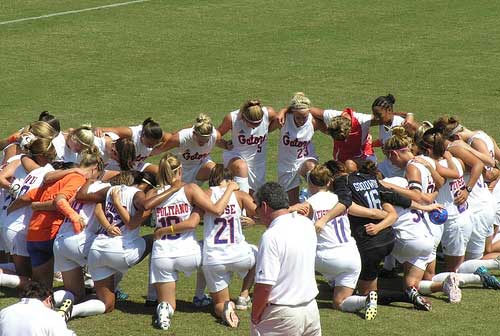
Florida Gators women's soccer team at prayer.

Our prayers are always answered. This is a true saying and worthy of all to be received. They may not be answered in the way we understand, the way we hope, or the way we expect. When a team prays for victory and receives defeat, there is grace abounding in defeat. Most of our greatest lessons come not from wins but from losses – and prayers were answered.

When a pastor, player, or coach ascribes to the Lord his or her win on a field, they are absolutely right! Their victories and their defeats, their skills and their weakness, their hopes and their fears are all bound up in the love of God.

In a profoundly narcissistic society, it does not bother me at all to see Tim Tebow genuflecting in the end-zone. It does not bother me at all for a pastor to say that he thinks God is watching out for a particular team.

The point is not that God cares about a ball game – but that the ball game is one part of God. The ball, the field, the players, the sweat, the dreams, the fans, the stadium, the city, and more are all caught up in the care and attention of God. The more we are able to acknowledge the presence of God in all that we undertake the more profoundly we can carry that presence to those who need it most.

When I am flying on a flight particularly marked by turbulence I don’t pray that I will have the calm and wisdom to accept the circumstances and, if the plane should crash, that I shall merit particular care in the afterlife. I pray that the plane doesn’t crash. Is God listening? I believe so. It might be an attribution error or a case of post hoc ergo propter hoc but I do think that God hears the fervent prayers of His people.

We are not Gnostics – we believe that the material world matters to God. We believe in the Incarnation and a Lord who was, in some way, formed by the everyday love and concern of a Father, a Mother, and those all around. This is part of the exchange of the Incarnation.

Pastor Daniels proposes a curiously dispassionate God by whom “all prayers are welcome” yet who does not seem all that interested in responding to them nor to value any of them particularly. This is a curious God to whom we should pray – but only for our own individual resolve to withstand or grow from a particular experience.

What does the Spirit do in such a cosmology? What role does God play at all in the Creation? Why an Incarnation? Where is the Living God active and true?

Those may seem like grand questions to jump to because we are talking about a football game, right? But what we are really talking about is a question of the efficacy of prayer, the nature of God’s action in the world, and God’s relationship to His people.

We don’t pay obeisance to a disinterested sun god, who is content to watch the world putter on, for whom we are an amusement or day’s diversion. We worship a God who has come among us as one of us and knows us as His own.

God may not have a scorepad and one of those beerhats on – or he may – I rather like to think he does at times though. The Incarnation revealed to us a God who wanted to know and love His people – in all of their passionate silliness – in all of their victories and defeats.

I think what troubles me is the belief that sports are just too petty or small a concern for God to look upon.

For the men playing football or the women playing soccer or the boys and girls in the Special Olympics or the countless other men and women competing, striving, and praying – those feats are no mean thing. They are not hobbies or a lark they are the stuff of dreams and longing. They form character and virtue.

If God is not involved, deeply and passionately, in every human being’s dreams and hopes (however picayune they may seem from our perspective), then I am not sure what God is involved in. We might, too often, want to constrain His action to look curiously like what we want to happen. Yet, there is something deeply faithful about asking God to intervene in the simplest parts of our days and expecting that God is active in every victory.

Robert+

Share this:

  • Share on X (Opens in new window) X
  • Share on Facebook (Opens in new window) Facebook
  • Share on Reddit (Opens in new window) Reddit
  • Share on Tumblr (Opens in new window) Tumblr
  • Email a link to a friend (Opens in new window) Email
Like Loading...

Current

  • The Society of Catholic Priests of the Episcopal Church An Anglican society devoted to catholic spirituality welcoming all priests, deacons, seminarians, and religious as members.
  • Saint Philip's in the Hills, Tucson St. Philip’s is a large, active parish known not only for its worship, music, and art, but also for its inclusiveness, educational programs, and its outreach to the community.

Links

  • Saint Hilda's House A residential spiritual formation and service program for recent undergrads.
  • Christ Church New Haven An engaged urban parish in the Anglo-Catholic tradition.
  • Saint John's Cathedral, Denver Saint John’s Cathedral continues its rich Anglican tradition of historic ministry in downtown Denver along with the tradition of forward-looking, public ministry on the frontier.

Recent Publications

  • Yearning: Young Adults, Authentic Transformation, and the Church A recent book by Robert on young adults ministry and the future of the Church. It features contributions from 22 young adults with whom he was privileged to work in New Haven along with his own reflections in addition to three guest essays.

Archived Posts

Recent Entries

  • We’ve Voted: What’s Next? November 4, 2020
  • Dying at the Border of Truth and Beauty: Stories we Need to Hear December 4, 2018
  • A Justice for our Time? Reject Judge Kavanaugh. September 27, 2018
  • The Trump Delusion: What We’re Begging for is a Renewed Church not a New Prayer Book July 9, 2018
  • You can be right or you can be in relationship: You don’t get to choose both July 7, 2018
  • Peace Between the Outrages June 18, 2018
  • The Many Problems with Bishop Michael Curry’s Royal Wedding Sermon May 20, 2018
  • The Torture of Our Souls May 15, 2018
  • A Catholic Future: Universal Discomfort March 11, 2018
  • Priesthood is a Pack Activity January 14, 2018
  • The Women October 17, 2017
  • Story by Story: from Generation to Generation October 16, 2017
  • This Very Night: A Sermon for Maundy Thursday April 14, 2017
  • Midnight Evangelism July 19, 2016
  • Is it Nothing? July 8, 2016
  • A Corpus Christi Moment: Making a Home for the Body June 2, 2016
  • Wonderfully Made: Being Pro-Life and Pro-LGBT April 13, 2016
  • Communion? The Fracturing of Shared Reality April 12, 2016
  • Refrain from Anger: On Anglican Bigotry January 19, 2016
  • Behold, Your Son: Loss, Love, and Family January 6, 2016
  • It Couldn’t Possible Matter, but It Does: The Superficial and the Silly in Liturgical Life December 8, 2015
  • Waiting on God: Advent and Violence December 6, 2015
  • We Believe? On the Limits of Inclusion September 9, 2015
  • The Gift of Joy and Wonder August 26, 2015
  • Considering Abortion: Dialogue and Dignity in the Episcopal Church July 14, 2015
  • One Lesson from China: Belief in a Post-Something Society July 9, 2015
  • Of Papal Encyclicals and Charleston: Mutual Responsibility and the Body June 19, 2015
  • A Message Signed with Blood: A Sermon on the Martyrdom of 21 Christians in Libya March 3, 2015
  • A New Tabernacle: A Home for Homeless and the Host February 23, 2015
  • Must All Episcopal Bishops be Elected? A Modest Proposal January 29, 2015
  • Liturgy: It’s not the Work of the People January 22, 2015
  • An Alcohol Free Lent: A Season of Repentance and Reflection January 14, 2015
  • A Sermon for the Feast of All Saints 2014 November 3, 2014
  • How an Atheist Became a Priest: The Persuasiveness of Simple Things October 12, 2014
  • The Eucharistic Heart of Christian Leaders October 2, 2014
  • Appreciating the Faculty of General Seminary September 30, 2014
  • And There Was War: Remembering General Seminary at Michaelmas September 30, 2014
  • Prayerfully Holding the Center: Leadership in a Changing Church September 29, 2014
  • Why Anglicanism? Catholic Evangelism and Evangelical Catholicism September 11, 2014
  • Why the Church? August 22, 2014
  • It Couldn’t Possibly Matter: On Righteous Dismissiveness, Frivolousness, and Tradition August 21, 2014
  • Somewhere, Somehow: The Geography of Nowhere, Mason Jars, and the Church August 19, 2014
  • The Future Work of the Episcopal Church: Part I July 18, 2014
  • The Diaconate and Lay Religious Orders: The Shape of Future Ministry July 16, 2014
  • Strange Language: Jargon, Tradition, and Essence July 12, 2014
  • Tribal Jargon: A Case for Strange Language in the Church July 10, 2014
  • Faithful Women and the Presence of Christ June 24, 2014
  • The Depressing Regularity of Black Masses May 25, 2014
  • Cassock Albs are Destroying the Church May 21, 2014
  • The Seven Last Words: A Sermon for Easter Sunday April 23, 2014

Enter your email address to follow this blog and receive notifications of new posts by email.

Most Read Posts

  • The Lord's Descent into Hell: A reading from an ancient homily for Holy Saturday
  • The Seven Last Words: A Sermon for Easter Sunday
  • By Thy Precious Blood: A Sermon for Good Friday
  • The Eucharistic Heart of Christian Leaders
  • Divine Right or Mandate of Heaven: The Church in the World
  • A Message Signed with Blood: A Sermon on the Martyrdom of 21 Christians in Libya
  • "There is No Try" or The Lessons of Star Wars for the Church
  • "You don't have to leave your brain at the door" - Can we please stop saying this?
  • High Church? Low Church? Broad Church? On the Insufficiency of Labels
  • The Diaconate and Lay Religious Orders: The Shape of Future Ministry
Follow A Desert Father on WordPress.com

Create a free website or blog at WordPress.com.

Privacy & Cookies: This site uses cookies. By continuing to use this website, you agree to their use.
To find out more, including how to control cookies, see here: Cookie Policy
  • Subscribe Subscribed
    • A Desert Father
    • Join 316 other subscribers
    • Already have a WordPress.com account? Log in now.
    • A Desert Father
    • Subscribe Subscribed
    • Sign up
    • Log in
    • Report this content
    • View site in Reader
    • Manage subscriptions
    • Collapse this bar
 

Loading Comments...
 

    %d