• About

A Desert Father

~ The Rev'd Robert Hendrickson

A Desert Father

Monthly Archives: June 2012

Liberal Protestantism and the Discomfort with Difference

27 Wednesday Jun 2012

Posted by RHendrickson in Uncategorized

≈ 14 Comments

Since the Reformers, there has been an impulse within Western Christianity to erase particular marks of sacred time and space. The desire ranges from a fierce iconoclasm that sees idolatrous popery as the bane of true religion to a polite bourgeois discomfort with physicality or difference. In contemporary American religion there is also the particularity of our inherited discomfort with anything that resembles hierarchy or appears undemocratic.

Within the Episcopal Church we see these impulses in a variety of places. Watch the distrust of the House of Deputies for the bishops of the Church and you can see that democratic impulse alive and well. Read the justification for Holy Women, Holy Men – everybody is affirmed and the concept of sainthood is redefined as setting a good example. Listen to the debates over Communion and Baptism and you can also hear the discomfort with difference as there seems to be incredulity that we should set any bar, let alone a high one, to participation in sacred mysteries.

This is the point – for many there is no such thing as a sacred mystery anymore. The notion that particular people, places, moments, or things can be set aside as blessed (as different) is increasingly deemed retrograde.

The danger of this sort of liberal Protestantism is that when we cease to see particular moments as communicating something of the divine then we will, eventually and I believe inevitably, cease to see that movement anywhere.

There is a commendable impulse that underlies much of this – the desire to see all of life as sacred and all people as blessed and valued by God. It is and they are! Absolutely!

Yet, we also believe that God is doing something new with people in Baptism. Even if your understanding of the Fall is a muted one there is still some bit of redeeming grace that we expect in that moment. In the Eucharistic feast we expect that God is coming among us is some special way even if Real Presence is a step too far for some.

God does something unique with the common in particular moments. These moments are the means by which we have sure and certain hope – they are the means given to us by Christ for the sanctification of humanity. After them, we are different. We are changed as we become a new creation. We are set aside as we are no longer that which we were.
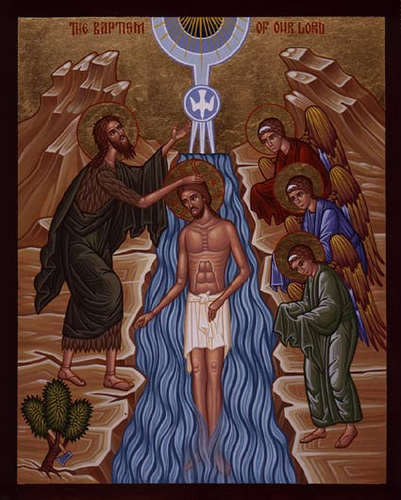
The concept of holiness necessarily requires a sense of and belief in difference. The Church invites people to a different life – a renewed existence in the Body. The Sacramental life of the Church is the means by which we see and know that God makes use of the simplest of elements to transform our very being. If we can’t articulate this simple fact, that God changes things, then we are left in a profoundly disconcerting theological place for we are left with human device and the limits of reason as the sole measure of God’s action in the world.

Current trends in the Church point toward a revolution of profound and disturbing significance. We no longer seem able or willing to say how it is that God transforms us as individuals and as a Body because we are uncomfortable with difference. The underlying message of the Diocese of Eastern Oregon’s proposal to endorse Communion without Baptism was first that we have failed to bring new people to the Church and second that the failure really isn’t that important because people are fine as they are and not in need of Baptism.

The message of the Church cannot only be “you’re fine as you are.” This kind of undifferentiated affirmation results not in an inclusive community but in a community without an understanding of its own purpose, message, identity, or goal.

I am not advocating that we return to fire and brimstone or rest our teaching on moralizing about private lives but I do think we need to be honest that God is calling us to be different, to change, to be transformed. Christ’s message was not one of affirmation alone but an invitation to die. It was an invitation not to live today as we did yesterday but to know our old selves as dead. This was the invitation of Baptism. This was the difference.

The Church comes together to celebrate Sacred Mysteries. It exists to say the Mass together and share in the sacrifice of praise and thanksgiving – in Communion with Christ. It exists to baptize new believers into the Body. It exists to be a Body of reconciliation and forgiveness. It exists to call people into union with one another in Christ. It exists to heal and to offer hope for the life to come.

The Church exists to change us and all those around us in sacred moments by sacred mystery. It exists to make us different – to make us one in Christ.

That difference is expressed in our liturgical seasons, in our rites and Sacraments, in our service in our communities, in our work of love and reconciliation, in our life of prayer, and in our self-sacrifice. A Church which denies difference denies its own calling and fails in its essential witness to bring others to consecrated life.

Understanding ourselves as changed and transformed is not hubris – it is an act of profound humility that recognizes that it is not we ourselves who bear witness to God but Christ living through us.

Just as the common becomes holy on the altar, we creatures become holy at the altar rail. We become another part of the feeding of God’s people even as we are fed. Each Baptism and Communion is part of the striving toward the Kingdom of God, the yearning that echoes in time and memory, and promises that human frailties and fractions can be bound up in the laboring grace of the divine and consecrated to God’s use.

This is the difference.

Baptism prepares us to be servants of God in the world as we are bound together in grace and sustained in love. We receive this grace and become agents of God’s reconciliation in our communities. The peace we receive from Christ is one that is grounded in overflowing abundance even as it demands that we offer all as we serve and thus find perfect freedom.

In Baptism we are different. We are changed. Thanks be to God.

Robert+

Share this:

  • Share on X (Opens in new window) X
  • Share on Facebook (Opens in new window) Facebook
  • Share on Reddit (Opens in new window) Reddit
  • Share on Tumblr (Opens in new window) Tumblr
  • Email a link to a friend (Opens in new window) Email
Like Loading...

I Wish the Church was More Like a Museum

26 Tuesday Jun 2012

Posted by RHendrickson in Uncategorized

≈ 3 Comments

Yesterday, my wife and a friend of ours headed into New York to visit the Chinese consulate. If you have not experienced the efficiency, warmth, and clarity of dealing with the Chinese bureaucracy then you are the richer for it. However, shocking to us, the consulate seems to have reformed itself a bit. Rather than the 8 or more hours it can take simply to get to the window (and then be rejected for a visa) we were in and out (and approved) in about an hour.

This good turn left us with a whole day in New York!

So we decided to head off to the Metropolitan Museum. I was particularly excited about the Byzantium and Islam exhibit, the Chinese printing exhibit, and my favorite, the Arms and Armor exhibit. Also not to be missed is the relatively new Greek and Roman antiquities wing.

I have heard, more than a few times, deriders of one part of the church or another say something along the lines, “The church is not a museum” or more often “We need to act like a church and not a museum” or “We can either get involved or just become a museum.”

Each comparison to the museum is, as you may have noticed, to demonstrate the stagnant nature of the museum in contrast to the speaker’s own vibrant, effervescent vision of the Church.

I actually find myself wishing that the Church was more like a good museum. Museums are places that generate excitement in us but may, on occasion, also inspire dread. They can bring us into contact with some of the most important elements of our history and identity even as they sometimes present those vital pieces, moments, or times as if they were forgettable or lost in the rush of time.

The trick in the museum is to present an object so that it communicates with us – so that it is not simply an object of studied and indifferent origin but is in conversation with us. This conversation forms us. It creates in us an understanding that this piece before us is part of us. Our conversation and engagement with it continues to craft some part of us.

Great museums do something great churches can do – they tell us who we are. Moreover, with training and study, they can form us for the future. To the untrained eye there is something that immediately attracts even while always revealing some new complexities and patterns that reward careful study and meditation.

Yet we too are afflicted with the question of value. Why do we matter? Who will notice if we are not around? I would contend that we matter because we answer the deepest need of human existence. However in a culture that is beset with consumptive utility, the ability to consume and be consumed, as its driving force, churches and museums alike will be called to answer for themselves and for their usefulness. Yet we answer those questions that we are trained to forget even exist.

The question “Who are we?” is up for grabs in a culture that sells identity. A culture with no sense of who it is is malleable, formless, and ultimately forgettable for it will have left nothing that can be seen, known, or is even, in the truest sense, present. Such a culture will be at the whims of those forces which always step into the void. Whether shameless corporate manipulation or political peddling some other narrative will drive the creation of identity to the point at which any sense of truth, beauty, or dignity is simply manufactured in the most profitable or politically expedient way.

Museums and the Church offer a counter-cultural understanding of the world. They invite us into a scope of history and meaning in which the full flourishing of humanity is pursued. They are an encounter with those things which are most essential to remember and most easy to forget. Their “usefulness” only extends so far as their understanding of their central story and mission.

Not every museum offers this. Neither does every church.

The Church has, in many ways, a similar charge as a museum. We communicate identity, curate elements of tradition, lead people through a journey, connect people across cultures and time, offer an entry way for the novice, connect themes and ideas across fields, and offer historical examples for the future. Beyond this, as the Church, we also offer a life-altering encounter with a living God whose power is always at work in the world.

Our role is descriptive as we share the story of the arc of salvation. It is also didactic as we offer the lessons of thousands of years of tradition and theological insight. It is also prescriptive as we offer an understanding of the Christian’s life and role in the world. It is also experiential as the Christian is drawn into the life of God by the working of the Sacraments and in the holiness of relationship.

Why does faith matter? Who is Jesus today and who has he been? How does the faith of centuries shape our faith today? Is there a God? How do we understand the afterlife? When a visitor walks into our churches they need to hear people dwelling with these very questions and finding, in the shape and life of the Church, a life-giving encounter with the Holy.

Even as they answer individual questions about particular objects of interest, museums also portray the sweep of history. They give you a sense that the particular dwells within the context of the whole. Docents carefully answer every question and guide people to a deeper understanding of the transitions between space, place, and time. Great museums and Churches are grounded in both the depth of history and tradition as well as the very real needs of the communities around them.

Great museums become voices and actors in their communities because they know how to engage the world around them as they tell a living story. the American Visionary Art Museum, has a mission simply to “expand the definition of a worthwhile life” by presenting and encouraging creativity in untraditional venues. The Denver Museum of Contemporary Art describes itself as an activator, content provider, and immediate research vehicle of culture in the making—a museum without a front door—a place for public engagement.

A judge with the Hague was interviewed about overseeing the trials for those that had committed atrocities in Sarajevo. He was asked how he kept his sanity and his faith in the face of such a relentless press of the worst of human barbarism related day after day. He said that he would frequently visit a nearby museum to look at the Vermeer paintings and be reminded of the stirring beauty that humanity was capable of.

Churches, at their best, offer this chance. We offer the chance for those beset by the cares, occupations, and struggles of this sometimes wearying life to find a place of rest, refreshment, and new meaning. They can be reminded of the beauty of God and the promise offered to each of us.

Each person that enters the space has something to offer to the whole understanding of the life of the Church. As in a museum, the curated meaning is not the only one. There are a host of challenging and enlivening insights that will come from those new to the exhibit. We also have to be ready as the Church not simply to expect visitors but to give them space to shape life and meaning along with us. So we are tasked with bringing forward and nurturing the tradition even as we are ever open to new interpretation and ideas some of which will stand the test of time and some of which will fade away.

Great museums allow for this sort of interchange. The fascinating thing about the arms and armor exhibit at the Metropolitan, for example, is its sense of movement. You feel in the midst of this history swirling about you and can imagine that hooves are pounding and pennants fluttering. You see in the exhibit a progression of history as well and understand the link between one piece and the next. You see the influences that one era has on another until you are, even without realizing it, seeing patterns that resound in our own time.

Yet, this does not happen on its own. There are not speakers playing whinnying horse noises or actors in olde English garb railing at the peasantry to stay out of the road. We bring something to the experience too that is vital.

Perhaps a lesson might be found in the sign at the entrance to the Gage Center, an historical house in New York which is a model for museums and the Church.:

Welcome to the Matilda Joslyn Gage Center where Matilda Joslyn Gage lived with her husband Henry and their four children and carried out her work for social justice from 1854-1898. Rules of the house: 1) Check your dogma at the door; 2) Think for yourself; Please dialogue with us about the challenging ideas you will find within these walls and together let us envision the world we want to create. Please feel free to take photographs, pick up books, play with the toys, sit on the furniture, and most of all write on the walls!

Oh that the Church could be more like a museum.

Robert+

Share this:

  • Share on X (Opens in new window) X
  • Share on Facebook (Opens in new window) Facebook
  • Share on Reddit (Opens in new window) Reddit
  • Share on Tumblr (Opens in new window) Tumblr
  • Email a link to a friend (Opens in new window) Email
Like Loading...

“There is No Try” or The Lessons of Star Wars for the Church

16 Saturday Jun 2012

Posted by RHendrickson in Uncategorized

≈ 3 Comments

Note: I promise I shall return to less fluffy pieces soon!  After a week mixing the sad and the frustrating it seemed an occasion for a bit of a lighter take.

Someone once told me that church geeks, the kind that become clergy for example, are the biggest geeks – they are the geeks that the Dungeons and Dragons kids make fun of.  It’s more than a little true.

One of the best comments I ever saw on a blog was about the Sarum Rite, the commenter said that attempting to recreate the Sarum Rite was like trying to master the rules of Advanced D&D.  In other words, it requires an obsessive attention to detail that only a fellow lover of such obscura will appreciate (and much of the world will find it baffling that so much energy is devoted to the pursuit).

Well, I have always had an appreciation of all things geeky.  I suppose it began with Star Wars – I was the kid that was thrilled with the Grand Moff Tarkin action figure.

I started thinking today about how two of my interests (read geeky obsessions) come together.  What are the lessons of Star Wars for the Church?  What can Yoda, Vader, Tarkin, and more tell us about how to change and adapt?  What are the lessons of the Rebellion’s victory and the Empire’s fall?

1. Meesa wants more: Dumbing things down just doesn’t work.

The complexity of the galactic struggle of the first three Star Wars movies was nearly obliterated by the annoyance that was Jar-Jar.  Those coming back to Star Wars and those new to it were not looking for a bizarre novelty – they were coming back to see Vader and Yoda.  Our great gift as the Church is that we are not the home of grating attempts at entertaining humor.  We have a tried and true core that need not be tarted up with CGI buffoonery.

2. “Named your fear must be before banish it you can.”

Yoda gets it right.  There are lots of things we fear as a Church right now.  The culture is changing.  The church is changing.  Atheism is on the rise.  We are becoming irrelevant.  We are too rigid.  We are too loose.  The Prayer Book is holding us back.  Abandoning the Prayer Book is killing us.  In other words – there is fear in abundance.  Fine.  Name it.  Get it out in the open so we can get on with the work of visioning our future.  We have to be willing to say with honesty those things that are most troubling and feel most threatening.  Only then can we begin to metabolize the fear and let it become a new source of energy.  The rebel culture was one of optimism and hope as opposed to their foe which was motivated by fear and anger.

3. Fear cannot be the motivator.

Yoda knows, fear and anger lead to the dark side.  Yet our own fears cannot be what drives us – we have to trust that God is leading us and the Holy Spirit are present even, and especially, amid our anxieties.  Fear cannot be the means we use to motivate others either.  “Do this or we’ll die” is not exactly the most salient vision statement.  After all, how much did Imperial performance improve after Vader’s serial force chokings of admirals?  Not much.  We have to find our common vision, our common identity, as Anglican Christians.  It was not fear that made Han a hero and a farm boy a Jedi – it was a belief in something greater than fear and larger than themselves.

4. Bigger is not better. 

When those AT-ATs came across the frozen waste of Hoth, they must have been a terror to behold.  Yet out come the rebel ships throwing cables around their legs and down they went.  Death Star? Ditto.  In other words, those big imposing structures and mechanisms we have put together just will not get the job done in this new era.  They are the way and tools of the past.  We have to be willing to take those things apart and build a newer, faster, more nimble force.

5. Agility is the key.

As those larger structures collapse under their own weight or through our own re-working, we have to be agile and responsive.  The culture is moving too fast around us for us to believe that bloated structures built around triennial gatherings will ever respond to the deep needs all around us.  We are only relevant insofar as we are equipped and ready to respond to the communities we are part of.  At every level we have to be moving quickly and anticipating rather than just reacting.  Insulated centralized structures will always be a step behind a networked but creatively trained and mobile forces with a shared hope.

6. Mentoring not just training

How do you think stormtroopers were trained?  I don’t imagine that their drills stressed creativity or new thinking.  The rebels, on the other hand, probably had a formal training program that was a mess.  They were ragtag and their equipment was often shabby – and yet they managed to pull it off.  Bringing up new leaders in the church, both lay and ordained, requires not just rote training in the fundamentals but also careful mentoring and apprenticeship.  Yet, there are basic building blocks that must be learned.   Look at Yoda’s training of Luke.  He trains him in the basics of the force, the core elements, but also mentors and helps him see what was possible.

6. Relationships not structures win out

It was the relationship and love between Han, Leia, Luke, Chewbacca, and more that gave the rebels strength and courage.  The Church is a Body of relationships – relationships rooted in the love of God.  It is not a system of obedience that will renew us but a revivified understanding that each of our lives is intertwined in dangerous ways with one another’s.  It is dangerous because it is a threat to our sense of pride, individualism, and self-sufficiency.  We are together, as the Church, only because of the life we share in the Sacraments.  Our bishops are leaders because they form the heart of our Sacramental life as a diocese.  Our priests are priests only because they were first baptized and called to offer the Sacraments on behalf of the bishops.  We have a priesthood of all believers that have been welcomed into the apostolic band through the laying on of hands at Confirmation.  It is this web of relationship that stretches beyond time and borders that binds us together and to Christ.  We are not a structure for the sake of structure – we are the Church because we share in the Body.

7. “Don’t tell me the odds.”

C-3P0 lets Han know that the odds of successfully navigating an asteroid field are approximately 3,720 to 1.  The odds seem against the Church these days.  We hear day after day that the decline is coming, the fall is imminent, the sun is setting on the Church.  Yet, we have gone through this all before.  There have been challenges again and again to the Church and yet it thrives not because of our own efforts but by the inspiration of the Holy Spirit.  The odds are there and the challenges are real and yet we would be sunk, indeed would have collapsed long ago, if odds were the only thing that guided the Church.  We are not a Body of odds nor a faith of mathematical determinism.

8. There is no try.

Yet, the odds are real and there is little time for us to just let the future happen.  We can’t spend our time theologizing our failure or decline – there are no excuses.  There is no try.  There is do or do not.  Our work is not to save the Church – it is to bring word of God’s salvation to the communities all around us.  With creativity, joy, and determination we are called to work, pray, and give for the spread of the Kingdom.  Offering our whole selves to this work is not easy and it is hardly glamorous but there is no try.  Luke: “I can’t believe it.” Yoda: “That is why you fail.” There is no try because we believe.

9. Learn from failure.

The Galactic Empire devoted years and an enormous amount of money and manpower to constructing the Death Star. After it was built, the base the size of a moon only successfully completed one mission before it was destroyed by the Rebels. And the Empire’s response? Build a bigger, newer Death Star.  There are no reasoned chats between Vader and Palpatine about the wisdom of this path.  Maybe there were creative ways to obliterate planets that they had not considered!  As I listen to the debates about structures in the wider church, I keep waiting for some leader or another to invite us to witness the awesome power of the new and improved House of Deputies.  “I find your lack of faith disturbing” he says as we wonder aloud about this grand new behemoth.  It was not the power of the structures, of the Death Star, that ultimately won but a shared vision of the future.

I am sure there are more lessons to be found – these are just some that jumped out.  Of course, there is always that most valuable of lessons, “Always let the wookie win.”

Robert+

Share this:

  • Share on X (Opens in new window) X
  • Share on Facebook (Opens in new window) Facebook
  • Share on Reddit (Opens in new window) Reddit
  • Share on Tumblr (Opens in new window) Tumblr
  • Email a link to a friend (Opens in new window) Email
Like Loading...

Current

  • The Society of Catholic Priests of the Episcopal Church An Anglican society devoted to catholic spirituality welcoming all priests, deacons, seminarians, and religious as members.
  • Saint Philip's in the Hills, Tucson St. Philip’s is a large, active parish known not only for its worship, music, and art, but also for its inclusiveness, educational programs, and its outreach to the community.

Links

  • Saint Hilda's House A residential spiritual formation and service program for recent undergrads.
  • Christ Church New Haven An engaged urban parish in the Anglo-Catholic tradition.
  • Saint John's Cathedral, Denver Saint John’s Cathedral continues its rich Anglican tradition of historic ministry in downtown Denver along with the tradition of forward-looking, public ministry on the frontier.

Recent Publications

  • Yearning: Young Adults, Authentic Transformation, and the Church A recent book by Robert on young adults ministry and the future of the Church. It features contributions from 22 young adults with whom he was privileged to work in New Haven along with his own reflections in addition to three guest essays.

Archived Posts

Recent Entries

  • We’ve Voted: What’s Next? November 4, 2020
  • Dying at the Border of Truth and Beauty: Stories we Need to Hear December 4, 2018
  • A Justice for our Time? Reject Judge Kavanaugh. September 27, 2018
  • The Trump Delusion: What We’re Begging for is a Renewed Church not a New Prayer Book July 9, 2018
  • You can be right or you can be in relationship: You don’t get to choose both July 7, 2018
  • Peace Between the Outrages June 18, 2018
  • The Many Problems with Bishop Michael Curry’s Royal Wedding Sermon May 20, 2018
  • The Torture of Our Souls May 15, 2018
  • A Catholic Future: Universal Discomfort March 11, 2018
  • Priesthood is a Pack Activity January 14, 2018
  • The Women October 17, 2017
  • Story by Story: from Generation to Generation October 16, 2017
  • This Very Night: A Sermon for Maundy Thursday April 14, 2017
  • Midnight Evangelism July 19, 2016
  • Is it Nothing? July 8, 2016
  • A Corpus Christi Moment: Making a Home for the Body June 2, 2016
  • Wonderfully Made: Being Pro-Life and Pro-LGBT April 13, 2016
  • Communion? The Fracturing of Shared Reality April 12, 2016
  • Refrain from Anger: On Anglican Bigotry January 19, 2016
  • Behold, Your Son: Loss, Love, and Family January 6, 2016
  • It Couldn’t Possible Matter, but It Does: The Superficial and the Silly in Liturgical Life December 8, 2015
  • Waiting on God: Advent and Violence December 6, 2015
  • We Believe? On the Limits of Inclusion September 9, 2015
  • The Gift of Joy and Wonder August 26, 2015
  • Considering Abortion: Dialogue and Dignity in the Episcopal Church July 14, 2015
  • One Lesson from China: Belief in a Post-Something Society July 9, 2015
  • Of Papal Encyclicals and Charleston: Mutual Responsibility and the Body June 19, 2015
  • A Message Signed with Blood: A Sermon on the Martyrdom of 21 Christians in Libya March 3, 2015
  • A New Tabernacle: A Home for Homeless and the Host February 23, 2015
  • Must All Episcopal Bishops be Elected? A Modest Proposal January 29, 2015
  • Liturgy: It’s not the Work of the People January 22, 2015
  • An Alcohol Free Lent: A Season of Repentance and Reflection January 14, 2015
  • A Sermon for the Feast of All Saints 2014 November 3, 2014
  • How an Atheist Became a Priest: The Persuasiveness of Simple Things October 12, 2014
  • The Eucharistic Heart of Christian Leaders October 2, 2014
  • Appreciating the Faculty of General Seminary September 30, 2014
  • And There Was War: Remembering General Seminary at Michaelmas September 30, 2014
  • Prayerfully Holding the Center: Leadership in a Changing Church September 29, 2014
  • Why Anglicanism? Catholic Evangelism and Evangelical Catholicism September 11, 2014
  • Why the Church? August 22, 2014
  • It Couldn’t Possibly Matter: On Righteous Dismissiveness, Frivolousness, and Tradition August 21, 2014
  • Somewhere, Somehow: The Geography of Nowhere, Mason Jars, and the Church August 19, 2014
  • The Future Work of the Episcopal Church: Part I July 18, 2014
  • The Diaconate and Lay Religious Orders: The Shape of Future Ministry July 16, 2014
  • Strange Language: Jargon, Tradition, and Essence July 12, 2014
  • Tribal Jargon: A Case for Strange Language in the Church July 10, 2014
  • Faithful Women and the Presence of Christ June 24, 2014
  • The Depressing Regularity of Black Masses May 25, 2014
  • Cassock Albs are Destroying the Church May 21, 2014
  • The Seven Last Words: A Sermon for Easter Sunday April 23, 2014

Enter your email address to follow this blog and receive notifications of new posts by email.

Most Read Posts

  • The Lord's Descent into Hell: A reading from an ancient homily for Holy Saturday
  • The Seven Last Words: A Sermon for Easter Sunday
  • A Message Signed with Blood: A Sermon on the Martyrdom of 21 Christians in Libya
  • Refrain from Anger: On Anglican Bigotry
  • High Church? Low Church? Broad Church? On the Insufficiency of Labels
  • The Diaconate and Lay Religious Orders: The Shape of Future Ministry
  • A Sermon for the Feast of All Saints 2014
  • A New Tabernacle: A Home for Homeless and the Host
Follow A Desert Father on WordPress.com

Blog at WordPress.com.

Privacy & Cookies: This site uses cookies. By continuing to use this website, you agree to their use.
To find out more, including how to control cookies, see here: Cookie Policy
  • Subscribe Subscribed
    • A Desert Father
    • Join 316 other subscribers
    • Already have a WordPress.com account? Log in now.
    • A Desert Father
    • Subscribe Subscribed
    • Sign up
    • Log in
    • Report this content
    • View site in Reader
    • Manage subscriptions
    • Collapse this bar
 

Loading Comments...
 

    %d