• About

A Desert Father

~ The Rev'd Robert Hendrickson

A Desert Father

Monthly Archives: May 2018

The Many Problems with Bishop Michael Curry’s Royal Wedding Sermon

20 Sunday May 2018

Posted by RHendrickson in Uncategorized

≈ 64 Comments

There were so many mis-steps in Presiding Bishop Michael Curry’s sermon at the Royal Wedding that it’s difficult to know where to start. Despite the fact that a billion people saw it, major media around the world are sharing it, and Episcopalians took pride and found joy in seeing one of our own bring the word there are ways he could have avoided a number of serious blunders.
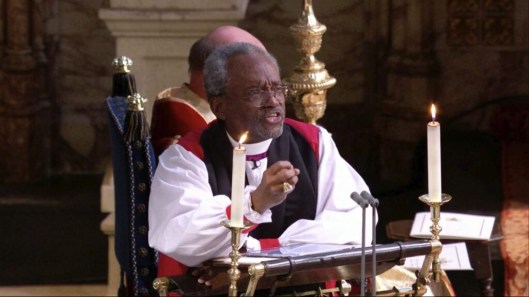
Let’s just start at the beginning.

1. He opened with the egregiously outdated Trinitarian formula, “Father, Son, and Holy Spirit.” There are far more creative ways that he could have talked about the various workplace roles of the Godhead and the sustaining work of the Redeemer. It just seemed unwelcoming.

2. Way too much Jesus. Really. Do a billion people need to be reminded of who Jesus is and the ways we are called to follow? Did they need the reminder to love God and love neighbor given by Jesus? People know more than enough about Jesus and really didn’t need a sermon that spent so much time on him. Besides this was a room full of people of all backgrounds and it seems like Bishop Curry could have chosen selections from world wisdom – these are not all followers of Christ after all and it’s not like we have some commission or the like to “evangelize.”

3. Too much love. Really. I think people have plenty of evidence these days that religion is about love. He could have spent time on any number of other topics without resorting to telling people that God is Love. Again, like with the Jesus thing, people can see everyday in our culture and news that Christianity is, at its heart, a movement of love.

4. Too personal. It’s weird when preachers show us how faith has reached them at a deep level. People need more information about God and these kinds of shows of deep devotion and conviction are confusing. It’s almost as if he was trying to say that Jesus (there he is again) can change who we are and how we see the world and not just tweak how we think about it.

5. Too political. I found it off putting that Bishop Curry wanted to bring uncomfortable things like slavery or Dr King into all of this. Why mix politics and faith? Jesus (oops, too much) rarely if ever mentioned these kinds of issues. If politics is about working out issues in community then it’s a little frightening to have someone say that Jesus (there he is again) has anything to do with the way we treat other people. Shaking hands at the Peace is about as political as we should get.

6. Too long. Really, if you are only preaching the Gospel to all nations then that could be creditably accomplished in four or five minutes.

7. Too predictable. It’s annoying that we can expect the Presiding Bishop to hammer, day in and day out, on Jesus and love. I wish he’d get more creative.

I’m sure that when time passs and the heady rush of the day wears off then people will be more appropriately critical of this personally convicted, Trinitarian, Jesus-proclaiming, socially conscious, and predictable sermon on the power of Love.

Feel free to watch and prove me wrong!
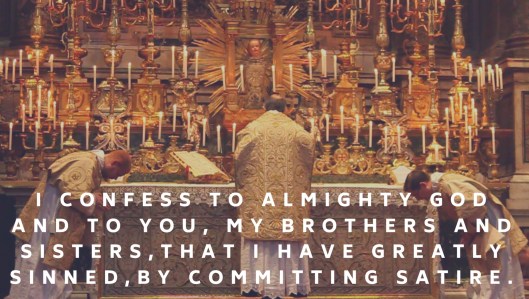
Share this:

  • Share on X (Opens in new window) X
  • Share on Facebook (Opens in new window) Facebook
  • Share on Reddit (Opens in new window) Reddit
  • Share on Tumblr (Opens in new window) Tumblr
  • Email a link to a friend (Opens in new window) Email
Like Loading...

The Torture of Our Souls

15 Tuesday May 2018

Posted by RHendrickson in Uncategorized

≈ Leave a comment

On my drive to work today, as I do most days, I was listening to various podcasts.  Today’s was a Slate interview with the author of the Rolling Stone piece, “An Open Letter to Gina Haspel From Someone Who Was Physically Tortured.” The author was held for two years by Al Qaeda in Syria.  He writes, “I began to wonder: What had happened to the young men who bore the weapons in the torture room to make them willing to induce such suffering in a helpless person?”

I wonder this now in our national culture.  What has happened to make us so willing to induce suffering in the helpless?  What has happened that we are, again, debating the merits of strapping people who are in our custody to boards and simulate drowning them.  This is not a simple matter of getting information.  This is a matter of triggering primal fear in a soul in our custody – it is a matter of subjecting human beings to emotional, spiritual, and physical horror.

These details are from the Intelligence Committee’s report on what happened at Gina Haspel’s black site in Thailand:

“…walling, attention grasps, slapping, facial hold, stress positions, cramped confinement, white noise and sleep deprivation—continued ‘in varying combinations, 24 hours a day, for 17 straight days,’ through August 20, 2002. When Abu Zubaydah was left alone during this period, he was placed in a stress position, left on the waterboard with a cloth over his face, or locked in one of two confinement boxes. According to the cables, Abu Zubaydah was also subjected to the waterboard ‘2-4 times a day … with multiple iterations of the watering cycle during each application.’

The ‘aggressive phase of interrogation’ continued until August 23,
2002. Over the course of the entire 20-day ‘aggressive phase of interrogation,’ Abu Zubaydah spent a total of 266 hours (11 days, 2 hours) in the large (coffin size) confinement box and 29 hours in a small confinement box, which had a width of 21 inches, at depth of 2.5 feet, and a height of 2.5 feet…”

crucifixionThere is a point at which a people lose their collective soul not through actions they commit but through the actions they willingly allow to be committed on their behalf.  We are fast reaching that point.  We are reaching the point where our leaders are mortgaging our soul for the sake of cheap points scored in political gamesmanship.  We are reaching the point where an inveterate liar who is now our commander-in-chief is appointing people to high position who have broken not the will of the enemy but the souls of barely-eligible-to-drink-and-vote men and women by making them shatterers of bodies, minds, and spirits.
At some point or another we will pay for this.  We will be judged because we have turned away from seeing Christ in all people.  We will look in a mirror collectively and see the Devil looking back – smiling and complacent he will tell us, “At least I kept you safe.” The cost is too high.  The cost is too bloody.  The cost is too much pain.

When a people reach the point of sanctioning the degrading and violent abuse of prisoners then we have reached the point where we can see them thrown to the lions.  We have reached the point where we can force them to fight for our amusement.  We have reached the point where we shout Crucify.  We have reached the revolting apex of civilization in the pursuit of smashing the uncivilizable enemy and, thereby, become utterly and disgustingly tamed by evil.

Evil is a taming force.  It is a force that domesticates the passions because it numbs our ability to stand in the experience of others.  It numbs us to their fear – so we build a wall against those fleeing violence and oppression.  It numbs us to their heartaches – so we gut social service programs.  It numbs us to their loss, their misery, their depression, their hunger, their thirst, their very humanity.

The embrace of the horrors of torture is an embrace of the demonic.  Full stop.  No amount of practicality (and there is no demonstrable practical value) with regard to getting information can make this morally right.  It is immoral.  It is ineffective.  It is an abasement of all that makes us whole, human, or especially Christian.

No person who wants this country to engage in “enhanced interrogation” should ever, ever again call this a Christian nation.  Call it pagan.  Call in an empire.  Call it whatever you want but to call it Christian if it is to torture captive bodies is a vile slander of the name of Christ.  If we call it Christian while it tortures then it becomes the vilest of masquerades hiding our shame, violence, and fearful need for so-called security beneath a mask of self-deceit.

To call us Christian Torturers is to put us at the foot of the Cross hurling one more insult as we shout, “Hail, King of the Jews” while wielding the spear against the captive God.

When our compassion (our sharing in the passion, the death-dealing pain) with the world is psychically, emotionally, and spiritually ablated we are not safe but utterly and completely obliterated as functioning human beings.  That evangelical Christians are supporting this kind of revolting return to Dark Age tactics of soul-shattering abuse of captives by supporting this President and his nominees is a stain from which Christianity as we know it should not recover.

The world should know that we are the most grotesque of hypocrites and demand that we return to the example of Christ.  We follow a tortured God.  We follow a broken Savior.  We follow a God who cried out “I thirst” who thought himself forsaken by his Father at an Empire’s spear-tip.  This is the God who demanding, pleading, and praying that we repent and return to the Lord.

If we do not recoil in horror and cry out at the senseless cruelties that are being condoned and embraced in our name then we are lost – and worse than lost.  We will be worse than lost for we will have condemned a generation to reject Christ because we Christians have blasphemed and held as worthless the very thing which Christ held so dear – the souls and bodies of our enemies.

Father, forgive us, for we know not what we do.

Share this:

  • Share on X (Opens in new window) X
  • Share on Facebook (Opens in new window) Facebook
  • Share on Reddit (Opens in new window) Reddit
  • Share on Tumblr (Opens in new window) Tumblr
  • Email a link to a friend (Opens in new window) Email
Like Loading...

Current

  • The Society of Catholic Priests of the Episcopal Church An Anglican society devoted to catholic spirituality welcoming all priests, deacons, seminarians, and religious as members.
  • Saint Philip's in the Hills, Tucson St. Philip’s is a large, active parish known not only for its worship, music, and art, but also for its inclusiveness, educational programs, and its outreach to the community.

Links

  • Saint Hilda's House A residential spiritual formation and service program for recent undergrads.
  • Christ Church New Haven An engaged urban parish in the Anglo-Catholic tradition.
  • Saint John's Cathedral, Denver Saint John’s Cathedral continues its rich Anglican tradition of historic ministry in downtown Denver along with the tradition of forward-looking, public ministry on the frontier.

Recent Publications

  • Yearning: Young Adults, Authentic Transformation, and the Church A recent book by Robert on young adults ministry and the future of the Church. It features contributions from 22 young adults with whom he was privileged to work in New Haven along with his own reflections in addition to three guest essays.

Archived Posts

Recent Entries

  • We’ve Voted: What’s Next? November 4, 2020
  • Dying at the Border of Truth and Beauty: Stories we Need to Hear December 4, 2018
  • A Justice for our Time? Reject Judge Kavanaugh. September 27, 2018
  • The Trump Delusion: What We’re Begging for is a Renewed Church not a New Prayer Book July 9, 2018
  • You can be right or you can be in relationship: You don’t get to choose both July 7, 2018
  • Peace Between the Outrages June 18, 2018
  • The Many Problems with Bishop Michael Curry’s Royal Wedding Sermon May 20, 2018
  • The Torture of Our Souls May 15, 2018
  • A Catholic Future: Universal Discomfort March 11, 2018
  • Priesthood is a Pack Activity January 14, 2018
  • The Women October 17, 2017
  • Story by Story: from Generation to Generation October 16, 2017
  • This Very Night: A Sermon for Maundy Thursday April 14, 2017
  • Midnight Evangelism July 19, 2016
  • Is it Nothing? July 8, 2016
  • A Corpus Christi Moment: Making a Home for the Body June 2, 2016
  • Wonderfully Made: Being Pro-Life and Pro-LGBT April 13, 2016
  • Communion? The Fracturing of Shared Reality April 12, 2016
  • Refrain from Anger: On Anglican Bigotry January 19, 2016
  • Behold, Your Son: Loss, Love, and Family January 6, 2016
  • It Couldn’t Possible Matter, but It Does: The Superficial and the Silly in Liturgical Life December 8, 2015
  • Waiting on God: Advent and Violence December 6, 2015
  • We Believe? On the Limits of Inclusion September 9, 2015
  • The Gift of Joy and Wonder August 26, 2015
  • Considering Abortion: Dialogue and Dignity in the Episcopal Church July 14, 2015
  • One Lesson from China: Belief in a Post-Something Society July 9, 2015
  • Of Papal Encyclicals and Charleston: Mutual Responsibility and the Body June 19, 2015
  • A Message Signed with Blood: A Sermon on the Martyrdom of 21 Christians in Libya March 3, 2015
  • A New Tabernacle: A Home for Homeless and the Host February 23, 2015
  • Must All Episcopal Bishops be Elected? A Modest Proposal January 29, 2015
  • Liturgy: It’s not the Work of the People January 22, 2015
  • An Alcohol Free Lent: A Season of Repentance and Reflection January 14, 2015
  • A Sermon for the Feast of All Saints 2014 November 3, 2014
  • How an Atheist Became a Priest: The Persuasiveness of Simple Things October 12, 2014
  • The Eucharistic Heart of Christian Leaders October 2, 2014
  • Appreciating the Faculty of General Seminary September 30, 2014
  • And There Was War: Remembering General Seminary at Michaelmas September 30, 2014
  • Prayerfully Holding the Center: Leadership in a Changing Church September 29, 2014
  • Why Anglicanism? Catholic Evangelism and Evangelical Catholicism September 11, 2014
  • Why the Church? August 22, 2014
  • It Couldn’t Possibly Matter: On Righteous Dismissiveness, Frivolousness, and Tradition August 21, 2014
  • Somewhere, Somehow: The Geography of Nowhere, Mason Jars, and the Church August 19, 2014
  • The Future Work of the Episcopal Church: Part I July 18, 2014
  • The Diaconate and Lay Religious Orders: The Shape of Future Ministry July 16, 2014
  • Strange Language: Jargon, Tradition, and Essence July 12, 2014
  • Tribal Jargon: A Case for Strange Language in the Church July 10, 2014
  • Faithful Women and the Presence of Christ June 24, 2014
  • The Depressing Regularity of Black Masses May 25, 2014
  • Cassock Albs are Destroying the Church May 21, 2014
  • The Seven Last Words: A Sermon for Easter Sunday April 23, 2014

Enter your email address to follow this blog and receive notifications of new posts by email.

Most Read Posts

  • The Lord's Descent into Hell: A reading from an ancient homily for Holy Saturday
  • The Seven Last Words: A Sermon for Easter Sunday
  • By Thy Precious Blood: A Sermon for Good Friday
  • The Eucharistic Heart of Christian Leaders
  • Divine Right or Mandate of Heaven: The Church in the World
  • A Message Signed with Blood: A Sermon on the Martyrdom of 21 Christians in Libya
  • "There is No Try" or The Lessons of Star Wars for the Church
  • "You don't have to leave your brain at the door" - Can we please stop saying this?
  • High Church? Low Church? Broad Church? On the Insufficiency of Labels
  • The Diaconate and Lay Religious Orders: The Shape of Future Ministry
Follow A Desert Father on WordPress.com

Create a free website or blog at WordPress.com.

Privacy & Cookies: This site uses cookies. By continuing to use this website, you agree to their use.
To find out more, including how to control cookies, see here: Cookie Policy
  • Subscribe Subscribed
    • A Desert Father
    • Join 316 other subscribers
    • Already have a WordPress.com account? Log in now.
    • A Desert Father
    • Subscribe Subscribed
    • Sign up
    • Log in
    • Report this content
    • View site in Reader
    • Manage subscriptions
    • Collapse this bar
 

Loading Comments...
 

    %d