
I wrote this on Monday to share with the congregation. As I re-read it despite the uncertainties, I think it still holds:
We’ve Voted: What’s Next?
I’m writing this before I know the outcome of the election. I’m sure some of you are elated and some are dejected. So what’s next?
First, what’s next is prayer. Morning prayer on Wednesday November 4th begins in our chapel the way it always begins, “Lord, open thou our lips, and our mouth shall show forth thy praise.” Let’s begin this day praising God for the gift of life and use that life to be a blessing. Lord, open our lips, and let what we say be something that blesses and builds up a divided nation. I encourage you to pray for whomever was elected — or to pray for the nation as the vote counting continues and we wait.
Second, what’s next is love. How can we show our love of our neighbor today — especially the neighbor with whom we might have been estranged because of the bitterness of this election? You may be too raw to seek out folks with whom you disagree — that’s just fine. If your candidate won then I hope you will take a few minutes to be genuine and kind to someone you know may be hurting today. Elections have become so tense as a toxic mix of fear, anger, and distrust bubbles over.
Third, what’s next is serving others. Let’s use this election as a chance to recommit to serving the community and world around us, especially the least, lost, and lonely. That’s a Gospel commandment above any vote or politicking we might do. Jesus gives us far more direct commands about how we are to tend to the poor, the widow, the orphan, and the prisoner than he does about what our voting preferences should be. Think of a way to serve today and let’s do it.
Fourth, what’s next is generosity. What’s a charity, cause, or non-profit (yes, your church is a good choice) that could use your support? Who is building up our community and how can we support them? As our communities fracture and the bonds that tie us together fray we need to support those institutions that are helping to re-knit us back together and inspire us to deeper connection. Who is creating, equipping, inspiring, teaching, healing, and more?
Fifth, what’s next is hope. However things have evolved and no matter where things are going, we are first a people of hope. That Christ is on his throne is our hope. With that hope comes a recommitment to following that King of Peace. Hope also means believing, despite all evidence, that all things shall be well. Hope is not the magical suspension of belief in the powers of this world — hope is the belief that despite those powers we can and will, with God’s help, move ahead with faith, hope, and love.
Sixth, what’s next is justice. Our work on behalf of those at the margins must be unwavering no matter who has won. The Church’s treasure is the poor. The Church’s guiding principles have not changed no matter who won the election. It is our work to ask why people are hungry and not just feed them. It is our cause to not only give shelter to the homeless but fight for permanent solutions. It is our joy to lift up and protect LGBT folks whose dignity is always being challenged. It is our task to welcome the refugee and the stranger as we would welcome the Christ child. It is our duty to strive for racial justice and to break down the hatred that divides us and infects our hearts.
My friends, whether you rejoice, mourn, or are numb this morning, let us hold fast to Psalm 37:8 “Cease from anger, and forsake wrath; Do not fret—it only causes harm.” Let us be quick to love today, patient in adversity, and cautious in boasting. The winding course of our nation’s history has taken one more step forward. Let’s take the next and the next after that with faith, hope, and love.
Yours in Christ,
Fr Robert

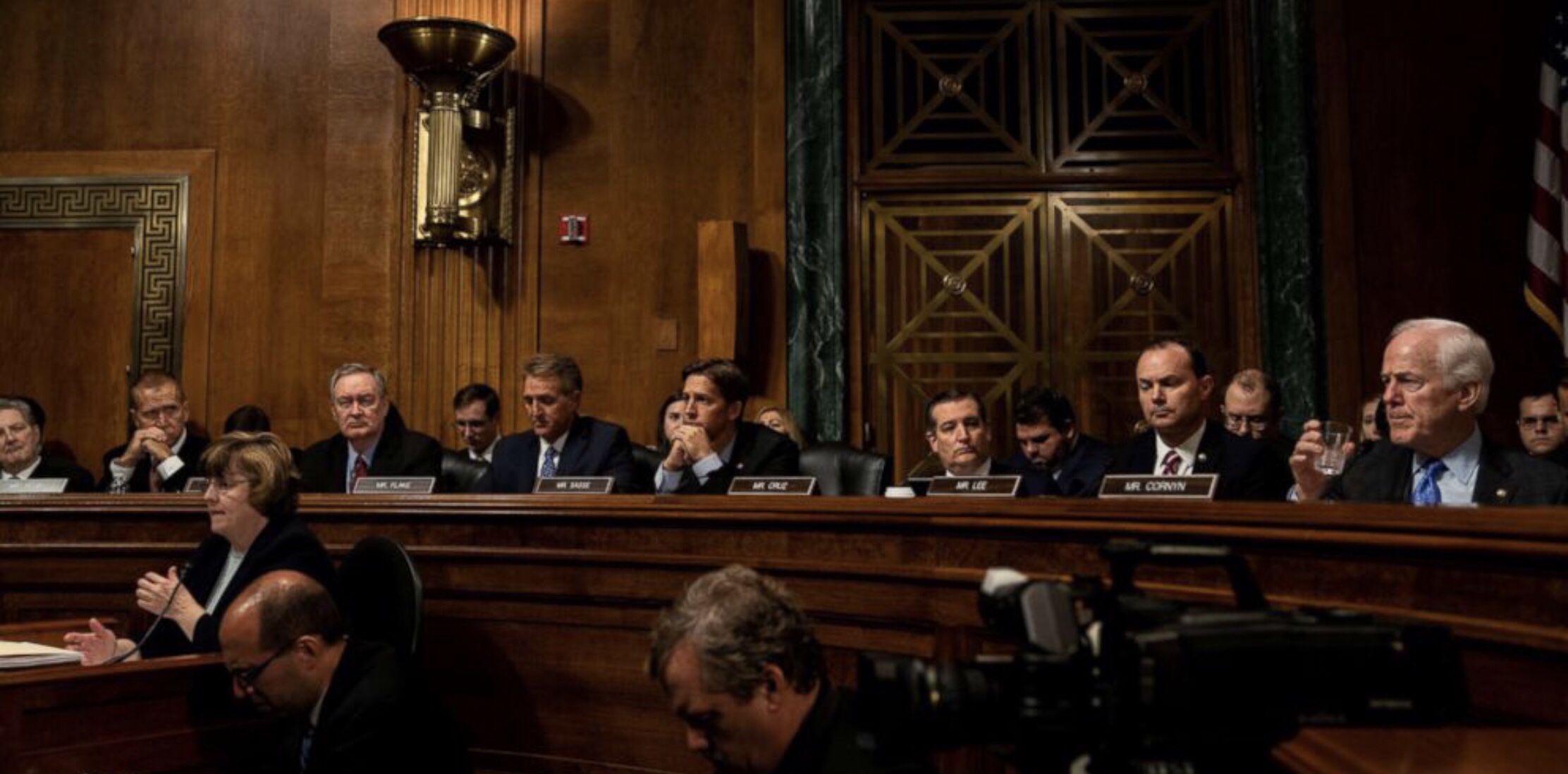
 The heartbreaking realities of everyday Americans absolutely demand a moral response. Our political system, enslaved by corporate interests, has little concern with responding to those real needs so it creates new ones that it can respond to. Football players are kneeling. Illegals are stealing your jobs. Gays are marrying. All lives matter. On and on it goes.
 Another path is harder. The path of the Church is one in which the whole community is shaped by the regular and rich encounter with Christ in Word and Sacrament and finds their voice in the message and voice of Christ. This takes longer. This requires not just preaching prophetically but listening prophetically – listening to what’s moving in our shared life, our shared burdens, our shared hopes. That sharing is not just between one Christian and another but between the gathered people and Christ. This kind of sharing can break the cycle of violent indifference and indifferent violence rather than feed it.
 Let’s just start at the beginning.
 There is a point at which a people lose their collective soul not through actions they commit but through the actions they willingly allow to be committed on their behalf. We are fast reaching that point. We are reaching the point where our leaders are mortgaging our soul for the sake of cheap points scored in political gamesmanship. We are reaching the point where an inveterate liar who is now our commander-in-chief is appointing people to high position who have broken not the will of the enemy but the souls of barely-eligible-to-drink-and-vote men and women by making them shatterers of bodies, minds, and spirits.
 Is our whole self brought to our whole awareness of the whole grace and mercy of God or is this a fragmented and Balkanized hobby that we consign to Sunday out of either malign intent or benign neglect? Catholic is not a team mascot but an encompassing reality in which what is universal is not our consumer opprobrium based in class distinction but our whole, obedient, quiescent and rebellious self making due with the perfect wholeness of Christ made known in the other, in the self, in bread made Bread, in wine made Wine, and in self made Us.
 The grounding, for me, has come in hindsight. I am not sure that I could have articulated why we made that choice when we did. My Rector, the first Convener of the Society might have been able to but I only know that I concurred. I was not a priest yet when we started the Society. It was an odd position to be starting a Society for priests when I was only eligible to be a provisionary member.
 A Desert Father