A Mosaic Faith: Putting the Pieces Together

Recently, we have undertaken a new outreach program at our mission in the Hill neighborhood called GARLiC (Green Art Renewing Life in Community). Its purpose, as outlined ably by its program director Sarah Raven, is “to encourage ‘upcycling’ and green art as a means to reduce consumer spending, increase art appreciation, and help the environment by reducing municipal waste in ethnically diverse, low income, urban neighborhoods.” Essentially we are working to take that which is being discarded and using it to create something beautiful.

I have been thinking about the implications of this sort of work for the broader life of the Church and keep wondering what it is that we are throwing away in our rush through modern life? Are there people, institutions, liturgies, prayer practices, and more that we are ignoring in our attempt to find something new that seems more relevant?  What do we make of these disparate pieces?

My sense is that we are moving into an age of what I might call mosaic ministry. A mosaic takes bits of that which is broken and creates a work of art – sometimes even sublime and breathtaking art. How can we, as a community of believers, take the pieces of our history and stories and arrange them alongside new ones to form an icon of Christ in the world. Just gluing together broken pieces in an attempt to hold on to an old form creates a cracked (and unstable) replica of the former rather than a new work of beauty.

As we look around the Church there are troubling signs abounding. All of us know the challenges of declining budgets, decreasing attendance, strained volunteers, and compassion fatigue.

Yet I wonder how much of all of this is linked to the simple fact that church, as we know it, doesn’t work? There are pockets of success to be sure, but all around us we are witnessing the geography of our society shifting dramatically and unceasingly. This doesn’t mean that the Church doesn’t work – but that our understanding of what it means to be the church is cracked, breaking apart, and no way of gluing it together will force it to hold its old form in the face of new stresses.

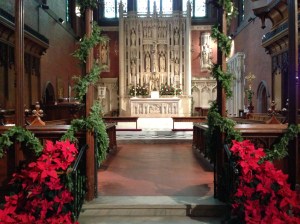
christ mosaicWe are entering a time of mosaic ministry – a time when the pieces have to be gathered up and put back together to form some new work of holy beauty that shows forth the image of Christ anew.

Our society is one that is hyper-individualized and networked rather than organized. The cultural trends are such that any church that is simply an institution that one signs up for is bound for failure. The same organizations that once represented the backbone of civic society (clubs, fraternities, civic organizations, boards, &c) are facing similar decline. How many people are flocking to join the Elks? Sure they do great work and have a storied history and yet they are on the downward slope of decline.

Most fraternal organizations have seen a decline of a third of their membership or more, while others, including the International Order of Odd Fellows, have seen a membership decline of almost 98 percent in the past century. Yes, the Church is not the Elks club, but it is facing the same cultural headwinds that these sorts of organizations face.

Our task is in some ways much simpler – we have to rediscover our identity as a people who are always seeking the answer to the question, “Who do you say that I am?”

Ever more elaborate churches, over history, have been designed to make visible the invisible – to say something of the glory of the Holy One, the mystery of that Being, and the coming together of the divine and the human. As we focus our common life on answering anew who Jesus is, we can build a Mission-Shaped church that, by its life and witness, makes Christ known as it works, prays, and gives for the glory of God.

The structural, programmatic, and institutional answers to our dilemmas will be almost irrelevant (or at least as relevant as choosing the kind of marble for a tombstone) without serious work as a community of faith to offer a compelling answer for ourselves and for the wider world about our belief in the person and power of Christ in our individual and common life.

Who do we, as a community and as individual believers, say Jesus is? How we answer that question will shape, guide, and direct mission and ministry. How is he reaching out to us (and us to him)? Who is he calling us to reach out to as his Body? Where is he leading that we fear to follow?

More important than what God is calling us to do is who God is calling us to be as a people formed in the image of Christ. How do we live into the reality of Baptism as a community in this day?  How do we see ourselves fitting into the mosaic image of Christ in which each piece helps form an icon of Christ’s living Presence in the Body?

We can thank God that we have the pieces all around us, especially as Anglicans, to face the challenges of the day. We have a rich liturgy, an appreciation for complexity, a respect for individual conscience, an identity that stretches back into the deepest parts of the Christian tradition, and an understanding of God’s action in the Sacraments. Most importantly we have the witness of Jesus Christ to fall back on when the challenge seems too daunting.

These and many, many more pieces are all about us waiting to be put together in new and creative ways that tap into the richness of our shared history to offer a still more excellent way of being the Church. People are aching for a Church that is less a monument than it is a movement and is less entertainment than it is a way of life.

Robert+

Keeping up with Tradition: Of Cannoli and the Church

Normally, I would not devote Christmas to writing a blog post.  But thanks to the miracle of modern technology and the dependable lack of dependability of our domestic air carriers, I am currently bestranded at the airport with not much else to do but write!

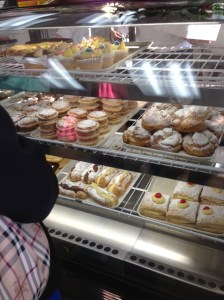
Yesterday, on Christmas Eve, my wife and I visited Lucibello’s Bakery in New Haven.  We were looking to pick up cannoli for Christmas.  When we arrived, we found quite the scene!  We were number 52 and they were on number 5!

lucibello


No one there seemed particularly perturbed to be waiting, in fact everybody was in pretty good spirits.  As I was waiting, I began to listen to the folks talking in line.  One said, “Oh, I remember when this was on Chapel Street, going in as a kid” another said, “This was always part of our Christmas.” People walked out with boxes stacked high, full of pastries of all sorts.

While in line, I happened to read a piece from the New Haven Register about the bakery.  There were a number of lines that jumped out at me about this 80 year old bakery.  The article reads, “Customers who have been frequenting Lucibello’s Italian Pastry Shop for years — many long-time shoppers who came as children now visit with their own kids in tow — find a menu there today that remains true to the store’s origins.”

l2The owner says of the shop, “We just never changed anything. Everything is still made by hand, from scratch…” That, he said, has been a key to the business’ longevity.

My favorite line in the interview was when the owner attributed the success the bakery has seen to “keeping up with tradition.”  He says, “From what everyone tells me, nothing has changed from when they were little.”

I love the phrase “keeping up with tradition.” There is something marvelous about the notion of studying, praying with, reading, and taking in the traditions we have as if they are living, vital things and not merely the remnants of a charming but bygone era.  In an institution like the Church, keeping up with tradition is our role and duty as we curate the mysteries we have been handed.

Of course, there are alterations and advances in the life of the Church that we should welcome.  But there are also such departures from the history, theology, and tradition of the Church that the believer is left lost and without any significant tie to or understanding of what and who we are.

It is our role, as leaders, to keep up with the tradition.  To know it so well that when we must make alterations or innovate, we know exactly why and how and what the intended consequences are and what unintended consequences might be wrought.

I am convinced that there is a deepening desire among many for places, experiences, and encounters that resonate with authentic history and communicate something deeper than what can be found in the mass market.  Lucibello’s, the bakery, is a wonderful example.  It is locally owned, the owners live in the community, they are steeped in a long history, they understand the tradition, and more importantly they understand just what that tradition means to their customers.

The owner might rather like to innovate with some new pastry, and says he has slowly added an item or two here and there, but the root of their success is their understanding that their customers are coming to be part of an experience – something that hearkens back in time and place and tells a much longer story.  He says, “It is rewarding, he said, to see the loyalty of Lucibello’s customer base. The bakery has become part of family traditions for generations of local shoppers…”

Moreover, they specialize in what they do well.  We could learn from this as a Church.  We will probably never do certain things as a church that other churches seem to do so successfully.  The key to our longevity will be knowing what we do well and doing it with intention, reverence, and care.  The key will be keeping up with the tradition.  At Lucibello’s, “We’re kind of unique here,” says the owner, specializing in only several certain items rather than many different types of cookies, cakes and pastries.  “Customers like knowing they can find their same favorites at the shop that they did years ago. It’s the memories…”

l1Another customer recalled, “It was old-fashioned — cakes in the window, glass cases all over the place,” he said, adding little has changed over the years.  The article closes, “The day before Christmas, it’s ridiculous,” he said referring to the crowds.  Faggio said he looks forward to the holidays, when it is not uncommon for customers to be lined up early in the morning waiting to buy family favorites. “That’s when you really see the tradition,” Faggio said. “We have lines out the door. It’s amazing.”

It really is amazing.

As I celebrated mass yesterday and read Luke’s account of the Nativity at the midnight mass, I couldn’t help but reflect on the nature of tradition.  How we pass on from one generation to another that which is holy and vital in our faith.  We keep alive this story of God with Us in a way that renews the promise of the creche in each of our lives and homes.

l3

There are many of us who love the new in the Church.  I am one of them, I am always looking for some new program or project that we can take on to deepen our missional engagement with the city around us.  Yet no new program, project, or liturgy or can have any meaning without a connection to the deeper tradition of the Church. Without a grounding in what we have received we are simply making up the faith we would like to have rather than deepening our life in the one we have inherited.

For example, when someone decides to innovate and design their own liturgy without the benefit of the centuries of liturgies we have been handed, they are selling short the movement of the Holy Spirit over our history – a movement which has brought together the strands of theology, prayer, and reason in countless ways.  It is not ours to decide, on our own, if it is somehow outmoded.

Those coming to our churches, like those to the bakery, are looking for that which draws them back.  They are searching for that thing, that intangible and indescribable experience that they once knew.  They are looking to be part of something larger than themselves, deeper than their knowing, and stronger than their fears.  They will not return if they find the slipshod, the careless, or the needlessly “innovative.”

I think of my family’s return to the Church.  It was through Rite I morning prayer with hymns and anthems and an East-facing celebration of the Eucharist.  Anything more innovative than that would have sent us searching again – for what we could not have said – only that we kept not finding it.  The generation before us has dedicated itself, in so many ways, to undoing the traditions of the Church.  In many ways this has been necessary and healthy.

The new task is the more complicated and deeper one – reconstructing that which has been lost and rediscovering those elements that could be carefully and lovingly restored.  Let’s commit ourselves to keep up with the tradition – to dwell in and with it so that we can draw others into its mystery and welcome still more home.

Robert+


‘Souls Matter’ – A Conversation with The Living Church

Recently I sat down for a lovely conversation with Richard Mammana (of Project Canterbury fame) and The Living Church to talk about ministries at Christ Church, New Haven.  Below is a snippet of said conversation and a link.

What are your hopes for the Episcopal Church?
“My hopes for the Episcopal Church are that we can recapture two things that I think we have had in our history. One is an evangelical zeal. I think we need to recapture the sense that what we do matters because souls matter. And the other is that we can recapture the catholic senses of discipline, worship, adoration, and service. My hope for the future of the Episcopal Church is found in that blend of evangelical Catholicism that is at the heart of any great period of the Church’s history.”

‘Souls Matter’ – From the Living Church

The Christmas Riot: Or The Night Mabel Saved Christmas

This post comes about from a conversation among the clergy here about just how long and how boring a sermon one could preach at the Christ Mass before a riot broke out…

‘Twas the night before Christmas and all through the house,

Mabel was stirring and shouting “Oscar you lout!”

For Mabel intended midnight mass to attend

and no lazy husband her plans would upend.

So into the Crown Vic they did clamber,

surprised by each light, bemoaning the clamor.

Mabel knew that this night could not get much worse

for there was no parking unless driving a hearse.

Yet park they did and the hike they made

trundling up stairs, through red doors, and into the nave.

Yet worse got this night for Mabel did read that tonight she would hear

Neither Healy nor Wilan but MacMillan, O Dear!

Suddenly her nose did pucker and tingle

for the smell of popery with pine did mingle

Wide swung the doors and poor Mabel near cried

for from the deep of the church incense she spied

She commenced to cough, and to wheeze and to mumble,

“From bad to worse does this old church a-tumble”

With organ alive and banners held high the procession commenced

and dazzled many an eye

Yet Mabel, unmoved, narrowed her gaze

for this night would get worse, just let her count the ways

The subdeacon chanted, the choir sang

the procession formed, making its way

Of course next to Mabel did the deacon plop

He commenced to chanting and swinging, and just wouldn’t stop

Then Father took to the pulpit and starting all mild

bid the people to ponder the mysteries of a child

On and on Father seemed to go,

When would this end Mabel wanted to know

Yet Father had fixed in his mind that what the people did need

was to know the meaning of Christmas, of the Incarnation, and the Creed

So on and on did Father soar

filioque, and Arians, and Gnostics, and more

A five and twenty minutes did Mabel grumble

At thirty, she thought she might surely crumble

At last at forty she could take no more,

A hymnal took flight, through the air it did soar

It struck poor Father square in the nose

And gobsmacked he paused, he simply quite froze

Yet Mabel was not done,

not yet and not quite

For she knew that she must,

simply must save this night

A riot she led, down came the greens

out went the banners, for that temple she’d clean

Amid the din and the clamor did Father escape

yet not without losing his lovely long cape

Afraid for his life, into the night he ran

wondering how this all went so very off plan

Yet Mabel, good Mabel went home on that night

knowing that she’d saved Christmas and sent popery to flight.

Fearful Symmetry and the Silence of God

Tonight, I went over to a nearby church’s brief prayer service for the victims of the school shooting in Newtown.  We sang “O God our Help in Ages Past” which is a hymn that I love.  Yet, when we got to the line, “A thousand ages in Thy sight are like an evening gone” my mind and heart clinched up a bit.  I wondered if a thousand ages are so fleeting, then what matter are 5 years or 10 years?  For a moment, God’s seeming indifference to the life and death of kindergarten children was overwhelming in its utter silence.

We sang hymns and said prayers but I just heard great silence.

I listen and I hear quiet.  I hear pain.  I hear loss.  I hear anguish.  I hear dreams gone dim and hearts made still.  This is a time when words ring false—when songs grate—when bells ring hollow.  Today I hear great silence.  A silence in which we listen for the voice of God, the whisper of the comforter.

The question deafens in the silence though.  Why?  What kind of God allows this?  Our answers and questions are drops in a pool, in the tide of that same question asked over and over in myriad ways across the centuries.  The distance between life and death seems enormous and yet they are woven together in these instants when we are made numb by the news.

We, and all who have come before, and all who come after face life’s fearful symmetry.  Life’s fearful symmetry – all are born in joy and all go down to the grave.  Often, in the face of loss, I say empty things and am speechless.  And we are all often speechless in those times.

Yet God is not speechless.  God speaks through and in tears. God speaks to us constantly waiting until we hear him.  When our hearts ache, when our eyes dry up, when we don’t know if we have another day left in us…there is Christ, there is God, there is humanity.

Where is God, we ask ourselves, to let this happen – to let loss come upon the innocent?  God is here.  God is now and with us and in us.  God was on the cross and is the victim on the altar and is in the hearts of those who mourn.

We belong to a faith that marks the full measure of shed innocent blood.  The answer we have is proclaimed loudest in the starkness of the cross.  In its fearful symmetry we find some measure of God’s answer – for in that moment of Christ’s seeming stillness awakened unending life.  There are no easy answers to life’s hard questions – and the silent cross is perhaps the hardest and most unnerving of answers to the flood of questions we would pour upon God.

From creche to cross, this is the symmetry of Emmanuel – God with Us.

That same God who is in us knows our sufferings and shares in them when we are broken; he is there to hold us together in sorrow and triumph. When we suffer and when we help others through their grief, we are taking on the mantle of Christ whose wounds are our healing.

The final judgment is presented as an instant, a moment in time that shatters time.  “Therefore you also must be ready, for the Son of Man is coming at an unexpected hour.” Death too comes at an unexpected hour.  It catches us unaware – especially when it takes the young.

It calls us up short in what seems an everlasting instant.  But just as death comes at an unexpected hour, so too will joy.  So too will new life.  So too will resurrection for us and for those we love.

We know this great hope and yet we also know anguish and pain.  For those who love much will grieve much.  It is in the pain of loss that we know we have loved deeply that we have been loved in the way God calls us to love.  It is in our knowledge of loss that love – and love’s often painful price – is all too often revealed.  This is the painful symmetry of love and loss.

The Old Testament promises that mountains and fields shall break forth into song and the trees of the field will clap their hands together for they are the scene of salvation.

One day we shall hear those songs of joy.  We will hear the clapping of the trees.  We will sing out, “Where, O death, is thy victory?  Where, O death, is thy sting?” Trumpets will sound, cymbals will ring, bells will peal, shouts of joy will echo through the hills and halls of Heaven, and the Angels will thunder out “Alleluia!”

And over all that joyous noise, through all that loud celebration, we will hear the voice of those we love whispering, “You are home.  I am with you.” This is God’s joyful symmetry.  Even as we go down to the grave, we make our cry – Alleluia, Alleluia, Alleluia.

Today I hear silence though.  And I pray for the confidence that the silence will one day lift and we will hear, feel, taste, and see the joy of the Lord with us.  I am listening, in the silence, for the sound of God mourning with us.

Robert+

Want Justice? Use the Prayer Book

I have been pondering the intersection of prayer, authority, and justice lately. There seems to be an increased need for an honest conversation about what a more just society looks like – as there is always a need for such conversation. Within the Church, we are often conflicted about how to respond to the demands of injustice.

We take particular holy days and make them statements, for example, turning a Stations of the Cross into a protest against the death penalty (let’s set aside for a moment what an interfaith Stations of the Cross is) or we make Good Friday into a day to talk about Earth Day. I am not opposed to using liturgy to address the deep needs of the world but it has to first express our deepest need – union with Christ and one another.

With the advent of Enriching our Worship and other options for worship, individual communities often seek to use their liturgical time together to speak truth to power in some way and to remind themselves of their Christian obligations to strive for the dignity of every person. The problem is the increasing disconnect between what worship is and what its purpose is.

Ultimately, worship is an expression of our desire to be united with Christ. In Baptism and the Eucharist we are given the most fleeting of glimpses of the deepest permanent reality – that we are at one with Christ. All we can do in worship is give thanks – to lay ourselves at the foot of the throne of grace and offer all that we are.

Worship is not meant to be a didactic exercise by which we talk about justice – it is designed to so clothe us in the fullness of Christ and be doing so empower us to proclaim justice at every turn of our lives and beyond.

Last year, a popular article that seemed to be making its way around clergy circles was one that exhorted Christians to get out of their churches, not to worship, during Holy Week because the world’s needs were simply too great to waste time on such a thing as worship.

This is incredibly privileged.

It is privileged because it assumes that we are all at some elevated state of grace that will enable us to do justice without ever being truly formed in what righteousness is. Every member of our congregations is being formed for the work of justice with each and every act of adoration. Worship and adoration lay the groundwork for a full sense of belonging in Christ that can shine forth.

Jonathan Myrick Daniels went down to die because he knew that the Magnificat was calling him to go from strength to strength. It is not vague calls for justice that will truly transform an unjust world but an understanding of our fundamental unity with one another in Christ that will. God is at work in the world – we need to trust that enough to not think that acting justly means acting incessantly. The work of justice is, necessarily, the work of common prayer.

John Macquarrie writes of Baptism, “Sin, or rather the conviction of sin, is the presupposition of baptism. We have a sense that all is not well with us.” The baptismal mystery is that we understand ourselves to be washed from sin in Baptism. Yet, we also recognize the reality of sin in our lived Christian experience. How do we hold onto that centered place in which we find ourselves at one with Christ, literally donning Christ at the font?

It is only through ongoing Communion, as the whole gathered Body, that we can constantly claim and reclaim the fullness of Baptism.

Justice cannot be studied in isolation from the rest of the Christian Sacramental life. To do so is to impart a magical quality to the moments and to disconnect them from our encounter with the world rather than framing them in the totality of belief, practice, life, death, hope, regret, grace, and pardon. Each Sacrament must be taken as part of the whole of the experience of Christ’s presence in and with us. Baptism, that moment of washing and donning, cannot be a moment but must be at once a beginning and end of the migration of lived Christian pilgrimage – a pilgrimage made as the whole Church.  Our entirety is baptized. Every aspect of our lives is knit to the divinity in Baptism and we are provided a divine source from which true justice can flow.

The individual believer or even communities are ill-equipped to do this work on their own. We are not meant to be lonely charity workers – we are called to be the Body – to see and know the world in the light of the Cross.

When our own self and the fundamental essence of the other are viewed in light of the Cross, they take on inviolability. That inviolability is inherited, for the Christian, at baptism and defines us and the other as linked to the Creator in such a way as to soften the need for competition and redefine common interest and true community.

This True Community, the Church, is one that is ever on the cusp of revelation and is ever-called to greater depths of relationality. Such relational reality is truly possible with honest appraisal and examination and constant rebinding to Christ. We have no source to understand justice other than Christ. Of course, there are other social and religious models for what it means to act justly. But the Christian is given one name by which they call themselves and by which the whole of his or her life is formed.

That encounter with Christ takes place within the gathered Body. It takes place within the shared hopes, memories, and aspirations of a people. It takes place within and beyond history. It takes place before and after death. It is always being offered. It takes the whole of the Body of the Church to begin to express our thanks for the gift offered in Christ – it takes the whole Body of the Church with one voice offering thanks and receiving new hope. It trains us to see all of Creation through the light of God’s ideal.

I suppose this brings me back to the title – the Prayer Book leads us to a more just Church. Justice is not each of our individual conceptions of right and wrong being traded about until someone makes better choices. Justice is not being made to feel bad so that we take part in wan acts of charity. Justice is the whole turning of our selves, our communities, and our Church to the will and mind of Christ. It is finding such unity with Christ and one another that we can do nothing but act justly.

This will not happen via antiseptic, didactic chats about God.

Our shared language, in the Prayer Book, is the expression of our communities’ many different hopes over the centuries. It is that which articulates the shared knowledge that we are being brought to our perfection in Christ.

Justice is not revealed by us to the Church – it is revealed by the Body to us. When we walk the Stations of the Cross, we are becoming that story. We are becoming self-offering so that we can be likewise to the world. This is not the product of an instant but is the result of a lifetime of worship with so changes us that we are a true community – not for the sake of getting along but for the sake of Christ. This necessarily demands a discipline on our part and a willingness to not hear every pronouncement we want to hear from the pulpit or in our prayers.

Every community that abandons the Prayer Book abandons our deepest hope for a more just Church for they have distanced themselves from the whole body. The cost of proclaiming one’s presumed enlightenment is often to be self-separated from the community.

A Church like the Episcopal Church that is without precise doctrinal articulation or a magisterium cannot allow itself to spin apart in the pursuit of theological or social agendas. The source of unity we have, as a worshiping body, is the Prayer Book. It is our means of offering the praises of Christ that we have offered through the centuries and beyond. It is our theological affirmation as a whole gathered Church beyond time and place.

The question “Where am I?” cannot have merely spatial meaning in the Sacraments. The question must be understood in relation to where one is in relation to the very divinity one is encountering in the Mass when and where one is always and everywhere giving thanks and praise. The memory of the believer and the memory of God become a shared space in which the believer and the divinity seek unity, calling and responding to one another. The journey of Baptism requires that we always are asking, “Where am I?”

The Church is the workshop of the soul where we are ever molded and formed in Christ’s own image. It is the answer to the question “Where am I?” for we are home in Christ. The soul is the site of our participation in God. That soul is burdened by the super-impositions of the individual that distance them from understanding their life in, with, and of the divine.

We ask God to make us aware of our begracement, and to free us of the need to acquire new forms of self-definition which propel us toward sin and away from true self, other, and God. This can only happen in the context of community – and not just our local community but the whole Body of the Church – and it is the heart of justice.

In a time of increased theological confusion, and even deeper confusion about just who Christ is, theological or creedal waffling will hardly suffice – and will in fact do profound harm. When each community takes it upon itself to change the worship of the Church, they are contributing to injustice for they are weakening the claim of the whole Body to offer one voice. Moreover, they are declaring the inability of the whole Body’s common life and prayer to be a means of grace and to offer the hope of glory.

There might be better prayers to pray. More we can be doing in liturgy. More modern language we could use. There might be many good and reasonable alterations that could be made to the Prayer Book to make it a better book. Yet it is not ours to change alone – it is the collected longing and debated theological reckoning of this Church. It is the expression of the movement of the Holy Spirit across our history that speaks to and through us to this day.

It is designed to change us. The purpose of worship is the adoration of God. A lifetime of shared adoration will change the Church. The Prayer Book can change the world.

Now You’ve Ruined Christmas: On Ironic Detachment and Meaning Making at the Holidays

I suppose I am in a more jovial holiday mode than I normally am this year.  Things that would have annoyed me greatly in the past don’t seem to be phasing me.

Antlers for cats? Cute!

Endless Carols? How jolly!

Christmas Sweaters? How adorably retro!

Even the press of shoppers that normally sends my nerves into a frayed and frenzied state seems to be having little effect.  I am just in the mood for Christmas, I suppose.  I think, maybe though, I may just be in the mood for something unironic and unimpeded by our desire to qualify.

It is easy to bemoan the state of Christmas.  Fox News built an empire on the War on Christmas.  Now the progressive Christian community seems to be taking equal delight in punching back about a War on Advent.  The really frustrating thing about all of this is its utter frivolousness.

Can we please not drag the mystery of the Incarnation through a partisan mud pit?  Can we please not treat the condescension of God With Us as one more chew toy in a cultural tug of war?

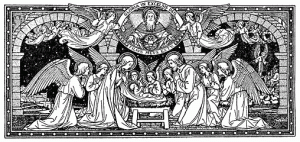
nativity_missal

I suppose that’s beside the point – but not really.  Many seem wrapped up in using the holidays for their own devices.

Prove I love people? Check.   Prove I know the Reason for the Season? Check.  Prove I am no sucker for the mass marketing of a savage and wasteful consumer culture? Check.  Here we have the hope of the nations being reduced to either a political football or a tool for self-expression.

I too would love for every person to be at Mass on Christ Mass day.  It won’t happen.  So I’m settling for the next best thing, which has already happened, Christ among us in the love expressed for one another.  Every good and perfect gift is from the Father in Heaven.  Each gift we offer one another in its simplicity, in its flaws, or in its intention expresses something of the Holy One – because it expresses something of the desire to show love and to be loved in return.

So for those who are complaining about Christ being taken out of Christmas – if you do not plan to be at Mass on Christ-Mass Day, then you’ve got no leg to stand on.  You have taken the meaning out of the day’s name.

For those angered by the mass consumption of the holidays – every holiday, celebration, or event is an expression of the culture it finds itself in.  Enculturation, sadly, does not just mean expressions of cheer we find charming or palatable.  For better or worse, we live in a consumer culture with all of the dangers and the benefits that imparts.  Christmas, the Incarnation, occurs within culture – this culture – and every culture.   This means that even as all things are brought to their perfection, our attempt to honor that greatest gift given to us will be flawed in some way, marked by the incomplete grasp any culture has on expressing its longings and hope.

I am in the mood for Christmas this year.

The temptation is often toward maudlin and well-trod paths of noting how sad the holidays are for some or for ironic detachment that proves something of our sense of self.

I realize all of the myriad and complex ways we can encounter the Christmas season.  I remember postponing Christmas when I was a kid because we could not afford gifts in December.  I remember lost loved ones and Christmases marred by family squabbles and disputes and loss.  So we see Blue Christmas services and the like that acknowledge the grief many find welling up during the holidays.

It is right and holy to make space for those complicated memories.  But it is even more fitting that we situate all of those very human tragedies and shortfalls within the scope of that which we are celebrating – nothing less than the divine taking on those same human trials.  This is not the stuff of forced cheer, false smiles, or ironic distance – this is the full engagement of divinity with humanity.

The dangerous thing about ironic detachment is that it is the exact opposite of Christ’s engagement with us.  It creates distance when Christ would draw us closer.  It builds up barriers where Christ would break them down.  It makes the holidays an intellectual exercise of competitive disinterest yet Christ takes on the fullness of our nature and offers all that he has without reserve or stint in service to the Father.

We are followers of Christ – ones who dwell in the life and rising of the Incarnate Word.  We are meant to celebrate, to embrace, to hold fast to this wonderful and sacred mystery.  So let’s enter Christmas not grudgingly, or half-heartedly, or with resignation, or with ironic detachment, or with partisan agendas, but with the fullness of all the thanks our hearts, souls, and minds can offer.

Robert+

On Spiritual and Physical Fitness: Or Some Lessons of an Annoying Diet

So, earlier this year, around May, I realized that a significant change was necessary for my physical health to remain actually, well, healthy. I stepped onto a scale and found a horrifying number blinking at me from the scale. I got off, I moved the scale thinking it was out of balance. Apparently it was, because the number was actually higher than the first one!

Pairing that experience with dizziness and shortness of breath at times (in part from a history of smoking on and off) and I came to the conclusion that a decisive change was necessary – I know of few people whose metabolisms sped up as they aged and I didn’t think I would be an exception to that. I realized that genuflection had become really my only form of exercise.

So I have embarked, and am still on, a fairly comprehensive overhaul of my physical fitness. Gone are sugar, most carbohydrates, and the like. In their place there is lots and lots of protein. I am now in the gym most days either lifting weights or playing basketball – or both on two-a-day days.

I have approached this with the zeal that many converts bring to their new church home! So far, I am down around 70 pounds and looking to lose a bit more.

What I keep finding myself wondering is why this new burst of discipline and how do I apply it to my spiritual life? What can I learn from the relative success of this regimen that I can carry over to my relationship with God?

Judging by the attempts of various delivery people and others to deliver packages or solicit us for this that or the other, many people assume priests are in the sanctuary 20 or so hours of the day. In actuality, our time becomes rather taken up with the drudgery of many other office jobs – albeit punctuated by times of prayer and encounters with both the holy and the bizarre.

The challenge as I am relatively early in ministry is to find in each day some of the excitement I had in my ordination, first mass, or starting a new program. I find I am very good at starting new things – it’s the regular patterns, routines and habits, that I find far more challenging.

So some of the things I am learning along the way are these:

Be intentional.

This may be the greatest learning thusfar – and one that I still struggle with. Approaching each meal or workout with a level of presence and awareness that makes them more than one more thing done without reflection. It is far too easy to shovel in food or neglect any exercise at all because our bodies seem to like habit. Yet we work best when we are working – actively engaging the environment around us. Even rest should have some element of intentionality to it so that it too is constructive and builds up the soul.

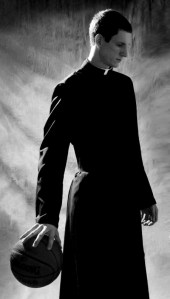
Priest Basketball

just another day on the basketball court…

Our prayer lives fall into this – we skip prayers here or there, don’t make a confession, decide that we don’t have time because of this or that pressing need. Before we are even aware of it, we slip into mindless, unintentional living. We lose track of the source of all of our gifts and begin to treat those gifts loosely and with little regard for their deeper value – their consecration to God.

I am beginning to think that I need to pray and exercise as if my life depended on it. It does.

The Psalmist asks God to teach us to number our days. In that simple prayer lies a powerful recognition that the most precious thing we have is to be cherished – its measure is to be numbered – for it is short.

Our lives, to have fullness, must have a well-balanced hub. Different spokes, when misaligned or out of joint, will cause the whole thing to wobble and then, without warning, to sometimes fly off. Different people have different spokes. We have work, family, recreation, church, health, relationships, and devotion. If any of these becomes misaligned it begins to put stress on all of the others until suddenly the wheel, the whole thing, just won’t move. We get stuck and can’t even begin to figure out how to pry loose that which seems lost.

So It’s Really Not About Me

Each of those aspects of our lives have, at their heart, our relationships with others – with individuals, groups, communities, and with God. None of them can be taken lightly. What I am finding is that the more intentionality I have with fitness, the more aware I become of other aspects of my life that need attention (like prayer).

I don’t really like to cook. I like to eat – cooking I can give or take. Yet, this focus on health has ramped up my interest in cooking which has, as you might imagine, had a positive impact on our domestic tranquility as I have lightened the burden of cooking in our house for my wife. Moreover, I have also been thinking about the relationship between food and faith in a new way – for example thinking about community meals and community gardens in new ways.

Perhaps the most striking realization has been that improving my health is really not about me – it is about the way I interact with and treat not only other people but the fullness of the gifts I am given. There is a reason gluttony is a deadly sin. It is a sin that denigrates the gifts we are given – that treats them without regard. Neither life, nor food, nor any other thing given to man is there for our enjoyment alone – it is there to draw us ever deeper into the mystery of other.

An unintentionally lived life and disregarded gifts are sources of deep sin. They remove us from an awareness of how our action or inaction is impacting others.

A small example. Wearing safety belts. I despise them. My libertarian instincts rebel against them even as my communitarian instincts affirm their existence. I have the rather more Calvinist view that if you really want to stop reckless driving you should put a giant spike in steering wheels. There would be far fewer accidents. Anyway. Back to safety belts.

They are not important solely because they keep me safe, they are important to the nurses who would have to see the results of my neglect if I had an accident. They are important because they spare loved ones the pain of seeing us in pain. They are important because we are better able to help others if we ourselves have not been seriously harmed in an accident.

In other words, taking care of ourselves enables us to care for others. Prayer has the same effect. It is often not about the efficacy or lack thereof of prayer but about the conscious rebinding of our selves, souls, and bodies to the one who holds all in care – and to one another. We pray in two ways – we give thanks and we implore. We give thanks for all the blessings of this life and we implore God for strength, forgiveness, mercy, healing, and for the many other benefits that only the source of all can provide.

Prayer and thanksgiving point us in the direction of making the offering of thanks to God when we can respond to God’s decisive gift and mirror Christ’s offering with faith and say “This is my body which is given for you.” In other words, we – through gratitude and thanks – come to know deeply and profoundly that our whole self is God’s and we offer it back with thanks for God to use us to the glory of his Kingdom.

Everyday is Both Exceptional and Unexeptional

In the poem “Morning,” John Keble gives articulation to holy simplicity. He writes, “And help us, this and every day, To live more nearly as we pray.” It is not deduction of or even emotional response to God that will ultimately lead one closer to Him, but the simple acting of living in prayer. The banality of the verse implies something profound about the Christian life. It is not just the great miracles that communicate the grace of God, but the joys of a well-lived life and a nature that are full of divine promise.

One of the characteristics of Wordsworth that Keble so admired was that Wordsworth had “described the manners and religion of the poor…in an celestial light.” It is simple and yet enormously difficult to live into the Lord’s Prayer, to say the Creeds with integrity, to forgive and accept forgiveness.

It is in the day to day that we find opportunities to live more exceptional lives. In the gospel for Gaudete Sunday (the third Sunday of Advent) we find John the Baptist exhorting that tax collectors should be fair, that soldiers should not do untoward violence, and whoever has two coats should look to give one away.

John was not calling them to anything more than simple discipleship in their daily living. Yet that was the mark of the transformed and repentant life – the extraordinary could be measured by the way these men and women went about their very mundane lives.

The trick of dieting and exercise is to make them at once routine but also see them as part of something exceptional. When done with regularity, intentionality, and discipline, they will carry me forward even when I am feeling a bit off or just not into it. It is by making them an unexceptional part of my day that they are accomplishing what to me seems like exceptional change in my health.

So to with prayer. It is when it becomes part of our daily life – a firm part of our routine – that we are able to be carried by them even when our conscious self is just not that into it. It is in the unexceptional patterns of prayerful living that the exceptional begins to take place as our heart and soul are drawn ever closer to God perhaps despite us and without our awareness.

It happens slowly – painfully slowly at times. I am coming to mark hours and minutes (not just days as the Psalmist would have it) as I tick away when I can eat what or how many more minutes of lung-scorching I can handle. Yet change is coming. It is happening by fits and starts, by turns easily and with great difficulty, in some ways out of force and sometimes with great fluidity.

I am hoping that over time God is doing something similarly with my spiritual life. That the patterns and habits of prayer, repentance, and thanksgiving are allowing some change to happen within that I may or may not be aware of and yet can trust is happening – something exceptional is underway.

Robert+

Simultaneum Mixtum: or a Third Way in Conflict

Yesterday, as part of our didactic discussion with our Saint Hilda’s interns, Fr Bob Griffith of Saint Paul’s Carroll Gardens led us in a discussion of self-giving leadership and what it means to be community in light of both the needs, rights, and claims of the individual versus the identity, cohesion, and goals of the community.

He left us with the notion that there are two things that we should always take into dialogue and disagreement. The first is that the other person could absolutely be right. The second is that Jesus is always the third way.

In a piece I wrote the other day, I commented on the utter sadness of the impasse in the Diocese of South Carolina as its leadership squares off against the Presiding Bishop’s office. A couple of folks have said, “yes it is sad, but what do we do?”

In our current discussions we have to be willing to admit that we could be wrong. We could have an opinion that is utterly contradictory to the will of God and the movement of the Holy Spirit. Thank God for grace. A good exercise for me is to periodically go back and read old essays, journal entries, and the like that I have written. I always marvel at just how obtuse the guy that wrote those was! The exercise often serves to help me frame my opinions now – I could be, and probably am on many subjects, just wrong.

In seeing that we could be wrong, we need to be very, very careful of moves, actions, and statements that cut off the possibility for either deep relationship or reconciliation. We could be the party that has this wrong. Thus, with care and great trepidation, we should nurture and facilitate ties with those with whom we disagree – especially with those with whom we disagree.

There is our way. There is their way. And there is the third way that Jesus offers. His example of self-offering, of pouring out his whole self in service to God, is our model for dialogue, debate, and argument. Jesus is always offering us a different path than the one that society and our ego encourages. He is offering us the path of self-giving.

So. It is sad. But what do we do?

I keep on pondering a movement in Germany that has been around for centuries. The Simultaneum or Simultankirche are churches in which both Protestant and Roman Catholic congregations worship. They are churches which recognize that the witness to Christ transcends their differences.

In those areas where agreement and partnership are possible, there is cooperation. For example, there are often shared mission trips, evangelism, and outreach. In those areas where cooperation is not possible, there is flexibility. So they do not have joint Eucharistic services and the like.

They share the same building but worship at different times.

In many places, these churches have been signs of reconciliation. They often have “hospitality agreements” that spell out how they will partner and cooperate with one another serving as both guest and host in the same space.

We should be considering how to live with such a model in our churches. It would be more than possible for a continuing congregation to share space with a congregation that found itself unable to be, in whole and good conscience, a full part of the Episcopal Church.

Bill the church as “S. Cuthbert’s Anglican-Episcopal.” Share the cost of upkeep, do chores around the church together, polish silver together, trim hedges together, do all those small tasks that are acts of prayer for the glory of God. S. Cuthbert’s could host a shelter together, build a soup kitchen together, do Habitat for Humanity together.

Laboring together and learning to live in the midst of conflict together are the very stuff of prayerful self-offering. None of this requires anything more than patience. And it certainly does not require doctrinal agreement.

I realize that there would be a host of legal, ecclesiastical, and logistical challenges and yet I have to think that this kind of generosity of spirit (admitting we could be wrong and looking for a third way) can help us weather the storm – not for the sake of compromise but so that we can proclaim the unity and reconciling grace of the Body.

We would be able to offer a witness to the grace of Christ amidst strife. We would demonstrate what it means to love one another even (and especially) in difficult times. We would alleviate questions over who gets the property and the silver. We would allow relationships between those who, in good conscience, disagree to continue and even to deepen in the service of Christ. It prevents us from, in our conviction that we are right, shattering a Communion that has withstood greater threats than these.

This may be naïve, but I keep thinking that if Roman Catholics and Protestants can do it, we can too. My hope is that we can find creative solutions to remain in relationship – to remain in Communion. Jesus is always calling us to a third way.

Robert+

Abandoning Communion?

Watching developments from South Carolina today has led me to lament the unfortunate way some words are tossed around in the Episcopal Church. The word I am most concerned with right now is Communion.

The bishop of South Carolina, Mark Lawrence, is accused of abandoning the Communion of this Church. This seems a strained understanding of both his actions and the nature of Communion. I suppose my first thought is to how we use the term Communion most commonly in Church – the administration of the Lord’s Supper, the Mass.

If anything, Communion binds together that which is broken and reveals new and abundant life. It is, by its nature, that which reveals to us the fullness of Christ’s gift of himself for the feeding of his people. The self-offering models for us the way in which we give of our selves, our souls, and bodies to be a living sacrifice. This necessarily requires the laying aside of self in the service of God.

Perhaps the most difficult thing to offer, especially in times of strain and stress, is the self. It is tempting to assert our own rightness and importance when we feel most under threat. Pair this with an increasingly zero-sum mindset that has crept into the partisan language of so-called conservatives and so-called progressives and you will find a recipe for a near blasphemous inversion of Communion.

The truly conservative approach would be to find that which is good and holy in our life together and hold fast to that despite the trials of the day knowing that the passions of the day are not heated enough to overtake our shared life in Christ. The truly progressive approach would be to embrace the multitude of opinions and allow the work of the Spirit to continue among those with whom we disagree.

Yet we find ourselves at an impasse of sad proportions. I suppose what is most depressing is the utter pettiness of the entire matter. A growing diocese (the only one in the Episcopal Church) that is a founding diocese of this Church is no longer going to be part of the Episcopal Church – part of this Communion. In the name of being right both the Diocese of South Carolina and the Presiding Bishop’s office have squared off in a manner that is frighteningly banal.

I say banal because it is the same small-minded, ungracious, and undignified malaise that has taken hold of our politics, economics, and culture more broadly. It is the fruit of 50 years of zero-sum thinking that has crippled our ability to be in true Communion. We talk of the Church being counter-cultural, speaking truth to power, blah, blah, blah.

Never has the Church so looked like the dominant culture around us than in this new fight. Like those souls who found themselves on the losing side on election day, we have the ecclesiastical equivalent of people filing secession papers. Like the utter simple-mindedness of the election campaign, everything is now dismissed as either unabashedly revisionist and unholy or shamelessly retrograde and homophobic. I have heard fellow priests mocking the departing dioceses, priests, and bishops and saying, “good riddance.”

The dialogue is poisoned because our hearts have been. Faith, Hope, and Charity have all taken a back seat to being right.

Never have we been such a sad and wan facsimile of the broader culture.

True Communion offers a shattering of this status quo and a sharp challenge to the norms and values of this culture. In the act of consuming the Body and Blood, we share in the body of Christ with our neighbors and with the worldwide communion across the breadth of space and through the depths of the ages. It is the conscientious rebinding of ourselves to the whole of Christian history, to one another, and to Christ. At the Eucharistic feast, we come together to eat and the Lord confronts each individual believer.

We participate in a communal feast as individuals just as in the last days; we will come as individuals before God in the raising up of the community of believers.  We will be called to account for how we have built up or torn down fellow members of the Body.

No one individual has abandoned Communion. We are all abandoning Communion.

Robert+