Epic Fail? On the Contributions of Clergy to Society

A friend of mine posted on Facebook a link to an article on how various professions are perceived in our society.  Those responding are asked to state whether the profession contributes “a lot” or “some” or “not very much/nothing” to society.  The article states,

…just 37% of Americans surveyed think the clergy make a big contribution to society, about the same as in 2009. Regular churchgoers tend to be more positive about ministers, priests and other clergy members. But even among adults who say they attend religious services at least once a week, only about half (52%) rate clergy in general as contributing “a lot” to society, while 29% say the clergy make “some” contribution, and 11% say the clergy contribute “not very much” or “nothing at all.”

conductorThis poll of public perception gets at the heart of many of the dilemmas we face as members and leaders of the Church.  Had the poll asked what the value of steam engine train operators, elevator attendants, and lamp lighters the answers might have been about as high as they were for clergy.  The times made them less and less relevant until people find themselves charmed at the notion of running across one in these days.

Yet, the Church has never existed to be charming.  We exist as a Body which carries with it a Spirit which is calling us to fresh engagement with the world around us.

I think what I am finding true in many places is that I think the 37% might be being a little generous.  To say that clergy contribute “a lot” feels like some folks just don’t want to hurt our feelings.  The reality is that I am in doubt that clergy contribute much to society – and I’m ok with that.  Now, the deeper question is how clergy do or do not equip others to contribute to society – and not only contribute to society but transform it.

Clergy have a fairly simple job in some ways.  We pray, teach, offer the Sacraments, preach, and console.  Many clergy are being asked to do far beyond those core competencies.  My days now are filled with budgets, meetings, agendas, community engagements, and more.  Yet we begin and end each day in prayer and at the Altar.  Our days here are held in the tension of knowing that our real, true, and lasting work is in the chapel and at the Altar even as we have other tasks that need to be done.

The busyness of many clergy lives has not resulted in the perception that we are somehow bettering society – to the contrary.  As clergy seem to be busier and busier the public perception is that we are less and less relevant.  Of course it would be folly not to note the impact of successive clergy scandals on public perceptions yet I think the issues are deeper than that.  In a culture that is becoming more “spiritual” and less “religious” the middlemen (and women) of religion are going to be called to account.  We are going to be asked what it is that we contribute to society.

Our answer should be nothing.  We contribute nothing to society.  Yet we have the potential to change everything.

Our role is not to contribute to society – to somehow by our own hand build it up.  Our role is something entirely more subversive.  We call people to know the True and the Holy so that they can name that which is unholy about them and work to change it.  We call people to places of peace and refreshment so that they can engage the powers and principalities of this society armed with the knowledge of God’s love.  We hold a trembling hand at the bedside as all the pride of this society fades away as the glory of the beyond is revealed.  We know that there are things being cast down and more being raised up.  We teach word of Christ’s peace as our people hear tidings of hatred and strife.  We hold up the innocent so that justice and injustice may be seen and weighed.  We offer forgiveness for sins and offenses.  We wash through and through in baptism.  We send sinners and saints to the grave.  We marry those who thought themselves unlovable.

All of this does nothing to build up society – it points us to a deeper one – to the Body.

This is not to say that it is a good thing that much of society seems to think we’re wastrels and unproductive.  Yet, it’s a very Protestant question to ask – are we productive, do we contribute, are we doing enough?  The challenge for clergy is that our work is utterly counter-cultural and outside of the recognizable “contributions” to society that are easy to note.

When I worked for Brooks Brothers, one of the things I noticed was how unexpected and unfamiliar good service was for many people.  They had simply had it drilled into them that you went to a box store, grabbed ill-fitting and badly made things, drug them to a conveyor belt of a checkout counter, paid, and went home a bit ensaddened by the whole thing.  Our approach was different and changed their expectations of how they could be treated and how that experience could look.  And we did it by doing the absolutely traditional with a sense that it was important that we did it well and with integrity.

Our church members are not “shoppers” even though many will even use that term when going from church to church.  Yet the experience of so many of them is as bad if not worse than the encounters with big box retailers.  We have the opportunity to change that experience.  To offer the kind of transforming, deep, grounded, forward looking religious experience that they didn’t even know existed let alone that they could be part of.  This is the great excitement I felt when I came to the Episcopal Church.  If you had asked me what the clergy were contributing to society – I would have been a bit flummoxed.  Yet I knew they were changing me – my experience there was something new and unexpected that would not have happened without them.

I didn’t think of them as “productive” – I thought of them as holy.  That grounded holiness I found there convinced me that there was something more for my wife and I to explore.

The role of the clergy is not to contribute – it is to call those who are contributing, who are working day and day out, who are struggling, who are striving, who are lost – it is to call people to holiness of life.  To see life as a sacred thing set apart not for society’s use but for God’s.  This will mean that we spend time in prayer, reflection, and contemplation.  It means that we will be writing, spending time at bedsides, and at bars (for pastoral care of course).  Our work is to help others know the reality of their own baptized lives so that they can go out into the world.

We tell them to go in peace, to love and serve, and we prepare for their returning – day after day, week after week, year after year welcoming the penitent and the proud, seeking the blameless and the bereaved, finding the convert and the curious.  This is work of a sort – but it is really much more about substance – about who we are as the people of God.  It contributes very little to society but it has the power to change it utterly.

Robert

An Antifragile Church: The Power of Disorder, Change, and Failure

I have been reading with some interest a book by Nasim Taleb titled Antifragile: Things That Gain from Disorder.  The premise of the book is that institutions fall into three distinct categories.

The first is fragile.  These can be seemingly strong organizations that have some fundamental flaws that make them unsuitable for growth and unsustainable.  Think of something like Lehmann Brothers which had a storied name and long history but was shattered by the economic downturn.   These kinds of actors necessarily must control their environment in order to survive.  An uncontrollable change in the environment causes them to collapse.

The next organization is the robust one.  It is able to continue decently performing despite the changes and chances of the environment.  It is a generally desirable category because it is a dependable one however it is not given to any great leaps nor soaring achievements.

preview_powerhouseantifragileThe final category is the one that occupies the author most – antifragile organizations.  These are organizations that are not only able to withstand shocks but are able to grow from them.  The author cites examples from industry, nature, and more to demonstrate the traits and characteristics that mark antifragile organizations.  These are organizations that are ready for the unpredictable and can respond to changes in the environment rapidly and with great efficiency.

These organizations actually benefit from turmoil, uncertainty, and stress.  The author says, “Some things benefit from shocks; they thrive and grow when exposed to volatility, randomness, disorder, and stressors and love adventure, risk, and uncertainty. Yet, in spite of the ubiquity of the phenomenon, there is no word for the exact opposite of fragile. Let us call it antifragile. Antifragility is beyond resilience or robustness. The resilient resists shocks and stays the same; the antifragile gets better.”

Organizations that are committed to security are inherently fragile ones.  They attempt to create buffers and barriers against the anticipated threats and sink resources and energy into managing the known.  An example might be salaried employment – there is a stability offered by a regular wage but there is always the catastrophic risk that one’s job might be lost.  Another might be allowing an economy to be fueled by debt – there is no flexibility in dealing with debt so any hiccup causes catastrophic results.  The natural world offers some interesting examples as well.  The human body can take repeated amounts of stress like exercise or even small doses of toxins and grow stronger yet an attempt to decrease risk by not moving or being exposed to germs actually weakens the body over time and makes it more prone to serious injury and failure.

The Episcopal Church is built on a fragile corporate model.  We have layers of bureaucracy that are seemingly devoted to preservation rather than risk-taking.  Each step we take to insulate ourselves from shifts in the environment renders us more susceptible over time to profound changes in the environment.

One might think of a judo type response to changes in the environment as being more beneficial – we train ourselves to see the changes as they come and learn to harness their energy to aid in our own momentum.  As the old proverb says, the reed that cannot bend in the wind will break.  There are winds coming left and right for the Church and we have to learn to bend a little more fluidly lest we break entirely.  One of the things antifragile organizations take to heart is that there is no normal – there is only the creation of a culture and process that can deal with high levels of constant abnormality.  This is precisely the opposite of the model that many of us have been trained in and value.  Yet, the more we can habituate ourselves to react fluidly the more ready we will be when we are forced to act and change by the vicissitudes of the environment.

An example in our current culture might be the shift in church attendance.  We are seeing declining attendance and yet are those coming less bound by cultural expectation?  Are they more ready to reach out?  Can they become a little more fluent in the language of faith and evangelism?  God is giving many of us a faithful remnant who are calling us to lead them into new ventures with boldness.

Antifragile organizations aren’t simply bending in the breeze – they are made stronger by the gusts.  The interesting thing about the antifragile organizations the author cites is that they are prone to small failures – they are willing to take repeated risks because they learn to handle the cost of failures and absorb the lessons into their organizational culture.  They snap back taller and even more resilient.

What risks is your church taking?  What failures have you learned from and absorbed into your organizational character?  Where do you see the need to step out in faith despite the seeming fragility of the circumstances?  These are all questions we’ll be praying on and pondering in the coming months and years.

R+

The Sub-Dean’s Stall or the Variation and Shadow of Change

So, at the encouragement of more than a few, I am now updating my blog title lest people wonder if I am curate emeritus of Christ Church, New Haven.  The old url will forward to the newly titled The Sub-Dean’s Stall blog.  More to come soon!

sub deans stall

R+

Of Kingdom and Empire: Celebrating the Fourth of July as Christians

Having celebrated with thanks the recent Fourth of July holiday, I confronted what has become an annual ritual, the sifting through of my Facebook feed’s many conflicting statuses about the day. They range from the thankful, to the incensed, to the proudly patriotic, to the hurt or doubtful. There are many who take issue with this celebration of our nation and her history and promise. Yet, I often find myself reading with a certain discomfort both those that seem too chest-thumpingly proud and those that seem too knee-jerkingly critical.

crosstreetsI am often asked, as a priest, to account for the many failures of the Church and her people. How can I belong to – not only belong to but preach on behalf of – a Church that fails her people in so many ways. I think the indictment would be too long for any one column and yet here I am, becollared and beholden as part of this Body which too often reveals the flaws of human nature rather than showing more deeply the self-giving love of Christ. Yet, I serve not the Church alone but that deeper reality which is at her heart, the risen Christ whose love is revealed in glimpses and by degrees in the life and labor of his Church.

Like a nation, many of us have not chosen the Church, we have been born into it. We are heirs to the promises offered and receive them without earning or even necessarily being aware of them at a deep and abiding level. There are those who sacrifice to make their promises manifest – soldiers offered in wars to make men free (or at least told that is their mission) and saints dying as the praises of God live on after they are taken into glory.

Both as a citizen of this Republic and the Kingdom to come I commit myself to the promise of both. This necessarily means knowing where our faults are so that we can continue to grow into the ideal that each offers to us and our fellow-citizens. The promises of each can seem beyond our reach and yet we struggle with all the freedom and power given us as citizens of the City of God. Those of us who live as members of the Body are called with our whole self to reflect back to our nation where it is failing to live up to its own promises to its own people and to the world around it. We are the conscience of the whole of society and yet we get it wrong too and are just as accountable to those we serve (the whole of the people of God). So we hold a tender balance in our hands and hearts.

How do we maintain the delicate balance between being held accountable and holding our sisters and brothers accountable as well?

The chief value of the Church is self-offering while the chief value of the state (and especially of Empire) is security (more precisely the maintenance of structures which mimic security). Yet the Church must always be on the cusp of collapse to be the truly leading edge of the culture. We must not share the same addiction to security that afflicts our national polity if we are to truly live as heirs of Christ. Every martyr, saint, and prophet attests to the Church’s only great promise – that we are found in losing all that we think makes us secure.

Look at the many ways in which society promises security – it goes far beyond the military-security complex. We buy insurance to protect our property and inheritance. We buy security systems, health plans, fences, botox, and more so we can hold on a little more tightly to that which always seems to be slipping away. In all of this we maintain the fiction of control because the alternative, lack of control, is unthinkable and terrifying.

Yet the Church can never sell control, security, or the thinkable – we only have the unthinkable to offer with any great confidence. That unthinkable is a God with Us, is secure in a Cross, and is overflowing from an empty tomb.

So we offer not security but the ultimate and greatest insecurity – that God is calling his Church forward, over the edge, and into great mystery. If he were calling us to security alone then the State would be our great hope – yet we are its. We are the great hope of the nation and the world for we are calling them to a way of being that rests in the promise that the giving of self is known in the outpouring of the cross. There lies our model for how to live as citizens of both a Church and state that too often fail to live up to their promise and potential.

The quest for security has been the occasion for sin across time, place, and circumstance and is the chief temptation of our days – that we can manipulate events and people to hold on tighter and tighter to a world that is ever spinning, turning, and falling away from our grasp. Yet, we can, as Christians celebrate our citizenship in this nation. We can celebrate that we live in a nation that has, at the heart of its national identity, notions of freedom and justice. God can do much with those impulses and is calling his people to model what it means to truly live into them. Just as the Church will often fail her people, so will the nation, and yet we know there are promises made that we are being called to keep.

In Church, we often call God King, or Father, or Lord – we do this not as a way of saying that we expect God to live up to human notions of what it means to be any of them – but that God is the fullness and fulfillment of all of them. We know kingdoms will fall even as the Kingdom endures. We know that fathers will too often abuse or abandon their role, yet we have been welcomed to call God Father by Christ as brothers and sisters. We use these terms because they give us some insight into the nature of God even as we know God cannot be described or circumscribed by those human ascriptions. Being citizens of the Kingdom means that we know the fullness of any definition that we use for God – each of them is swelled to the fullness of their potential meaning in God.

Citizens of the Kingdom are called to know the fullness of the promises of God and to make them known. When we live as citizens of this state we are called to reveal, to work for, to proclaim the nature of justice, the fullness of equality, the essence of freedom. These terms have their essential promise in the nature of God’s call to his people – in how we care for and sustain one another. So we live knowing that we fall short of their fullness and yet we can celebrate that these notions are at the core of our national identity as we strive to make them realized, lived, and embodied. The terms do not describe things as they are – they describe things as they might be – they are promises and potential and that we can celebrate even as we get back to the hard, hard work of making them known.

Robert+

Of Experimental Masses, Real Absence, and Conversion

I saw a note this morning that was related to the Real Presence of Christ and our own need to know Christ not as called into our midst but ourselves as entering the reality of the presence of Christ.  I am beginning to think that the real challenge for myself and the Church more broadly is allowing ourselves to believe in Real Absence – in the actual setting aside of our own needs, distractions, agendas, and longings for a moment or two as we know ourselves in the Presence.

Last night, I celebrated a mass quite different from ones I have celebrated in the past.  It was west-facing first (which still throws me off), very contemporary language, a loaf of bread, music as far from Bairstow and Byrd as you can imagine.  So the challenge I found myself facing was not so much cultural or experiential one – though it was both – but the challenge of letting myself get out of the way a bit so that Christ could make himself known in this way that was strange to me but was obviously meaningful to so many.

UDA-22-20090215-ROCKY

As a Church we often occupy ourselves with one thing or another – right now we are talking about reorganization and renewal.  Yet I wonder if we could profitably spend just a little more time figuring out how to get out of the way.  By that, I mean what is it in our Church that is blocking others from experiencing Christ – things that we think to be central, important, or even vital?

I think this will vary in many places.  In some places the barrier will be a fetishizing of “welcome” over teaching long-shared sacramental practice.  In others, it will be the elevation of doctrine over the needs of real, breathing men and women.  In some places it will be an overbearing bureaucracy and in others an underdeveloped leadership.  In other words, the Church needs a balance brought only by the acknowledgment that we need our relationships, community, and one another as the Body more than we need to be right.  It is in those difficult places that we will be shown, again and again, that the Holy Spirit is continuing to move and call us to new life.

These weaknesses, these blind spots, are often the flip side of great gifts.  The tendency, however, is to lean into those gifts when times get rough rather than and to overcompensate in such a way that glaring weaknesses are suddenly exposed.  It is then that the strength becomes a source not only of strident self-righteousness but spiritual barrenness.  Thus the need for Real Absence – an ability to stand outside of ourselves and genuinely allow the Presence of Christ, needed and longed for, to fill the space we are so ardently trying to occupy.

We have to allow Christ to teach, to preach, to heal, to comfort, to challenge, and to know us in the deep ways that cause us to doubt, for a moment, that we know what is best or can control where we are going.  We have a penchant in this culture for false presence – for the selling and buying of identity so that anything deeper is obscured by a sallow opacity.  The giving up of this – this self-emptying – is at the heart of what a life that can be described as Christian ultimately is shaped by.

Sadly, this whole process is one that Episcopalians are sometimes a little uncomfortable with – conversion.  We spend a good bit of time affirming and even our calls for justice or reconciliation often feel more like attempts to make ourselves feel better about our own enlightenment rather than a real attempt to create change or promote something that doesn’t just mime justice but is actually just.  Conversion is that process by which we know ourselves no longer alone but in relationship with the Trinity.

Once we believe that this relationship is Present and Real – then we can only allow ourselves to be changed and drawn into something that looks more like the true exchange of the Trinity and less like the bartering of selves and desires that forms so much of our cultural milieu.  The only point at which conversion is possible is when we can believe firmly enough in the Real Presence that our only rational response is Real Absence by which we allow ourselves to be formed, shaped, and filled by the Holy in such a way that we realize that there can be no personal piety or private devotion.  Piety and devotion become not means by which we map individual holiness but the path to a deeper and lasting opening of the self that undoes the notion of the hermetically sealed holy life.

Devotion, worship, prayer, service, the study of Scripture, Confession, and more become the means by which a life has its fullness revealed in the encounter with Christ at Font, Cross, and Altar.  Our teaching as a Church and Body must always point toward the fundamental reality that is Father, Son, and Holy Spirit revealed across the ages.  The Church at her most vital is a Body that knows itself formed in the realities of the Trinity.  Revealed in this Truth is the ideal for human nature, that we too are welcomed by Christ to call God Father, that we share in the gifts of the Spirit, that we are Sisters and Brothers.  This is where the Church might need to get out of the way a little bit – to practice Absence – so that the many longing for something more can see and know it by our willingness to be something less as Real Presence is felt and known.

Robert+

A Book, a Vacation, and a Move

I have blogged infrequently lately as I have taken on a number of other things this term.  First, I am happy to say, a book I have collaborated on with many of the young adults from here at Christ Church and a couple of friends who work with young adults in other places is now nearing completion.  Making it seem much more official is its appearance on Amazon for pre-order.

The book was a real joy to work on – especially to receive the many essays that young adults from Saint Hilda’s and Christ Church contributed.  Reading their articulation of their faith, hearing how living in community was changing them, and reading how they see their faith and service intersecting and feeding one another has been a true gift.  In the book, we have my own essays on different aspects of young adult ministry throughout the book.  These are relatively informal reflections and this is intended as a starter for conversations not as a definitive primer on young adult ministry.  In addition to my own essays, there are reflections from around 20 young adults from around Christ Church as well as from a few folks outside of our immediate orbit who are engaged in young adult ministry themselves (Steve Rice, Bob Griffith, and Erika Takacs).

I have not seen many works out there that feature so prominently the voices of young adults themselves reflecting on faith, the church, mission, prayer, community, and more.  The foreword of the book is written by David Cobb, the rector of Christ Church, and summarizes quite eloquently the beauty that emerges when a group of faithful people come together in a particular time and place to serve God together.

cover

As I was writing the book and having the many conversations that go into such a work, was also engaged in another set of conversations.  I began exploring a new call to ministry elsewhere.  I had the rare privilege and joy to be serving in a place that I love and to work with colleagues of deep faith and good humor and there was no pressure for me to head out the door.  Thus, I was able to pursue a call with a real sense that I was free from the pressure of just needing to quickly find a new job to avoid the bread line as it were.

When I started at Christ Church, I easily imagined myself being buried in the churchyard next to other venerable clergy.  It is a place that is easy to fall in love with and to while away one’s time doing worthwhile ministry and worshiping God in a way that is full of beauty and grace.

cathedralI have now accepted a position as Sub-Dean of Saint John’s Cathedral in Denver and begin there in June.  In many ways, the cathedral offers many of the things that attracted me to Christ Church.  It is a catholic place that prays the daily office, offers daily mass, and more.  It is also a place with a large and active young population and is looking to expand its mission both within the city and far beyond.  Perhaps what swayed me that this was a real call was the absolute joy that many of its parishioners expressed when describing worship at the cathedral – I had a conversation with a fellow who was overjoyed that they offer Benediction every Wednesday night after compline.  This is a place that seems to love to work, pray, and give together for the building up of the Kingdom.

forbidden cityBetween finishing the book and accepting the call to Denver, Karrie and I managed to get away back to China for a couple of weeks with my parents.  I love getting back there whenever I can.  A side project of mine that I am working on is creating the infrastructure there for small groups to do short and medium term mission trips around China.  I hope to have more details to put out in the coming months.

In my final sermon here at Christ Church, I wrote the following:

In this place, through these gates, we learn more of what it means to truly go into the city, to serve in the city, to find in it the presence of Christ made perfectly present at the Altar. This place is not the destination – it is the gate between the Christ made known at the altar and the Christ we come to know in the streets all around us as we go in peace to love and serve.

It is beauty beheld here that gives us not only a glimpse of the glory of the ever after and the beyond but helps us see more clearly the beauty of lives well lived – of faith made manifest in more perfect offering – that reveals just how the church should be.

This year's interns and I at our end of year formal barbeque!

This year’s interns and I at our end of year formal barbeque!

Not only is Christ Church a place that lovingly offers a worship that is steeped in beauty and tradition – it is a place where 22 young adults will live in intentional community next year, that hosts an incredible daily soup kitchen, that has worked to establish a new church community in a neighborhood abandoned by nearly every other church, that is engaging questions of sustainability and creativity through the work of generous and passionate interns, and much more.

I will always be thankful to this place, to the rector, and to the people of Christ Church and will carry so many of the lessons learned here into ministry wherever I go – they have given me a glimpse, in so many ways, of just what the Church is called to be – faithful in prayer, dedicated in service, and both evangelical and catholic in all the ways that are true to both.

Robert+

PS: Of course, this move begs the question of the blog title – I think that I am now leaning toward keeping the current title – unless someone persuades me otherwise!

Beloved in the Lord: The Exhortation in the Prayer Book

Today in Mass (a glorious day replete with the stunning Vierne Kyrie, Litany in Procession, Comfortable Words, Prayer of Humble Access, and more) we read the Exhortation on page 316 of the Book of Common Prayer.  

ImageFor those not familiar, it is a wonderful articulation of the basics of Christian living and Anglican doctrine.  I would encourage any parish to use it every once in a while, especially in Lent, as the lead-in to Confession.  I reprint it below without much additional comment as I think it speaks quite well for itself and I simply want to bring it to the attention of those who may not have encountered it before.

For those looking for a short exposition on Anglican Eucharistic theology, there are far worse places to begin than with the Exhortation.  It has been part of our Prayer Books since 1549 and encouraged careful and thoughtful preparation to receive the Sacrament.  It was to be read the Sunday before Communions were to be offered so that people had ample time to pray, reflect, confess, and prepare to receive Christ at the Altar.  Later, in the ’28 Prayer Book, it was designated that it be read on First Advent, First Lent, and Trinity Sunday.

In its earlier 1549 form, it included the rather more dire warning that those not in a state of charity with the world and fellow man should not come to receive unless “the Devil enter into him  as he did into Judas, to fulfill in him all iniquity, and to bring him to destruction, both of body and soul.” The 1979 Exhortation, while less colorful in some ways, is no less powerful.  Its tone is deeply pastoral and contains within it words of grace, pardon, reconciliation, hope, and forgiveness.

In a day of drive-by encounters, it is a powerful reminder of the dignity of this Sacrament and, moreover, of the dignity of our union with Christ which we should treat with the utmost reverence, care, and honesty.

Again, I commend it for any Christian to read and ponder this Lent.

An Exhortation

This Exhortation may be used, in whole or in part, either during the Liturgy or at other times. In the absence of a deacon or priest, this Exhortation may be read by a lay person. The people stand or sit.

Beloved in the Lord: Our Savior Christ, on the night before he suffered, instituted the Sacrament of his Body and Blood as a sign and pledge of his love, for the continual remembrance of the sacrifice of his death, and for a spiritual sharing in his risen life. For in these holy Mysteries we are made one with Christ, and Christ with us; we are made one body in him, and members one of another.

Having in mind, therefore, his great love for us, and in obedience to his command, his Church renders to Almighty God our heavenly Father never-ending thanks for the creation of the world, for his continual providence over us, for his love for all mankind, and for the redemption of the world by our Savior Christ, who took upon himself our flesh, and humbled himself even to death on the cross, that he might make us the children of God by the power of the Holy Spirit, and exalt us to everlasting life.

But if we are to share rightly in the celebration of those holy Mysteries, and be nourished by that spiritual Food, we must remember the dignity of that holy Sacrament. I therefore call upon you to consider how Saint Paul exhorts all persons to prepare themselves carefully before eating of that Bread and drinking of that Cup.

For, as the benefit is great, if with penitent hearts and living faith we receive the holy Sacrament, so is the danger great, if we receive it improperly, not recognizing the Lord’s Body. Judge yourselves, therefore, lest you be judged by the Lord.

Examine your lives and conduct by the rule of God’s commandments, that you may perceive wherein you have offended in what you have done or left undone, whether in thought, word, or deed. And acknowledge your sins before Almighty God, with full purpose of amendment of life, being ready to make restitution for all injuries and wrongs done by you to others; and also being ready to forgive those who have offended you, in order that you yourselves may be forgiven. And then, being reconciled with one another, come to the banquet of that most heavenly Food.

And if, in your preparation, you need help and counsel, then go and open your grief to a discreet and understanding priest, and confess your sins, that you may receive the benefit of absolution, and spiritual counsel and advice; to the removal of scruple and doubt, the assurance of pardon, and the strengthening of your faith.

To Christ our Lord, who loves us, and washed us in his own blood, and made us a kingdom of priests to serve his God and Father, to him be glory in the Church evermore. Through him let us offer continually the sacrifice of praise, which is our bounden duty and service, and with faith in him, come boldly before the throne of grace [and humbly confess our sins to Almighty God].

_________________

My writing will taper off a bit in the coming weeks as I have some other projects to which I need to devote serious energy.  I look forward to writing more soon.

Robert+

The Consolation of Theology: Or Why We Need Scholar Priests

Recently, I have talked with those considering calls to the priesthood who were turned away because they also happened to have a call to an academic vocation as well. They were told that they were too academic to pursue a call to priestly ministry and that they would have to choose either a vocation to the priesthood or an academic career.

One of them was told that the church needed to find people who were interested in doing things not just thinking about them. Others on another committee mused that they had professors in seminary who were priests as well and just couldn’t understand why they were priests (because they worked as full time academics).

When I went through the ordination process, we were literally told to hide any hint of an academic vocation from the committee so that they would not hold it against us. When I did let slip that this might be something I was considering, I was told dismissively, “We don’t ordain Jesuits in this diocese.” In other words, I had better choose.

In my opinion, this is an incredible waste and a disturbingly shortsighted view of priestly ministry. We need priests and pastors with an academic background just as we need academics with the training and experience of priestly ministry. We are off in a dangerous place when we decide that some of those coming forward are too smart to be made priests.

There is a general anti-intellectualism in American life. Of course, in the Episcopal Church, we pride ourselves on being exempt from such a thing. We are all too happy to talk about not having to “check your mind at the door” when you come to our churches. Yet it seems that you better be ready to do just that if you want to enter the ordination process in some of our dioceses.

We scoff at those who read Scripture literally. Yet we are going to create a Church where the only fundamentalism we embrace is that of individual feelings.

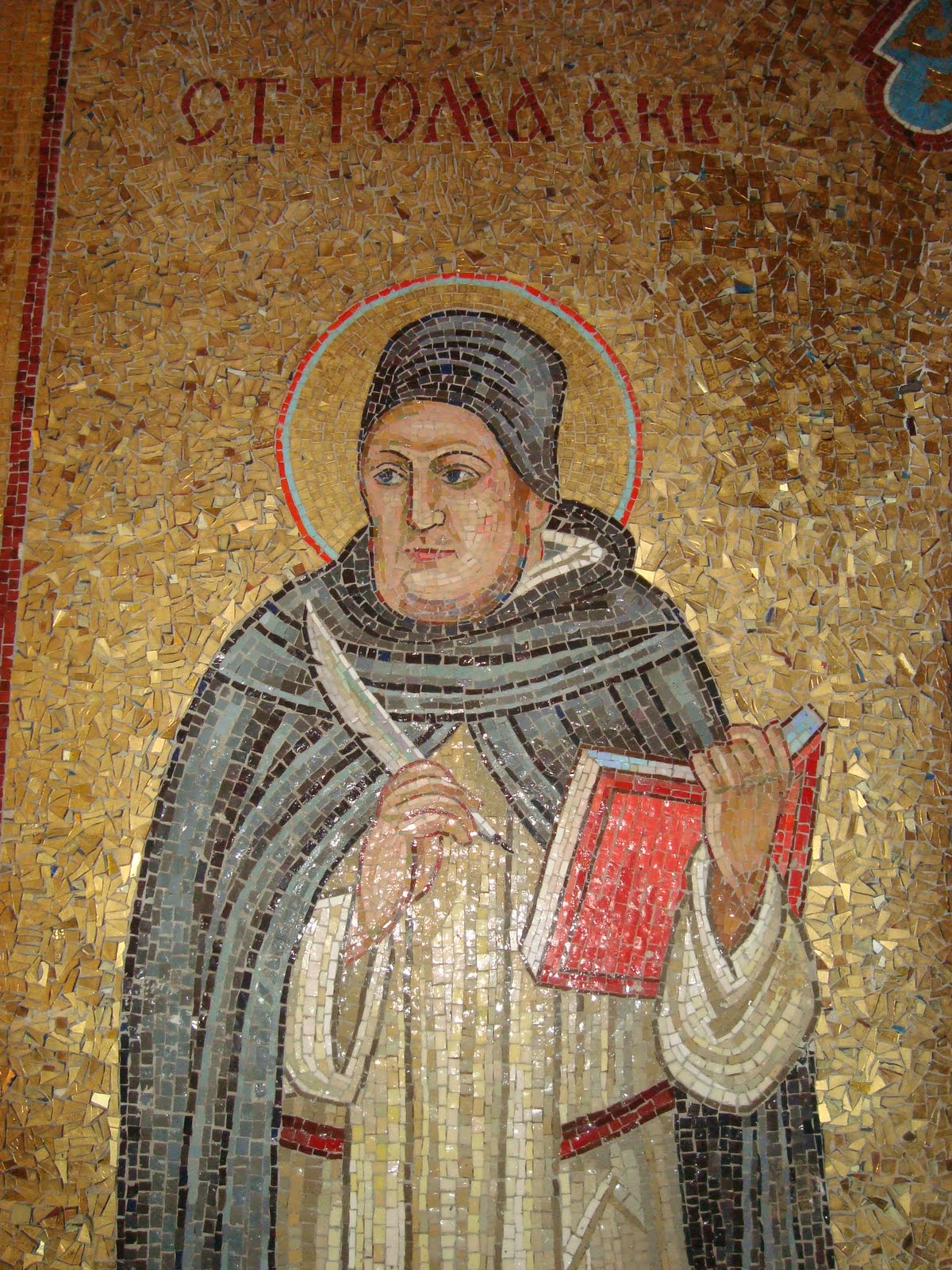
S. Thomas Aquinas

S. Thomas Aquinas

Doctrine – and sound training in doctrine – is essential for priestly ministry.  It is part of what differentiates us from the spiritual but not religious.  I think poor training in doctrine is at the root of why so many are now calling themselves spiritual but not religious.  We need a generation of clergy ably trained in doctrine who can articulate what it is about our particular faith tradition that is unique and life-giving.  Moreover, this cannot be done in isolation from training in other fields like psychology, philosophy, the arts, science, and more.

We simply cannot offer any answer worth hearing if we do not have priests trained to think theologically and who can delve into our tradition in creative ways to answer complicated questions and profound doubt.

How do we answer questions of life and death with no grounding in eschatology? How do we talk about our understanding of ordination and ministry without preparation in ecclesiology and sacramental theology? How do we defend our view of baptismal ecclesiology without adequate training in incarnational theology? How do we talk of Body and Blood without using all of our gifts of history and theology to articulate where we stand as Anglicans?

These are not esoteric questions being asked only on the close or the quad at our seminaries. These questions are at the heart of pastoral ministry.

When someone asks you, “What happens when my mother dies?” When someone asks you, “Why is this happening?” When someone asks you, “Why should I baptize my child?” When someone asks you, “Am I a bad person for seeking a divorce?” from an abusive spouse. When someone asks you, “Why all this sacrificial language?”

There are innumerable questions and there are those hard stories we all hear that challenge our faith.

When a gay teen is beaten in the name of religion, when our fellow men and women are tortured in our name, when women are profoundly mistreated, when poverty is allowed to grow unchecked and unquestioned – when these and countless other sins abound, the only answer we have is sound doctrine.  This is the kind of teaching that throws down the mighty from their seats – and we need priests and pastors who can offer just such profoundly grounded wisdom.

When someone faces these deep questions, the only thing we have to rely upon is the faith we have received. The faith that is the product of the movement of the Holy Spirit over generations of believers and is ours to offer – yet we have to work to understand what it is we are offering. Just as we might agree that faith without works is dead – faith without inquiry, study, reflection, and intellectual engagement is just as dead.

These questions are profoundly theological ones and sound theology is the most pastoral thing we can offer. Of course this does not mean a dry recitation of Augustine on just war. Nor does it mean vague, wan sharing of our feelings about things that make us sad. It requires a meaty answer that is simple in its articulation and deep in its grounding – it requires the kind of answer that Jesus or his disciples would have given.

Doctrine is not about right answers – it is about right relationships.  Doctrine is that which encodes our relationship with the Triune God and with one another.  It is our ultimate guarantee of dignity for it lays out our compact as the beloved of God.  Sound doctrine defends and defines the fullness of human nature and worth.  Without it, we only have human perception to rely upon which too quickly turns to manipulation and capitulation.

We need priests passionate about asking deep questions about doctrine and dignity. We need academic priests.

Especially in a time when we are wrestling with just how many parishes can afford a full-time priest – we are almost deranged to turn away those who might have a gainful way to support themselves while at the same time enriching the lives of their faith communities by their learning. We need many other kinds of priests as well but we are doing serious harm to our Church’s future and our ability to have any kind of relevant voice in the theological questions of the future without raising up a generation of scholar-priests who are faithful, curious, and spiritually grounded.

We should be seeking out faithful academics to call into priestly ministry and supporting priests who might have an academic vocation in every way possible. We cannot afford to have an academy divorced from the day-in and day-out practice of ministry and we cannot afford to have priests who are not devoted to faithful inquiry.

As the bumper sticker says, “If you think education is expensive, try ignorance.”

Robert+

Upping the J Count: Proclaiming Christ in a World of Difference

As the Diocese of Connecticut is revamping its ordination process, I am a part of its new Commission on Ministry. We have been watching videos from prospective postulants who are interested in being part of a provisional phase of that process. They are really wonderful testimonies to the faith, witness, and hope of each of these people offering themselves for service in the Church. One of the metrics I developed as I watched was what I call the “J Count”.

The J Count is simply how frequently does the applicant mention Jesus in some way or another. It gets a little more complicated in that my formula also scales the points based on how early in their presentation the count begins.

Now I have thought of this as purely a matter of interest. Yet, it was indicative of something deeper. Those candidates I found myself most drawn to were those who had something to say about Jesus. Something about Jesus had drawn them in and was calling them to serve him in a new way.

Recently I have read a few articles from Episcopalians on the future of the Church. Some of them are good and interesting. Yet they have no “J Count”. I don’t see in them a clear and compelling vision beyond a mission statement that the United Way might offer. I read a strategic plan for a parish that had lots and lots of talk but almost no J Count.

I realize that many will say that it is implicit in our conversation. It is assumed. People know that’s what we’re talking about.

Yet, I think it is a deep oversight on our part and a troubling one. In this culture we can no longer afford to assume anyone knows anything about Jesus. We have the obligation as the Church to say more about him (and less about us). Being Church will no longer be about educated and previously formed Christians choosing this or that parish based on their programmatic offerings. Those churches that thrive in the new environment will be those that offer a compelling reason not only to follow Jesus but to become a part of the Body of Christ.

I realize this puts us in the awkward position of making some unique claims about Jesus. Make them.

xcdeschades2Make the unique claim that the life of Jesus, the death of Jesus, the Resurrection of Jesus, and the reign of Jesus are unique and all consuming. The Episcopal Church may operate in a pluralistic culture yet we are not a pluralistic body. We are one body with only one claim to uniqueness in our cultural landscape – we offer unity in holiness with Christ.

As I talk with folks from around the Church interested in starting young adult service programs like Saint Hilda’s, one piece of advice I give them all is that if it is not going to be about forming faithful Christians, then why bother? The same goes for the Church. If we cannot, with boldness and foolishness, proclaim the saving power of the resurrection then why would any other claim we have, any other assertion we can possibly proclaim, have any validity or value?

No claim of the Church can be offered without the imprimatur of the cross and without finding its heart in the unique proclamation of Christ. Our calls for justice can only have as much force as our assertion of the uniqueness of Christ’s life, death, and resurrection. The love of one another is the response to God’s love for us in Christ. It is the love of Christ poured out on the cross that provides our model for mission and evangelism in the world. We cannot allow ourselves to believe that there are cultural, religious, or political limitations to the love of Christ which we are bound to share with the other.

For missionary churches in the post-colonial era, there is a degree of guilt present in the collective consciences of those sensitive to the evolving awareness of our collective guilt for the abuses of the past. This awareness is, in some part, a healthy regard for the other and a movement toward accepting the legitimacy of a variety of worldviews and histories without seeing them as invalidating one’s own. However, this awareness has also resulted in, what some would argue, is a potentially crippling reluctance to engage with the other in an open and honest way for fear of reenacting historical abuses or reinforcing past prejudices.

By neglecting fulsome, on-the-ground evangelism efforts in favor of grant-giving or charity, the church has engaged in behaviors of dysfunctional rescuing, avoiding contact, and denying differences. Mission and evangelism are our Church’s Confession that we still have much to learn from the world around us, that we are willing to be vulnerable to the work of the Spirit, and to admit that our blindness, fear, or even laziness have habituated our institutions to simultaneously old and new forms of discrimination.

The missionary enterprise, rooted in the open and confessing spirit, expressly engages the other, recognizes differences, and seeks reciprocal friendship rather than the false hope of “rescue.” Our amendment of life takes place in moments when we act in love, partnership, and openness with others. This joyful amendment of life, in the constant reflection and refraction of the confessing spirit, reverberates through the web of individual relationships the Christian is blessed to be a part of.

No act can be more respectful of another than to share with them that which is most essential to our identity. Pretending that our faith does not call us in specific and powerfully unique ways does a disservice to us and to those with whom we would be in relationship. Evangelism need not be the powerful overwhelming the less powerful.

It must be the encounter of the vulnerable sharing a Good News which has opened their heart and soul to the world around them in new ways – ways we can scarce contain. It must also be listening for the Good News others are sharing with us as Jesus continues to speak in ways we often least expect.

The challenge of evangelizing in a world of difference cannot be met by indifference to that which is essential to our faith – the person of Jesus Christ. This is the heart of any Christian ministry – Jesus has so changed us and called us that his name is on our lips. His life is ours to know. His cross is ours to carry. His resurrection is ours to proclaim. His love is ours to share.

Robert+

Why Charles Matters: Charles King and Martyr and Our Kalendar

Maybe it’s because I have a penchant for quixotic causes, but I have always felt that King Charles I deserves a place in our Kalendar in the Episcopal Church.  Despite our anti-royalist lineage and republican heritage, it would be of benefit to look again at the case for including Charles in our list of remembrances.  I think this is especially so in light of the many, many commemorations added through ‘Holy Women, Holy Men’.  Some of those added were people of rather unclear faith and some were added whose faith might lead them to revolt at the idea of their names being included in a kalendar of saints.

Charles’s witness to the catholic faith, in many ways, preserved the order of the Church that we now call home.  His intransigence set firm the orders of bishops, priests, and deacons as integral to our identity as the Church in England.  Of course, there were excesses in the Episcopate that Charles was defending and yet there was a fundamental character that was worth protecting and defending.  Our identity as an Episcopal Church rests on our conviction, in the Anglican tradition, that bishops form part of the historic and ongoing definition of Church.

We, as Episcopalians, maintain that the episcopate is vital and necessary to the future reunion of the Church Catholic.  We say so clearly in the Prayer Book.

We affirm on pages 876-877,

“…that the Christian unity . . .can be restored only by the return of all Christian communions to the principles of unity exemplified by the undivided Catholic Church during the first ages of its existence; which principles we believe to be the substantial deposit of Christian Faith and Order committed by Christ and his Apostles to the Church unto the end of the world, and therefore incapable of compromise or surrender by those who have been ordained to be its stewards and trustees for the common and equal benefit of all men.

As inherent parts of this sacred deposit, and therefore as essential to the restoration of unity among the divided branches of Christendom, we account the following, to wit:

1.    The Holy Scriptures of the Old and New Testaments as the revealed Word of God.

2.    The Nicene Creed as the sufficient statement of the Christian Faith.

3.    The two Sacraments,–Baptism and the Supper of the Lord,–ministered with
unfailing use of Christ’s words of institution and of the elements ordained by Him.

4.    The Historic Episcopate, locally adapted in the methods of its administration to the
varying needs of the nations and peoples called of God into the unity of His Church…”

Essential not only to our identity but the whole identity of the historic Church is the role of the Episcopate.  It is this office and order that Charles died defending.

He died with his heart and mind fixed on his faith and defending his Christian duty, as he saw it, as his final words attest:

m_CharlesMartyrdomBW_WEB‘I have a trust committed to me by God, by old and lawful descent, I will not betray it, to answer a new unlawful authority; therefore resolve me that, and you shall hear more of me. I die a Christian according to the profession of the Church of England. I have a good cause and I have a gracious God.’

‘I go from a corruptible to an incorruptible Crown.’

‘REMEMBER!’

J. Robert Wright, professor of Ecclesiastical History at The General Theological Seminary, cites historian Kenneth Hylson-Smith’s writing on Charles’s martyrdom in his case for the commemoration of Charles.  He writes that Charles is

“an example in faith and conduct of that Churchmanship which emphasizes catholicity: continuity with and descent from Christ and his Apostles; the central importance in the life of the Church of episcopacy; a deep concern that the worship of the Church should be of prime importance in the life of the Church, and should be conducted with reference and awe; a focus on the altar, in churches furnished and adorned in such a way as to enhance the beauty of holiness and stimulate worship; the centrality of the sacraments, and a doctrine of the Eucharist which stresses the presence of Christ, but which admits of neither the transubstantiation of Roman theology nor of the consubstantiation of Luther; and an affirmation of the English Church as part of the historic Church, joined still, in spite of outward division, by the one Catholic faith.”

With the breadth of commemorations we now observe and propose to observe, it seems a good and natural thing for us also to remember the faith and witness of King Charles whose contributions to our order and doctrine of the Church are lasting and vital ones.  Is Charles a perfect saint? No. But if we looked only for perfect saints, we would have a small sliver of faithful men and women praying for us in Heaven.

Robert+

For more information on Charles see the following:

“The Case for Charles” by J. Robert Wright

The Society of King Charles the Martyr

“Remember!” A Sermon by the Rev’d Tony Jarvis