A Church’s Identity: A Visit to General Seminary with Thoughts on Modern Disputations, Controversies, and Sundry Matters Ecclesial

I hope that readers will pardon any excessive sentimentality or moroseness! I assure you that this too shall pass. Joy cometh in the morning. R+

I visited General Seminary today and was immediately struck by just how much of a shock it was for me to see the West Building boarded off as it makes its transition from oldest building on the seminary Close to high end condo building. Other parts of the Seminary, such as the apartments across the street, are also going through the same transition. General no longer felt like General as I walked up and down the length of the Close.

This is not to say that the change is all bad. The new Keller library looks fantastic. The classrooms in Seabury Hall are modern and bright. There are bathrooms from the 20th century on the Close now.

Still, as I sat in the new Hobart room, I could not help but feel as if I were in a place I no longer recognized. The pieces were there but none were in the right place. I even recognized the paintings on the wall from various other places around the Close.

My idea of General Seminary, the General Seminary that occupied the block of Chelsea Square, the General Seminary that sullenly yet proudly used classrooms that felt like they were last painted when they were used as shooting locations for “Our Miss Brooks,” the General Seminary where maintenance deferred was maintenance denied – always. That General Seminary is no longer there.

No students will hang out on the roof of the Maoist architectural experiment that was Sherrill Hall with a cigar and scotch, watch the lights of the Empire State Building in the autumn air, and label all manner of things modalist, modernist, or some dreadful combination in between.
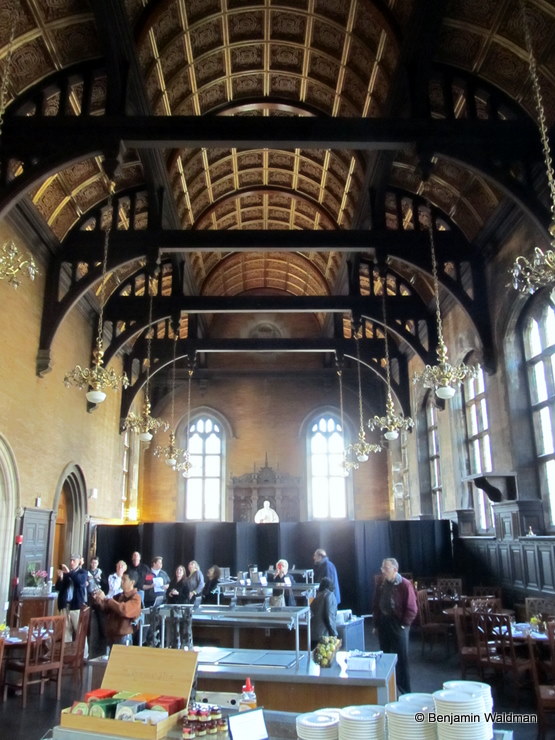
Like so many things the place was a product of countless moments. It was map quiz liturgies, Solemn Evensong, class pranks, St Patrick’s Breastplate, the Hogwartsesque refectory, Fr Wright’s corrections and reproofs, Dick Corney’s cram-packed blackboard, early mornings in the sacristy, late nights in the oratory, the Barbie Dream Chapel, and more. Each person will have a General that is theirs and, when they return, it will ever be no longer there.
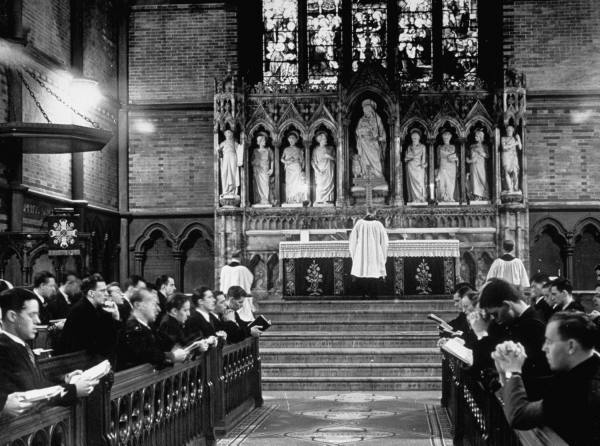
Yet the heart of the place – the Chapel of the Good Shepherd is there – with bells still clanging and calling students, faculty, and staff to pray together.  You always know what the heart of General is – even as so much around it changes the chapel serves to always remind one that you are at General because it is there that its life as a community is formed, refined, expressed, and made alive.  You know you are there, at GTS, when you are in the chapel.

In the future, I am sure others will bemoan that General is no longer General because some other this or that is no longer there.  Yet, God willing, they will have that chapel to talk about.  They will know they are talking of the same place because that space will have shaped, formed, and nurtured them.  It will still be calling faithful people to prayer.
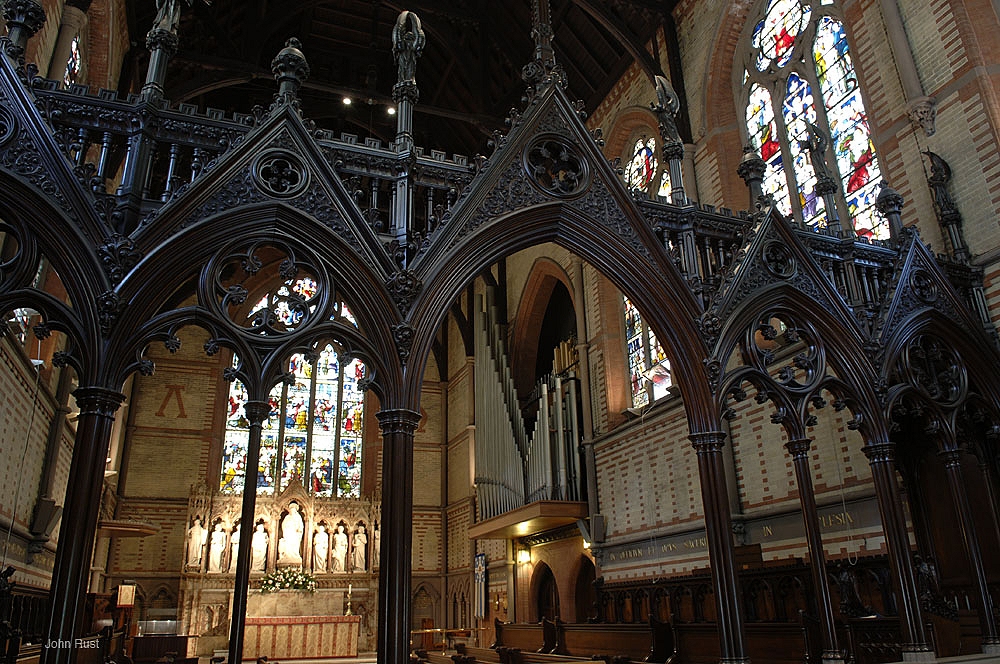
I suppose I was feeling more sensitive to issues of time and place because in between wonderful meetings with potential curates for Ascension House I was engaged in an online conversation about Communion without Baptism. The whole conversation left me with the same sense of profound displacement. As I read of Eastern Oregon’s resolution coming to General Convention and heard of a similar resolution being proposed for Connecticut, I could only think that it seems that the Church I took for granted is no longer there – and may never have been.

I have said, when people ask me about General, that I loved the “idea” of General Seminary perhaps more than its actuality. There was a certain charm and resistance to the changes and chances of the world that marked it as a place set apart even as it sought to engage the needs of the changing world and church. Its quirkiness appealed to me deeply – moreso than its execution of its day to day operations ever could!

Perhaps, I am discovering, I fell in love with an “idea” of the Episcopal Church.

I joined a church that valued tradition and yet was engaged with modernity. I joined a church that embraced the timelessness of dignity and beauty. I joined a church that was engaged theologically and reasonably rather than emotionally in issues of doctrine and order. I joined a church that was a true blend of Catholic and Reformed. I joined a church that valued the uniformities of the Prayer Book even as it explored how to plumb its depths in manifold ways. I joined a church that was sacramentally grounded. I joined a church that believed that how we pray says something about what we believe.

Just as when I went to General, finding the Episcopal Church was a joy and it felt exactly like where I was called to be. I felt at home and it was a place that made sense because there was a there there.

I am not sure where the there is now.

As I talk to priests too happy to ignore rubrics and ordination vows to conform to the doctrine, discipline, and worship of the Church because they have decided their sense of “welcome” is more important than the church’s call to common identity,

as I attended a Diocesan Convention at which we sang treacly hymns with narcissistic lyrics,

as I talk to priests in pitch battles in their dioceses about baptizing in the name of the Trinity,

as I attend Eucharists where priests make up the Eucharistic Prayer on the spot (“meal of power” not Body and Blood and “the systems of the world are broken” at the Fraction),

and as I watch the Church one more time hurtle into a divisive squabble, I am feeling profoundly out of place.

The Church that is slashing funding for Christian formation and youth ministry while hurtling toward “Open Communion” is not the Church I thought I was joining. The Church that has a diocesan convention at which we sing “Shine, Jesus Shine” and ignore the Prayer Book is not the Church I thought I was joining. The Church that is defining sainthood as anyone who has done something good and worthy rather than someone who has done good and worthy things because of their faith in Christ is not the Church I thought I was joining.

The “debate” over Communion without Baptism is opening, for me, a sense of cognitive and spiritual dissonance. It is one part of a broader shift. There are wonderful churches that do manifold things differently than the Episcopal Church. You can make up Eucharistic prayers, communicate anyone who walks through the door, and baptize in the name of whatsoever contortion you wish to make of the Trinity, you can do all of that in other traditions, churches, and faith communities.

That is not what we have done. It is not what marks us as a Church. It is not what gives us an identity. Those things are part of the life of other traditions.

My question for people who wish all of these things is “Why this Church?” Why choose this tradition when those things are available free of charge and canonical responsibility in other places? I would suggest that we are having difficulties as an Episcopal Church because we are, in too many ways and places, forgetting how to be Episcopalians.

I came to the Episcopal Church because I found a home that valued dignity, was steeped in history, and believed the Sacraments did something. My first parish home was a large Rite I parish which was filled with young people similarly drawn. There I found people who were called to life in Christ through a worship and sense of place that called them beyond themselves – to strive for faith – rather than asking little and changing no one.

I realize that perhaps I joined my idea of the Episcopal Church rather than its actuality.

Even, at Christ Church, as we engage in mission efforts, young adult ministry, and seek to deepen our participation in the life of Christ in the Church, I am aware that it is now feeling more and more like a rearguard action as I watch the very Church we are working so hard to form young people for drift further and further away from its core identity.

I see signs of real hope – our diocese has helped us undertake new mission work in the Hill neighborhood at Ascension. The young people that are part of Saint Hilda’s House are faithful, passionate, and care deeply about the world around them. Here, at Christ Church, we are living into a fulsome blend of Catholic tradition and full engagement with the world around us. I have wonderful conversations with new clergy partners and potential curates for Ascension.

Yet those moments are feeling increasingly rare and precious.

There are boundaries within which one says “that is x.” In the past, we have used the Prayer Book to do just that. We have said, this is what we believe. Yet we are not only redefining “x,” we are deciding “x” is irrelevant. We no longer desire to have any sense of boundary, discipline, or conformity. Those things which mark us as a community and a people of faith are being undone with incredible rapidity. Over and over, I hear the language of the narcissistic world that wants its way right away creeping into the language of the Church.

What heart will be left? As we reconfigure the definition of sainthood, dismantle the Sacramental tradition we have been handed from the first Christian communities, ignore the Prayer Book, second guess canons on a parish by parish and priest by priest basis, and so much more, what heart will be left to the place?

When I first came to the Episcopal Church, I felt like a pauper given a key to a treasure room – everywhere I looked was something I could have only imagine owning – and yet it was now, by grace, mine to care for, share, and pass on.

Too often now though, I feel like I am watching those very treasures sold off as here for a day and gone tomorrow furnishings are tried out – jumped on and slouched into like a knockabout futon. The sad thing is we are not buying anything very new – it’s as if we’ve walked into a 1968 Futons-R-Us store and said, “I’ll take whatever dated, period-specific, scratch-and-dent, discolored thing you have!”

I can only hope enough others too have found, valued, and long to hold onto and pass on some of the inheritance before we are left with far too many faded pieces and no longer recognize the place around us.

Robert+

A People Born of Catastrophe: A Sermon for Fifth Lent

A sermon for fifth Lent preached at Christ Church New Haven.

Recently a local group asked for a clergy person to be part of a discussion of a play that is being performed next week. I enjoy the theatre a great deal – I get a chance to be amongst my own people – all dressed in black with carefully disheveled hair – it’s like a homecoming of sorts.

The play is Catastrophe by Samuel Beckett which is best pronounced with a French accent – but since any French I attempt sounds like Inspector Clouseau at best and, at worst, a little field mouse that makes it across an ocean to find true love – plain English it will be.

In the play, An autocratic Director and his Assistant put the “‘final touches to the last scene’ of some kind of dramatic presentation”, which consists entirely of a man standing still onstage.

The Assistant has arranged the man as she has seen fit, atop a black block, draped in a hospital “dressing gown.”

The bulk of the drama consists of the Director moulding, shaping, contorting the man on stage to suit his own vision.

The Director is an irritable and impatient man. He is obsessed with the appearance of his production and demands that his coat and hat be removed leaving the man shivering in his hospital gown.

He has the man’s fists unclenched and then joined, arranging and re-arranging them.

Finally, they rehearse lighting with the theatre technician (the never-seen “Luke”). The play-within-a-play lasts only a few seconds: from darkness, to a ray of light falling on the man’s head and then darkness again.

The Director exclaims: “There’s our catastrophe! In the bag” and asks for one last run through before he has to leave.

He imagines the rising of the expectant applause on the opening day (“Terrific! He’ll have them on their feet. I can hear it from here”). The man has become, “a living statue portraying, from the director’s point of view, the quiescent, unprotesting and ideal citizen of a totalitarian regime.”

However, in an act of defiance, the man, the Protagonist, looks up into the audience (after having been looking down the entire time); and the “applause falters and dies.”

In that moment of simple defiance, He becomes a triumphant martyr rather than a sacrificial victim … his gaze and stoicism communicating a fierce strength and self-possession – the light has awakened him.

The light strikes the man and the forces that contort, bind, manipulate, and dehumanize him are thrown back – his personhood is made inviolate in that moment.

For Christians there are parallels that abound in the story. When the Director says “There’s our catastrophe! It’s in the bag” – the audience applauds, believing the story is at an end.

They are shocked when the Protagonist suddenly moves – they realize they have been clapping with and for the oppressors. Think of Palm Sunday – when we will say, together, “Crucify Him!” Recognizing only too plainly our own complicity and guilt in the suffering of Christ.

Yet there is a light that shines out from the darkness, in the play, it is Luke that gives new life and hope. That light releases the true being of the man even as he is being put on display, mocked, and derided for the crowd’s amusement.

The title of the play, Catastrophe, has multiple meanings.

In the Greek tragic sense, it is an action bringing ruin and pain on stage.

It also means an overturning – a complete reversal or inversion.

Another definition is “a complete failure; a fiasco.” And a final is a sudden violent change; a cataclysm.

This is the story we are about to enter as the Body of Christ in Passiontide and Holy Week is a catastrophe of epic proportions.

Ruin and pain are be on display for all the world to see. The cross will mark a complete failure of Jesus’ ministry – a fiasco. Yet this fiasco will be suddenly reversed and upended as our very being as the Body undergoes a violent change – the cataclysm of the Resurrection.

We sit in darkness and await the true light which comes to show forth the fullness of human nature and hope. Our selves and souls and bodies undergo a catastrophic change as the light of Easter breaks upon us and our fragile entirety is upended in the immensity of Christ as we are bound by the Spirit to the only true God.

This Christian life will not be one of ease. No people signed with a cross can expect as much – ease and comfort are part of the world’s sales pitch. Our Lord’s call is simpler, more direct, and more catastrophic – come and die.

Even as we are called to die to sin and be reborn the entirety of Creation is changed as well – our relationship with God, with others, with time, and with all of Creation is undone and remade.

We are a people born of Catastrophe. We are a people that have been overturned by Blood and water. Death is thrown over. The grave is undone. We are made anew.

There are forces, people, times, things, desires, fears, and so much more that twist and contort our very selves and our sense of who we are much like the director does on that stage. The Devil makes use of our foibles and insecurities to draw us, bit by bit, fear by fear, rejection by rejection, dashed hope by dashed hope, into loathing (of self and others) and, finally, into unbelief.

Whether it is grief, hubris, greed, or apathy – the world’s values lead to a painful and shallow place in which our only hope is that there are others lower than us.

For as our own needs can never be met by what the world has to offer, we content ourselves with the false comfort that others’ needs are not being met as well – that seems fair to us – and becomes the means by which we know we are “winning.”

We become the playthings of others and others to us as we grasp for a shallow, fleeting glory.

St Irenaeus is quoted as saying, “The glory of God is man fully alive, and the life of man is the vision of God.” God revels in our flourishing and we, in turn, are fully alive when we see and know the presence of Christ in us and in those around us – when we are taken with the vision of God.

When we measure ourselves by the standards of the world alone then we will always be reduced, eventually, to the lowest common denominator. The world’s standards are too base and too cruel for they judge by how we accrue and manipulate.

Using the standards of the world – we too quickly fall prey to the false comfort of applauding with the crowd. To love this life and this world is to lose the true life Christ promises.

Christ announces that the powers, principalities, and standards of this world are overturned by his sacrifice as “the ruler of this world” is cast out.The standard we have, the standard by which we measure our lives, is a higher one than the world’s. It is a divine one. A perfect one. A crucified one. It is one that withstands the sundry and manifold changes of the world and fixes our hearts where true joys are to be found.

The miracle of our sacramental life, is that we do not have to live up to a standard but to live into our true being – a being offered in the catastrophic reworking of our very nature and of all Creation.

The Baptismal covenant is more than the imparting of a new code by which we ought to live –though it is that. Baptism is the welcoming into the life that is now ours – Jesus Christ’s.

We do not have to prove our worth because we are one with the living Christ whose worth is beyond all measure. Our Lord is not simply Alpha and Omega – beginning and end – he is our present, our fullness, and our being.

As we prepare to enter Passiontide and Holy Week, we are reminded again of our story as the Body of Christ. We are united with his own suffering and rejection. We are there in the upper room, in the garden, and at the foot of the cross. And we are there watching, waiting, hoping, and rejoicing in catastrophic joy of Resurrection life.

Robert+

Of Benediction of the Blessed Sacrament or “What Just Happened Here?”

O Saving Victim, opening wide
     The gate of heaven to man below
Our foes press on from every side,
     Thine aid supply, thy strength bestow.     

All praise and thanks to thee ascend
     For evermore, blest One in Three;          
O grant us life that shall not end,
     In our true native land with thee.  Amen.

Yesterday, we had Evensong and Benediction of the Blessed Sacrament at Christ Church and on Fridays we offer Stations of the Cross and Benediction. A Jewish man once, having attended Benediction at Christ Church, asked “So what just happened here?”

That is often a question I ask myself after Benediction as well! What just happened here?

There are the objective measures of what happened. Jesus, made known in the Sacrament, is before his people on the altar for them to offer adoration and praise and so that they may receive blessing and assurance from his Presence. He is present in a way that demands little of us in the way that receiving in the Mass does – we are not tasked with an Exhortation to adore as we are in the Prayer Book’s Exhortation regarding receiving Holy Communion. We are simply giving thanks and praise for the One coming among us in this particular way.

The Thirty-Nine Articles are seemingly outwardly plain in their condemnation of the practice. Article Twenty-Five cannot be argued with in its rather blunt assessment that the Sacraments are not to be “gazed upon, or to be carried about.”

Yet, John MacQuarrie writes of Benediction,

Anglican theologians have wisely avoided trying to give too precise a formulation of Christ’s “real presence” in the Eucharist, but they have consistently affirmed it and it is, of course, implicit in our liturgy. It is in terms of this focusing of our Lord’s presence that the service of Benediction is to be understood — and also justified, if anyone thinks it needs justifying. Psychologically speaking, we need some concrete, visible manifestation toward which to direct our devotion; theologically speaking, this is already provided for us by our Lord’s gracious focusing of his presence in the Blessed Sacrament.

When this is understood, complaints about “idolatry” or “fetichism” are seen to be beside the point. Let us assure any who may be perturbed over such matters that we are not being so stupid as to worship a wafer, nor do we have such an archaic and myth-laden mentality that we believe the object before us to be charged with magical power. Rather, it is in and through the Sacrament that we adore Christ, because we, being men and not angels, have need of an earthly manifestation of the divine presence, and because he, in his grace and mercy, has promised to grant us his presence in this particular manifestation.

Our days are often a blur. We are always challenged to see each day and moment as a holy and precious thing that is vibrant with the presence and grace of God. Those able to do this with a degree of regularity and dedication are named saints by the Church. In their very being they know and feel the great love of God. The sense of the love of God transforms their very being so that their outward and visible lives become manifestations of God’s transforming power.

Yet even saints’ awareness and sense of divine condescension can falter. A reading the diaries of Mother Theresa points toward the need so many of us have for some deeper sense, some more concrete communication, of the Presence among us. She wrote, to a priest, “Jesus has a very special love for you. As for me, the silence and the emptiness is so great that I look and do not see, listen and do not hear.”

All of us need assurance at some point or another that God is simply there. The Body of Christ is not meant to be carried about or gazed upon – as Article 25 of the 39 Articles says plainly. Yet it is to be adored, to be revered, to be given thanks for, and to be held for the world to see and know. Benediction offers a time for adoring the Presence of Christ in such a way as to seek nothing but the assurance that He is ever with us and to offer only that which we are ever commanded to offer, to love the Lord Our God with all of our hearts, all of our souls, and all of our minds.

If Benediction simply stopped at “carrying about” the Sacrament then we would be woefully in error. If it was simply an act of “gazing” then we would be undermining the fullness of the Sacramental life. Yet it is far more than carrying and gazing. It is holding up that which we know to be a concrete manifestation of the love of God. Held up is the host, the saving victim, so that all may be drawn to Him with renewed faith in that Presence.

We do not simply gaze – though that is part of the act for we do look intently with admiration, thought, or surprise. Benediction is not the act of gazing alone though – it is the community’s adoration – the body comes together in love to give our attention, if but for a moment, to the One who calls us and who comes to be with us.

Benediction is part of the work or preparation and contemplation the Exhortation calls us to.  We do not come together solely to gaze but to be reminded of the power, grace, and love made known in the Body. We kneel in reverence as we are drawn ever deeper into the Mystery of Christ’s Body and Blood.

We may come to Benediction even when we know we are not ready to receive the Sacrament. We may perceive that there are wrongs we have done or things left undone that impair our ability to come with to the altar rail and yet Benediction reminds us that grace awaits – that Christ may be seen and known and his mercy endures forever. Benediction assists us in “sharing rightly in the celebration of those Holy Mysteries” for we are given the opportunity to “remember the dignity of that Holy Sacrament.”

In that act we render to God never-ending thanks for all of the benefits of the Passion and know that we are called together as one body with him. Praise is ever our bounden duty and service. Benediction is a chance to offer that praise and to simply be in the Presence of Christ. In a culture of too much noise and too little contemplation we are given a space to be.

In the Divine Praises, often said during Benediction, we hear and repeat the mystery of faith – that God dwells with us, is ever blessing us, and will make glorious that which often feels so feeble.

Blessed be God. We hear and repeat. Blessed be Jesus Christ, true God and true Man. Blessed be God in His angels and His saints. Blessed be God. That which we seek, which Mother Theresa ever sought, is offered to us and for us – unity with God and assurance of His Presence and mercy. Blessed be God in His saints. We give voice to the promise made to humanity that there is a Presence not simply in the Sacrament but dwelling deep in our souls as well. We come together as a Body to see and know our source and comfort and to know, in that place, that we to might share some small bit of that Presence with others.

Benediction is an act of prayer, thanksgiving, blessing, and preparation. We bow in thanksgiving and praise. The priest, in donning the humeral veil, makes clear that it is not him making the blessing but the Living Son who is lifted up that ever offers blessing.

Therefore, we before him bending,
     This great Sacrament revere;      
Types and shadows have their ending,
     For the newer rite is here;
Faith, our outward sense befriending,
     Makes our inward vision clear.

Glory let us give and blessing
     To the Father and the Son;
Honor, thanks, and praise addressing,
     While eternal ages run;
Ever too his love confessing
     Who, in both, with both is one.  Amen.
Words:  Thomas Aquinas (1225?-1274); ver. Hymnal 1940, alt.

Benediction is one means by which we can come together to offer our thanksgiving for the great gift bestowed unto humanity in the coming of Jesus among us. It is a moment, an instant, in which the threads of holy time and the Christian story of the renewal of creation are woven together as the world slows to a crawl and the tapestry of Creation, Incarnation, Passion, Resurrection, and Ascension come together and are offered up for us to give thanks and praise.

Created elements, consecrated by divine mercy, are held aloft by sinful hands to be adored by loving hearts as the body sees and knows its source and fulfillment. Our hope is held before us, the ultimate sign of hope is made over us, and we lift our eyes and hearts in reverent thanks.

For some, that space may feel like a quiet time with Jesus as a friend. Others may find themselves thrown down in awe at the throne of grace. Others may be walking alongside Jesus on the road. Others may simply relish the absolute mystery of it all and watch the beauty of holiness unfold. Some may contemplate the Passion and others may know the joy of the Resurrection. Some may yearn for deeper relationship and others may know themselves not yet ready.

It is these and countless other ways of being with Christ that Benediction offers. The chance to dwell with the God of Hope without being told what that moment means. This is why I so often ask, as the Jewish fellow did, “What just happened here?”

Robert+

O God, who in a wonderful Sacrament hast left unto us a memorial of thy Passion:  Grant us, we beseech thee, so to venerate the sacred mysteries of thy Body and Blood, that we may ever perceive within ourselves the fruits of thy redemption; who livest and reignest world without end.  Amen.

On Morning Prayer and Sunday Mornings: An Old High Churchman’s View

I generally do not re-post things that others have written.  However, occasionally one finds a piece and says “Ah Ha! I wish I had written that!”

Below is a post from “the Old High Churchman” on Morning Prayer as a complementary worship offering for parishes.  It seems especially important as the Church moves along in conversations about Communion without Baptism that we re-open and examine all of our options for evangelism and engagement before we redefine the Sacraments and upend their theological underpinnings (underpinnings that span Reformed, Catholic, and Orthodox Churches and denominations).

I have written more on this and my experience of Morning Prayer as the primary service on Sundays here.

Robert+

Below is the post from The Old High Churchman:

Some thoughts about Morning Prayer

The last forty years have seen the almost complete disappearance of Morning Prayer as the principal act of public worship in Anglican Churches. It was almost as though the Liturgical Movement, which in Anglican circles tends to be dominated by Liberal Catholics, had set up Morning Prayer and Holy Communion in opposition to one another rather than as complimentary acts of worship. The battle cry of the “Lord’s service on the Lord’s Day” was a very seductive one for the marginalized clergy of the 1970s who embraced a more sectarian understanding of the Church as it was pushed out of the mainstream of society.At one time I used to think that the thought process behind the Liturgical Movement’s replacement of early Communion and mid-morning Matins by Parish Communion or “Slow Mass” was unassailable, but I have come to revise my opinions somewhat. The Parish Communion or “Slow Mass” attempts to combine the elements of a substantial Liturgy of the Word with the Eucharist. As a result the traditional Fore Mass was expanded by the addition of an Old Testament Reading and a Psalm, and the intercessionary element was frequently expanded. As a result the usual hour’s service on a Sunday morning consisting either of Matins with a fairly substantial sermon, or a Sung Eucharist with a more modest homily was replaced by a protean monster of a service that tries to do everything in one go, or alternatively by a Sung Eucharist which ends up being light on Scripture and preaching. With the Slow Mass/Parish Communion arrangement heaven help you if Aunt Aggie of “praying the newspaper” fame, and a baptism coincide; chances are you are in for a two hour session which ultimately is somewhat liturgically incoherent.

Anyway, to get back to the point, I have come to the conclusion that parishes need to provide both Eucharistic and non-Eucharistic worship in order to prosper. Please note, I am not suggesting that we neglect the Eucharist, but rather suggesting that we do not put all our eggs in one basket and reach out to those who are not yet ready for Communion.

The first concern that I have about the “Slow Mass/Parish Communion” as the only service is that it creates something of a closed congregation. Part of the reason for this is that, except for a few very Anglo-catholic parishes, Anglicans have an engrained aversion to non-communicating attendance at Holy Communion. Semi-churched Anglicans are at a distinct disadvantage in parishes where the Holy Communion is the main or only service simply because they feel they ought not to be there. In short, they are accidentally excluded and this creates a much sharper distinction between the churched and the unchurched, which is a mixed blessing in a missionary situation.

Secondly, Morning Prayer is a very Evangelical service. For a start, it has a very heavy Scriptural componant. Even with the rather limp-wristed lectionary of 1943, it includes one medium length or two short psalms, and two fairly substantial lessons, one from each Testament. In addition to this there is quite a bit of Scripture in the liturgy itself. It also gives room for a more substantial, expository sermon than can usually be preached at Holy Communion. I generally find that twelve minutes is about your whack at “Slow Mass” if you want toretain any hope of finishing within an hour and a quarter or an hour and an half, but it is perfectly possible to go 20-25 minutes without going much over the hour at Morning Prayer.

Thirdly, not everyone is the same in their approach to the sacrament of Holy Communion. For example, some of us have a strong preference for fasting Communion, which becomes difficult if the celebration of Communion occurs at an hour later than 9.00am. Inspite of all the Liturgical Movement propaganda I have digested over the years, I still prefer to go to an early celebration and receive fasting, then come back later in the day for Matins or Evensong and an expository Sermon rather than put myself around a condemned breakfast and go to a mid-morning Eucharist. Others prefer the “Slow Mass” format. Others still, the old-fashioned Sung Eucharist. What I am saying is that one size does not fit all, and that priests need to listen to their people, and the people need to be open with their clergy about what they think will build up the Body of Christ in their particular parish.

In the old days, Morning Prayer and Communion were often combined. In the Church of Ireland the usual format was Matins to the end of the second canticle, then the Communion service with the non-communicants being prayed for and allowed to depart after the Prayer for the Church Militant. This occured monthly, and on the other Sundays Holy Communion was celebrated early. By the way, the 1928 American Prayer Book allows this too. If you think I am romancing look it up, or read “A Prayer Book Manual” (Boston, MA, 1943) where it is mentioned as one of the options for integrating MP and the Eucharist. Other parishes tackled the need for both Eucharistic and non-Eucharist worship by having a mid-morning Sung Communion and a late Morning Prayer, as was the case in my home parish in the 1960s and 70s. Still others has ealy and late said celebrations either side of Morning Prayer. Wherever one was, experiments were made, or at least the local pattern for worship was allowed to evolve to meet the demands of both the existing congregation and those of evangelism.

I guess what I am asking is for the parish clergy take seriously the need for non-Eucharistic worship, and also appreciate the need for flexibility in scheduling the parish’s worship. I am also asking both clergy and laity to appreciate the breadth and the richness that exists in both our Eucharist and Morning Prayer Liturgies and allow both the opportunity to draw folks to Christ. One size does not fit all, and our attempts to make it so has lost Anglicanism a lot of support and membership down the years. The Anglican Way is both Reformed and Catholic and as a result we have to make room for both expository peaching and sacramental worship in our spiritual lives. The Reformers hoped to combine both within the Communion Service, but in all reformed traditions – Lutheran, Reformed, Presbyterian, and Anglican – the tendancy from about 1600 onwards has been for the two to inhabit different time slots and different services. Our belated attempts to re-realise the Reformers aspirations have not been altogether successful, so I would hope that we will have the courage to re-evaluate the teaching of the Liturgical Movement.

On the Unexpected Grace of a Good Conference: Being an Inquiry into Mentoring, Discernment, and Vocation

So I am in Atlanta for a couple of days taking part in a consultation with the Fund for Theological Education.  The agenda for the time together is to flesh out what mentoring is, what it means to be a mentor, what does it mean in a Christian context, and how do we encourage those we are mentors for.

So - mentoring has some bad clipart!

It is really an intriguing question.  From the beginning of the conversation there were some interesting questions raised.  Can mentoring be taught?  Is it possible to define or is it too organic? Does attempting to define mentoring limit it?

The group assembled is an impressively faithful and diverse one with varied voices from across the country.  (As an aside, FTE should plan clergy days).  Each of the participants here brings a distinct understanding of what it means to be mentored and to be a mentor.

A few things came up in various ways through the conversations:

1. Mentors help clarify our past and potential.
2. Mentors have high expectations and see in us that which we don’t always see.
3. Mentoring is a regular process and requires intentionality.
4. Mentors ask good questions and don’t just provide easy answers.
5. Mentors take us to the woodshed sometimes.  Mentoring is a process of affirmation and challenge.
6. There is reciprocity in the relationship – this does not mean equality per se but means mutual respect.
7. Mentors provide strength for the journey.
8. Mentors help us integrate our past with our present while expanding our sense of the possibilities for the future.
9.  Mentors give us space and time to re-image and re-imagine our self and communities around us.
10. Mentors help mentees discern what it means to flourish as they follow God.
11. Mentors pray with and for their mentees.
12. Mentors know they will “fail” sometimes.
13. Mentors realize that mentees are not there for them – don’t use them to work out your unmetabolized anger, regret, or pain.
14. Mentors do not live vicariously through mentees – have the courage to let them be their own person – mentees are not “mini-mes.”
15. Mentoring has a direction and movement forward – it is not re-treading, therapy, or spiritual direction though it may have a bit of all of those.
16. Mentors are “mid-wives” of seasons as they help mentees move into new phases of their lives.
17. Mentors help draw out what has been deposited by others.
18. Mentors help mentees find the grace to pause – the courage and patience to listen for the will of God.
19. Mentors have a clear sense of themselves before trying to guide others.
20. Mentors are engaged with mentees in a process of Christian apprenticeship – helping mentees to discern what it means to live a cruciform life.

Through the day we talked about experiences of good mentoring in our lives and careers.  I have been blessed in recent years to have good mentoring that has come at key moments and helped provide clarity and confidence.  I reflected that there are a couple of moments over the last few years that still resonate – that still carry a powerful poignancy such that I can recall minute details about seemingly commonplace conversations and moments.  Oftentimes my experiences as a mentee and mentor are the stuff of quotidian conversations.  Yet I have had mentees say “It was so powerful when you said…”.

I have had the same experience – I could remind mentors about conversations or moments and I am almost positive they would not remember them.  Yet, with the movement of the Spirit being what it is, those moments were exactly what I needed at that time and in that place.  Each person at the consultation here had the same experience and you could hear the genuine love in each of their stories.  It was a powerful reminder that God uses common men and women to shape other common men and women to follow Him in the Way.

This conversation about mentoring has helped me think intentionally about not only my work with Saint Hilda’s House and Ascension but about priestly ministry more broadly.  Would the Church benefit from priests thinking of themselves as mentors – as leading our congregations in a process of Christian apprenticeship?

It seems so, as so many of the marks of a good mentor are the marks of a caring and discerning priest.

We are drawn together in the process of sanctifying our time and space as we come humbly into the presence of God both in our mentoring and Sacramental relationships.  We come as beloved sinners before God and ask Him to bring our lives closer to Christ’s – to use our selves and souls and bodies as they are joined to His one great act of sacrificial service and obedience.  The Holy Ghost that descends at Baptism, that alights at Pentecost, that comes down upon Body and Blood, comes upon those particular mentoring relationships in which we pray together for God’s wisdom to transform timid souls for the work of foolish and holy boldness.

We are sharing together as we walk the way of the cross – as that story becomes ours that we share together.  As the memory of Christ, the experience of the Christian community, the life of the Church becomes part of us, our experiences become part of it.  Mentoring is a transgressive act for it carries with it the necessity to risk being guided and the concomitant risk to open ourselves and our experiences to others.  It requires that we tread into memory and beyond.  It demands that we expand our sense not only of our own potential but of the potential for God to make use of us.

In so many ways, the Epistle for the coming Sunday lays out the hope of Christian mentoring.  We do this work not because any of us has any great thing or work to offer but because God is showing forth His immeasurable grace.  We are charged with proclaiming the great gift of God and with helping others to see that path which God has prepared before us to be our way of life.

Thankfully, Christian mentorship is not ours alone but it the work of the whole Body – the great cloud of witnesses.  We are engaged in the long and arduous work of being made alive, together, by Christ.  Mentoring is that intentional work of seeking to become, together, that which we are made to be in Christ Jesus so as to live in such a way that our work (our good works) says something of grace and mercy.

I wonder what experiences of good mentoring others have had?  It would be helpful to hear how people have had their lives changed or impacted by mentors and what marked those experiences as good ones.  How have you been guided along the Way?

Robert+

Of the One Percent and Dissolute Dissolution: Where is the Money going in the Episcopal Church Budget?

The Episcopal Church released its proposed triennial budget this past week.  There are so many issues with this budget that it seems a rather sad mortgaging of our future.

I am sometimes reminded in the Church of a dissolute family of some distant means, lofty titles, and rich history living in a grand but drafty house that was gifted to it by generous and trusting forebears deciding that they will not only sell off the silver and linens but will take out a second or third mortgage and pass on only dissolution and inglorious decay to those who come after them.

Even as the Church talks of decentralization and horizontal structures we are continuing to engage in an almost perverse pursuit of ever-more centralized budgets and decision-making at the national level.  As the Church struggles to get by (and barely) in so many areas we are caught up in increasingly inane power struggles that reveal a level of blind insularity that borders on a near pathological indifference to the realities of the Church around us and the future before us.

This is a budget that slashes young adult, campus, and youth ministries even as it pours ever more resources into the offices of the Presiding Bishop and the President of the House of Deputies.  In the name of moving those things “better done” at the diocesan level, like youth and young adult ministry, we are developing a budget that pools even more resources in offices that are now ahistorical anomalies that are growing (and absorbing resources) beyond their original scope and purview.

This amounts to what is often called an “unfunded mandate.” If the budget proposed to rebate the amount that was once spent on these ministries at the national level for dedicated use on youth and young adult ministry at the diocesan level, it would not be nearly so egregious.  Yet the money was slashed (and moved to other administrative areas) and dioceses are now supposed to cover this even as we see cathedrals closing and dioceses slashing staff under their own budget crises.

I hear a lot of lip service being paid to what the kids want these days in the Church.  People ask me about young adults and how the Church can best bring them in.  What do the kinds want?  What they do not want is a Church that not only ignores them but deems them irrelevant at the Churchwide level.  This is not just benign neglect.  It is abuse.

My deepest fear is that this budget represents the true belief of too many about the nature of the Church – that the Church exists not to change lives and souls through a lifelong encounter with Christ but only to push others to do good works.  We are slashing the Christian formation budget so that we can fund the Presiding Bishop, the President of the House of Deputies, and the lobbying arm.

This budget further nudges the Episcopal Church toward being a political lobbying and advocacy group with little concern for its future as part of the church catholic.

This may sound harsh and yet we are proposing to swell the top offices and political lobbying while gutting young adult ministry, lifelong Christian formation, funding for historically African American colleges, dioceses with strong Native American populations, Hispanic/Latino ministries, ordination exams, and seminarian scholarships.

We are slashing our future to fund offices that spend their energy shifting blame for the failures of the present.

What are our priorities?

Presiding Bishop’s Office: +$364,000

President of the House of Deputies: +$212,000

Church Center Comptroller’s Office: +$421,000

Human Resources at the Church Center: +$271,000

Treasurer at the Church Center: +$120,000

Total Staff additions at the Church Center: +$1,400,000

Lobbying: +$700,000

Hispanic/Latino Ministries: -$40,731

Youth, Young Adult, Formation Ministries: -$2,800,000 from about $3 million to $286,000

Seminarian Scholarship Grant: -$195,000

Aid to historically African-American colleges and to dioceses with strong First Nations populations also cut.  The General Ordination Exams are cut.

A Church facing the kind of numbers we are in attendance and giving should invert these numbers.  We should engage in a massive crash program – a Manhattan Project – to bolster our commitment to mission, youth and young adults, and Christian formation.

Moreover, youth are not an add on to the Church.  They are not superfluous to our life as the Body – they are full members of the Body.  They are not just our future and it is not just practical concern for the future that calls us to offer more rather than less for their formation as living members.  How should we care for those least represented in our counsels and deliberations as the Body?

We are a Church that is too happy to make statements rather than take stands.  We make statements about this, that, and the next yet, when things are really on the line, where is our faith?  Where are our hearts?  This is no time to just keep making statements with empty diocesan resolutions and hollow proclamations in which we resolve to call on so-and-so to stop such-and-such.

Our budget is not simply a statement about our theology, spirituality, and priority.  It embodies our theology, spirituality, and priorities.  It declares how we live out our faith and hope.  The time for making statements is long past.  We have to make a commitment – a pledge.

The truly radical, hospitable, expansive, and contemporary thing to do would be to upend our priorities and place Christian formation, youth, and young adult ministry at the heart of our budget and our common life – to make the future our priority as we pass on all that is true and holy in our tradition.  We need a commitment to tradition without an addiction to mere traditionalism.  Sadly, just as people are forgetting what it even means to be Christian in this culture we have decided it is not really that important to teach them.

There is much more to be said that the Crusty Old Dean has taken on (well and with passion):

http://crustyoldean.blogspot.com/2012/03/hollow-church.html

Highlights from the COD:

“As Jesus once said, where you treasure is, there you heart will be also. However these priorities were determined, where we are putting our funding is where our emphasis will be.”

“The Office of the Presiding bishop has $364,000 in additional staff. The President of the House of Deputies has $212,000 in additional staff. Neither of these offices lost anybody in the 2009 bloodletting, and they get increases here. The Controller’s office at 815 adds $421,000 in staff, Human Resources at 815 (despite laying off a lot of people on the national staff the past four years) adds $271,000 in staff, the Treasurer’s office $120,000. That’s $1.4 million in added staff costs.”

“Youth, young adult, and formation ministries are slashed about 90%, from about $3 million to $286,000. No more EYE or national Episcopal youth events. No more children and youth ministries, and on and on. Is there a person alive who is not completely delusional who honestly thinks that if GC consisted overwhelmingly of people under 40 instead of overwhelmingly people over 40 that this would happen?”

“COD felt in 2009 that the Episcopal Church was going to botch and bungle a once in a lifetime opportunity to rethink what a denominational organization should be and look like. Indeed, we have wasted more time on power struggles between individuals in the church than in any systemic discussions, spent more time determining whose side someone was on than what we all stand for in the end.”

“The reality is there needs to be a collaboration between local, diocesan, provincial, and national levels — not 815 dumping things it wants to cut and telling the church it now needs to do them. How is this democratic? Who is the General Convention to be the arbiter of what should be done on what level of the church?”

Robert+

Ashes-to-Go: A Salvation that Remains

Many of my friends and fellow priests have gotten involved in Ashes-to-Go. The idea is to go out into the streets and other public venues to impose ashes on passers-by. There is much to be admired in the effort – the church does need to find ways to bring its witness out into the byways. We also need to be flexible and recognize that the days when the culture around us pauses for Holy Days has, indeed, passed. Yet I have found myself feeling a sense of vague discomfort with the practice.

Of course, existing in a time of change is always uncomfortable and no matter the various ways we look for to meet the changing world, they will always cause some measure of disquietude. After a couple of long conversations about Ashes-to-Go with friends and colleagues I had come to the conclusion that it might not be such a bad idea. Then came Ash Wednesday.

The call to a holy Lent from the Prayer Book reads as follows:

“This season of Lent provided a time in which converts to the faith were prepared for Holy Baptism. It was also a time when those who, because of notorious sins, had been separated from the body of the faithful were reconciled by penitence and forgiveness, and restored to the fellowship of the Church. Thereby, the whole congregation was put in mind of the message of pardon and absolution set forth in the Gospel of our Savior, and of the need which all Christians continually have to renew their repentance and faith.”

Lent and Ash Wednesday are presented in the context of the fullness of the Christian life and faith. Moreover they are part of the life of the community of faith (the whole congregation). The time of repentance and restoration was a time for pondering how we have erred in our Christian pilgrimage, to repent, and to resolve to amend our lives in such a way so as to live into the fullness of the promise of Christ.

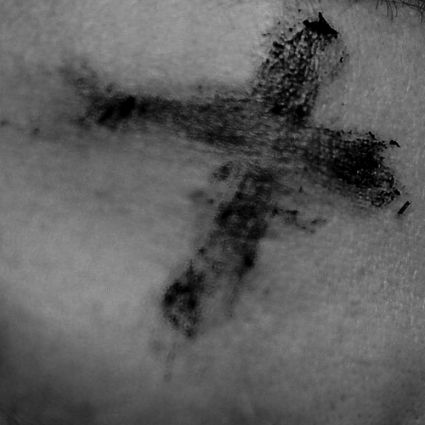
My concern about Ashes-to-Go is that it sits apart from the fullness of the Christian message of new life and reconciliation with God and one another. Those receiving ashes hear and receive only one part of the message – they are marked with the sign of sin and death without its being situated within the context of the pledge of our redemption. The sign seems ill administered without the Sacrament.

It becomes a reminder of only one part of the Christian story. Moreover, it is a quick reminder of a much deeper process and imparts upon the reception a singular and momentary quality that invites one to a speedy Lent rather than a fuller examination of conscience and amendment of life.

The Prayer Book continues, “And, to make a right beginning of repentance, and as a mark of our mortal nature, let us now kneel before the Lord, our maker and redeemer.” Ash Wednesday is the beginning of the work of Lent and is meant to initiate a deep engagement with the self, the other, and God. We hear in the liturgy that, “it is only by your gracious gift that we are given everlasting life.” Ashes-to-Go does not offer the chance to situate our repentance within the grace of Christ’s great gift.

It is as if we were to only say “For I know my transgressions, and my sin is ever before me” from Psalm 51 without hearing “Give me the joy of your saving help again and sustain me with your bountiful Spirit.” Within the fullness of the liturgy we are able to say, with confidence, “Deliver me from death, O God, and my tongue shall sing of your righteousness, O God of my salvation.” For we hear of the rest of the story – that God’s saving action will never let dust, ashes, sin, or death be our end. Ashes-to-Go ends the story entirely too quickly for we do not hear and know the assurance that “He pardons and absolves all those who truly repent, and with sincere hearts believe his holy Gospel.”

I worry that we are sharing only the mark of our separation from God rather than our conviction that God dwells ever with us and that this very dust that we are may be hallowed, sanctified, blessed, and even assumed. This reconciliation of ourselves to God brings with it the welcome to live in the fullness of the Christian life. We are given the hope that “being reconciled with one another,” we may “come to the banquet of that most heavenly Food” and receive all of the benefits of Christ’s Passion and Resurrection. Ash Wednesday is not about our sins alone but about our life in and with the Triune God who calls us into true life – a life free of the mark of death.

This simply cannot be communicated in a drive-by encounter. The sign of death is decisively stripped away in the Sacrament – it is that encounter with the Christ made known in the Body at the Altar and in the Church that is the point of Lent as we are brought into Communion and community.

My worry about Ashes-to-Go is that it reinforces the privatized spirituality that plagues much of the Church. “I” do not get ashes. “We” get ashes so that we may know ourselves, as a Body, to be marked for a moment but saved, together, forever.

I can’t help but liken Ashes-to-Go to the signs I used to see at every sports event in Mississippi that had “John 3:16” emblazoned on them. I always wondered if these really changed hearts or simply heartened those carrying them. I suppose that is a good thing in and of itself. This quick ashing seems to be a too brief declaration that simplifies the Christian story in the way of those home-made placards.

On the plus side, I think it is absolutely vital for the Church to find ways to engage the changing world. This may be one such way – yet I cannot quite get comfortable with it. I am increasingly leery of the Church’s desire to find ways to make the work of the Christian life easier or faster – especially as it pertains to this most sombre and needful of seasons.

My hope though is that Ashes-to-Go really can become an entry point and that those who receive these ashes will be drawn to the Church in a fuller and deeper way. Perhaps this brief encounter can catalyze some movement of the Spirit that calls the recipients to newness of life. I look forward to talking with my friends about their experience of the day and pray that their efforts have shared something of the fullness of the Christian life.

This is one of those cases where I hope I am wrong for I see the need, the energy, and the creativity that are all at work.

Robert+

Ash Wednesday: Wiping away the Dust

A sermon for Ash Wednesday 2012 – Christ Church, New Haven

The opening line of the rite of Confession on page 447 of the Prayer book reads “The Lord be in your heart and upon your lips that you may truly and humbly confess your sins: In the Name of the Father, and of the Son, and of the Holy Spirit. Amen.” I find it heartening that those words, that blessing, is mirrored in the Liturgy. When the deacon brings the Gospel Book to the priest for a blessing, the priest says “The Lord be in your heart and upon your lips that you may worthily proclaim his Holy Gospel.”

There is a vital link between being able to honestly confess our sins, faults, and failures in the sight of God and to being equipped to proclaim the Gospel. It is right that these lines are so similar. Both proclaiming the Gospel and confessing our sins are works the demand of us an obedience to the Lord and that we lay aside our pride and vanity.

It is impossible to honestly confess our sins with prideful hearts and it is equally impossible to truly proclaim Good News without knowing ourselves forgiven by Divine Mercy.

Confessing and Proclaiming both find their root in the heart of the Christian faith – our acknowledgment of the glory of God and the vital presence of his gracious love.

Confession and Proclamation are at the heart of the Christian message – we are truly sorry, we humbly repent, we are forgiven by the Lord who came into the world to save sinners, and we can’t help but proclaim that grace boldly – full of thanks and praise for God’s unfailing mercy.

Our whole ministry as Christians is bound to the reality of God’s forgiveness – to the washing away of our sins in the flowing waters of baptism. Confession and repentance make proclamation truly possible.

John Macquarrie writes, “Sin, or rather the conviction of sin, is the presupposition of baptism. We have a sense that all is not well with us.” We are washed from sin in Baptism – Yet, we also recognize the reality of sin in our lived Christian experience. How do we hold onto that centered place in which we find ourselves at one with Christ, literally donning Christ at the font?

It is impossible to talk about the dust of Ash Wednesday without pondering that which washes away the dust – water. It is the water of baptism that washes away mortality and gives us the knowledge that no stain, no mark, no failing, no pain, no sin, and no death lies beyond the power of the waters to wash away.

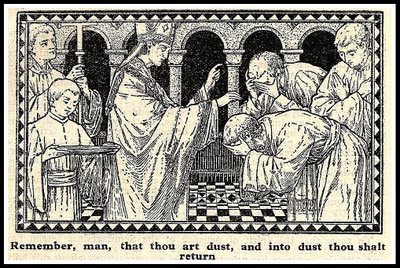
Over this dust we say, “…Grant that these ashes may be to us a sign of our mortality and penitence, that we may remember that it is only by your gracious gift that we are given everlasting life…” Blood and Water wash away the dust and leave in their wake a new creation.

No Sacrament can be thought of in isolation from the rest of the Christian Sacramental life. To do so is to impart a magical quality to the moments rather than framing them in the totality of belief, practice, life, death, hope, regret, grace, and pardon.

This dust is a sign – it is not a Sacrament. It reminds us of brutal realities. It points toward sin and death. But it is a sign alone full of meaning yet not binding us by its mark.

It is not the end of the story but a mark of a new beginning.

We will fail God at times. We will die. And then the Sacrament does its work – for when dust claims us, when we go down to the grave, it is then that we find our fulfillment as the waters of Baptism wash away the dust and we rise anew – forgiven and transformed.  The dust points toward our death to sin and new life in Christ who bears our sins.

Each Sacrament must be taken as part of the whole of the experience of Christ’s presence in and with us. Baptism, that moment of washing and donning, cannot be a moment but must be at once a beginning and end of the migration of lived Christian pilgrimage. Our entirety is baptized. Every aspect of our lives is knit to the divinity.

Confession and repentance are means by which we can keep our Baptism in front of us as we walk. They are the recognition that sin, washed from us at Baptism, still enters the Christian life and dims the awareness of the fullness of Christ’s indwelling. Repentance makes the unobservable and the easily avoided more concrete so that we also feel and know the reality of the grace of Baptism.

Sometimes penitence takes on a dismal quality. It is never fun work but we too often find folks who seem to revel in the self-abnegation of Lent and the self-flagellating of confession. The problem with this approach is that it is no less self-centered than a wholesale and ultimately empty affirmation of the narcissist.

“Look how awful I am. Look how wretched I have been. Look how grievously sorry I am!” Note the Gospel!

Lent is not a call to gross acts of self-abasement – it is a call to honesty. To honestly see our faults. To honestly ask for forgiveness. And to honestly believe that our sins are put away – that we are forgiven, that we may walk in newness of life. Anglicanism, at its best, is a tension of commendable impulses. We balance, healthily, the joy of Easter with the pain of Good Friday. We are not an Easter people alone nor are we a Church that grinds the penitent down with the guilt of Good Friday.

We know that the fullness of the Christian life is revealed in all of these moments and more. Easter makes little difference without Ash Wednesday. Without its reminders of our mortality and failings – the joy and redemption of the Resurrection make little real sense (not that they ever truly do which is part of the profound blessing).

Repentance and Confession are just another exercise in self-obsession if they are not done with the promise and forgiveness of the empty tomb to look toward.

First John reads, “If we say that we have no sin, we deceive ourselves, and the truth is not in us; but if we confess our sins, God is faithful and just to forgive us our sins, and to cleanse us from all unrighteousness.”

Confessing our sins is not about us – it is about the other. It is about God.

Confession is the willingness to accept the forgiveness and mercy of God, so that we may love God with all of our being, and grow in love and charity toward our neighbor.  Not because it is simply a kind thing to do but because we are called to mirror the love of God – to be perfect as our Heavenly Father is perfect – and to know we will fail and be called to confess and to strive anew.

The kind of Confession that dwells solely on our faults, our own faults, our own most grievous faults without a deep desire to see our relationships healed by grace is ultimately unhelpful for it rests on us. What we do. What we don’t do.  These are crucial things to be aware of but they are not the full story of Ash Wednesday – for the dust is washed away.

Confession is a Sacrament of the future – restoring hope rather than simply punishing transgression – it is not a Sacrament of judgment alone but of restored souls and renewed relationships.  It reminds us of our whole saved being whose nature and hope is found in the One identity we all share as the Body of Christ.

Confession only makes sense in light of our many, many relationships as our souls and bodies, are drawn ever closer to God and ever closer to our Baptized self – so that we can be a sign of God’s forgiveness to others as well – so that we may worthily proclaim His Holy Gospel as others perceive within us the fruits of Christ’s redemption.

Robert+

Doing What Since 1784? On Ethos, Advertising, and Identity

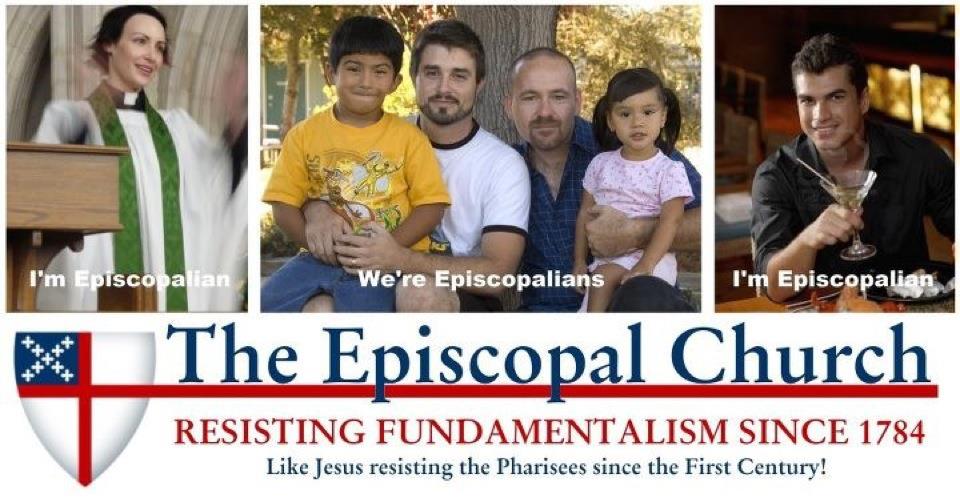
Friends of mine have circulated an ad for the Episcopal Church on Facebook. The ad portrays a female priest, a gay couple with two children, and a handsome fellow raising a martini. The text of the ad says, “The Episcopal Church: Resisting Fundamentalism since 1784.” The ad almost looks like someone with the intent to mock the Episcopal Church crafted it as a vaguely metrosexual (a word that spellcheck is uncomfortable with) fellow toasts us with a martini.

The sentiment of the ad seems to be that the Episcopal Church is not the kind of religion that marginalizes women and gay Christians. The problem is that the ad seems to communicate that we are the kind of religion that sees ourselves as better than many other Christians.

Recently someone else I know posted an ad created by breakaway Anglicans which depicted the Presiding Bishop with the tagline “Don’t believe any of that crap? Neither do we.” The ad was an obvious (or maybe not) hit on the Episcopal Church’s doctrinal wobbliness (as the breakaway cleric sees it) and our apparently flexible approach to Scriptural warrant. The friend posted it without irony believing it to be a progressive statement of the Episcopal Church’s liberation from outmoded beliefs. It was one of those moments when mockery and self-awareness passed one another by without a backward glance!

Not long ago I took part in a brainstorming session in which the participants, almost all in their 20s and 30s, were asked what it meant to be Episcopal. Here are some of the responses:

“Heritage, Bridge, Reverent, Liturgy, Music, Incarnational, Contemplative, Richness of Language, Common Prayer, Connection to Tradition, Connected to Ancient Communities.”

On the negative side, answers also were “snobbish” and “elitism.” The ad above reinforces these unfortunate stereotypes both in its text and especially in that third picture.

What are we communicating as our core identity?

A couple of years ago I watched a video interview with several Episcopal members of the Executive Committee. They were asked the question, “What is the Good News of the Episcopal Church?”

Answers ran the gamut. However, the main theme was that the Episcopal Church was open and welcoming to all. This is a good thing – but it is not the heart of the thing – the “thing itself” as DeKoven says.

Toward the end of the video a member said, “The Good News of the Episcopal Church is that Christ has died. Christ is Risen. Christ will come again.” He had the Good News exactly right. The Good News was not an answer to unfortunate strains of Christian fundamentalism – the Good News is that we preach Christ and Him crucified.

As I attend meetings of clergy, diocesan conventions, see online posts, and the like I have become increasingly worried that many in the Episcopal Church see our vocation as an oppositional one. For many, our message is that we are not the Christians that scare you. Really.

The challenge is that oppositional messages are rarely the ones that capture the heart or the imagination. They might be emotionally satisfying for the moment – a kind of cathartic response to seeing the Church used as a vehicle for political or cultural voices that victimize all too many.

Ultimately, the Episcopal Church cannot simply be a response to misrepresentation of the Gospel, it must be a voice for the Gospel. There are varying voices in the Church that define themselves by saying what we are not. We are not Roman. We are not Evangelicals. We are not fundamentalists. On it goes as we ever define ourselves on others’ terms.

Who are we though? This is the crux of our Church’s dilemma. We struggle to say who we are without saying who we are not.

We might begin with our Catechism and some of its answers to the core questions of the faith.

Q. What is the Christian hope?
A. The Christian hope is to live with confidence in newness and fullness of life, and to await the coming of Christ in glory, and the completion of God’s purpose for the world.

Q. What is Holy Baptism?
A. Holy Baptism is the sacrament by which God adopts us as his children and makes us members of Christ’s Body, the Church, and inheritors of the kingdom of God.

Q. What is grace?
A. Grace is God’s favor toward us, unearned and undeserved; by grace God forgives our sins, enlightens our minds, stirs our hearts, and strengthens our wills.

Q. What is adoration?
A. Adoration is the lifting up of the heart and mind to God, asking nothing but to enjoy God’s presence.
Q. Why do we praise God?
A. We praise God, not to obtain anything, but because God’s Being draws praise from us.
Q. For what do we offer thanksgiving?
A. Thanksgiving is offered to God for all the blessings of this life, for our redemption, and for whatever draws us closer to God.
Q. What is penitence?
A. In penitence, we confess our sins and make restitution where possible, with the intention to amend our lives.
Q. What is prayer of oblation?
A. Oblation is an offering of ourselves, our lives and labors, in union with Christ, for the purposes of God.

I chose these particular answers because they articulate an Anglican approach to grace, joy, repentance, offering, adoration, and hope. Were I creating an ad campaign for the Episcopal Church, I would begin with these Anglican answers to the core questions of the faith.

Those searching for a church home are often looking not for an agenda or a church defined by its opposition. They are searching for a church that will enrich their spiritual lives, help them raise their children, fill some deeper yearning, help them help others, and more. The reasons people come to church are as varied as the people themselves.

At its best, the Episcopal Church offers an apolitical inclusion that embraces all as they search for the One who is All. The Church is not a response to the world around us but a response to God. The Episcopal Church lives into this response of love and self-offering in manifold ways that are expressed in the answers of our Catechism. We might also use Scripture, language from the liturgy, or hymn verses – in other words those things that bind us together as the Body of Christ in this Church – to articulate our shared witness and faith.

Yes, the push for justice and equality are part of a response to God. However, that cannot be the defining character of a Church that hopes to grow and serve Christ in ever expanding ways. We have to be more nimble, more full of joy, more creative than that.

We cannot allow any agenda to define us. Whatever the agenda is it can never capture the fullness of our life in Christ. All we can do is attempt to describe our life with and in God. As we do that, we offer, in fits and starts, a glimpse of our collective response to God as the Church. Agendas are part of our life as the Church. Every wing, faction, and group within the Church has an agenda – items and articles that it elevates or prioritizes. Each of these expressions is one part of the totality of the church.

However, the Church is diminished whenever we see those agendas as somehow definitive or defining – especially when those agendas are crafted in opposition to culture rather than response to God. We can not be the church of “better than…”

The Episcopal Church is a way of being in response to God. An ad campaign for the Episcopal Church should stress how we worship together, how we live together, how we pray together, how we serve together, how we adore Christ together. An Episcopal Church campaign should offer the Episcopal Church as an alternative not to any other church, denomination, or cultural prejudice because faith is greater than the sum of that which is opposed.

We are a Church of grace, dignity, awe, reverence, prayer, hope, and joy. We do ourselves a disservice by ceding the ground upon which we define ourselves to others.

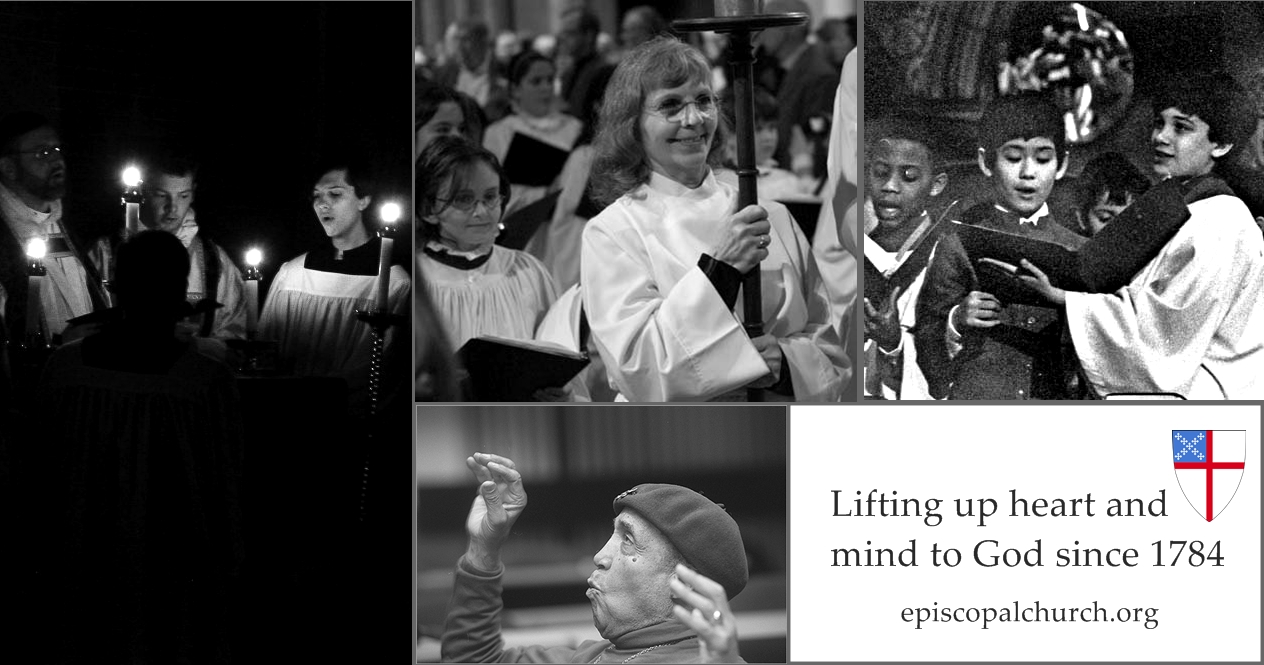
With this in mind, I dawdled around and made what I thought would be a good first ad in a string of ads communicating an Episcopal Church identity. I like the “since 1784” tag so I used that but I think it could be blended with different images and text to offer a broad image of the Church.

Of Tebow, Football, and Prayer

A friend of mine posted this piece by a UCC pastor about Tim Tebow’s pastor and a comment he made on the Broncos being 7-1 at that point since Tim Tebow was quarterbacking. Tebow’s pastor says, “It’s not luck,” Hanson said. “Luck isn’t winning six games in a row. It’s favor. God’s favor.”

Pastor Daniel (I apologize if UCC ministers are not referred to as pastor – I assume they are not Mother and Reverend is grammatically inelegant) takes issue with the claim that God would act to intervene in a football game in answer to one team’s prayers. She writes, “To be fair, the player himself made no such outrageous claims. But his pastor seems to have skipped a few theology classes. Surely there are other Christians praying just as hard on other teams. And what about the players of other religions?”

Pastor Daniel maintains, “…as for touchdowns, skillful surgeons, happy first dates and fast lanes, those are human affairs. God doesn’t reward one player with a touchdown and curse another. God gives us the instructions on how to withstand the hard times, and how to withstand the good times…”

I think this might be a case of both/and rather than either/or.

Pastor Daniels is right as far as she goes. God absolutely gives us the fortitude to withstand all that the world can throw at us. It is with His help that we carry on when we cannot carry ourselves.

I wonder though if there is not something good and true about believing that God will intervene in the most mundane of circumstances? I don’t claim to be a theologian (in fact, without fail, every single time I type theologian I accidentally type theologican first!) and I may have missed the classes that Tim Tebow’s pastor missed as well. But it seems profoundly limiting to suggest that God will not, in some wise, intervene in even the silliest of human endeavors (which they all must seem to Him at times).

We have spent the Christmas season celebrating the inbreaking of God into a manger and celebrating the very real birth of God With Us. If that scene teaches anything then it teaches that God embraces us even in the midst of some very human realities – because of those very human realities. God seems to speak less in the grand than in the simple, the essential, and the human – for that is what we might understand.

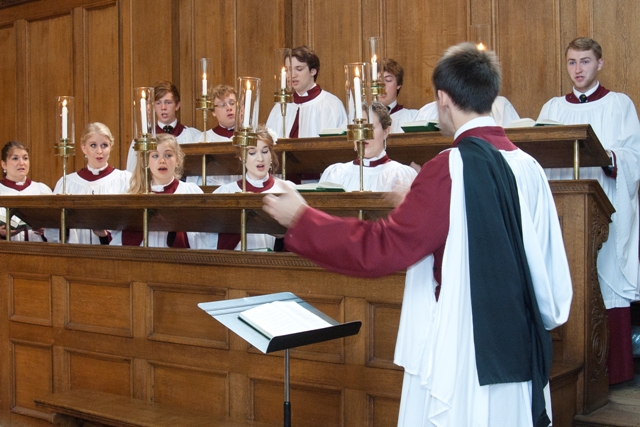
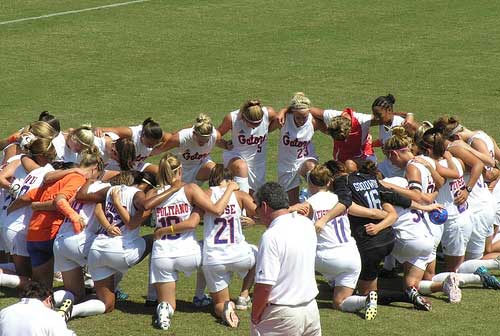
Florida Gators women's soccer team at prayer.

Our prayers are always answered. This is a true saying and worthy of all to be received. They may not be answered in the way we understand, the way we hope, or the way we expect. When a team prays for victory and receives defeat, there is grace abounding in defeat. Most of our greatest lessons come not from wins but from losses – and prayers were answered.

When a pastor, player, or coach ascribes to the Lord his or her win on a field, they are absolutely right! Their victories and their defeats, their skills and their weakness, their hopes and their fears are all bound up in the love of God.

In a profoundly narcissistic society, it does not bother me at all to see Tim Tebow genuflecting in the end-zone. It does not bother me at all for a pastor to say that he thinks God is watching out for a particular team.

The point is not that God cares about a ball game – but that the ball game is one part of God. The ball, the field, the players, the sweat, the dreams, the fans, the stadium, the city, and more are all caught up in the care and attention of God. The more we are able to acknowledge the presence of God in all that we undertake the more profoundly we can carry that presence to those who need it most.

When I am flying on a flight particularly marked by turbulence I don’t pray that I will have the calm and wisdom to accept the circumstances and, if the plane should crash, that I shall merit particular care in the afterlife. I pray that the plane doesn’t crash. Is God listening? I believe so. It might be an attribution error or a case of post hoc ergo propter hoc but I do think that God hears the fervent prayers of His people.

We are not Gnostics – we believe that the material world matters to God. We believe in the Incarnation and a Lord who was, in some way, formed by the everyday love and concern of a Father, a Mother, and those all around. This is part of the exchange of the Incarnation.

Pastor Daniels proposes a curiously dispassionate God by whom “all prayers are welcome” yet who does not seem all that interested in responding to them nor to value any of them particularly. This is a curious God to whom we should pray – but only for our own individual resolve to withstand or grow from a particular experience.

What does the Spirit do in such a cosmology? What role does God play at all in the Creation? Why an Incarnation? Where is the Living God active and true?

Those may seem like grand questions to jump to because we are talking about a football game, right? But what we are really talking about is a question of the efficacy of prayer, the nature of God’s action in the world, and God’s relationship to His people.

We don’t pay obeisance to a disinterested sun god, who is content to watch the world putter on, for whom we are an amusement or day’s diversion. We worship a God who has come among us as one of us and knows us as His own.

God may not have a scorepad and one of those beerhats on – or he may – I rather like to think he does at times though. The Incarnation revealed to us a God who wanted to know and love His people – in all of their passionate silliness – in all of their victories and defeats.

I think what troubles me is the belief that sports are just too petty or small a concern for God to look upon.

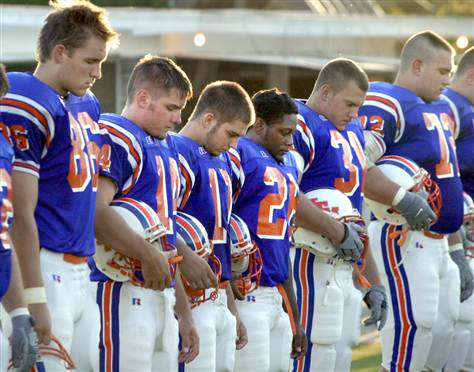
For the men playing football or the women playing soccer or the boys and girls in the Special Olympics or the countless other men and women competing, striving, and praying – those feats are no mean thing. They are not hobbies or a lark they are the stuff of dreams and longing. They form character and virtue.

If God is not involved, deeply and passionately, in every human being’s dreams and hopes (however picayune they may seem from our perspective), then I am not sure what God is involved in. We might, too often, want to constrain His action to look curiously like what we want to happen. Yet, there is something deeply faithful about asking God to intervene in the simplest parts of our days and expecting that God is active in every victory.

Robert+